Truck Advertising: LED Billboard Trucks, Costs and Best Uses
Truck advertising rents a printed or LED box truck by the eight-hour shift. Published rate cards list $1,200 to $5,000 per truck per day, and why.
Advertising on a truck means renting a box truck fitted with printed or LED panels and driving it along routes you set. On published rate cards (retrieved September 2026), Blue Line Media lists mobile billboard trucks at $1,200 to $5,000 per truck per eight-hour day, and Billboard Express lists its LED trucks at $175 per hour with an eight-hour minimum.
Both figures were read off the publishers' own pages on 14 September 2026: Blue Line Media's mobile billboard page and Billboard Express's rates page; a third card, AdQuick's mobile billboard guide, is in the cost table. None of the three publishes a method behind its numbers. This guide covers the three ways to put an ad on a truck, what each one costs on published cards, where trucks are and are not allowed to run, and which format suits which job.
What Are the Three Ways to Advertise on a Truck?
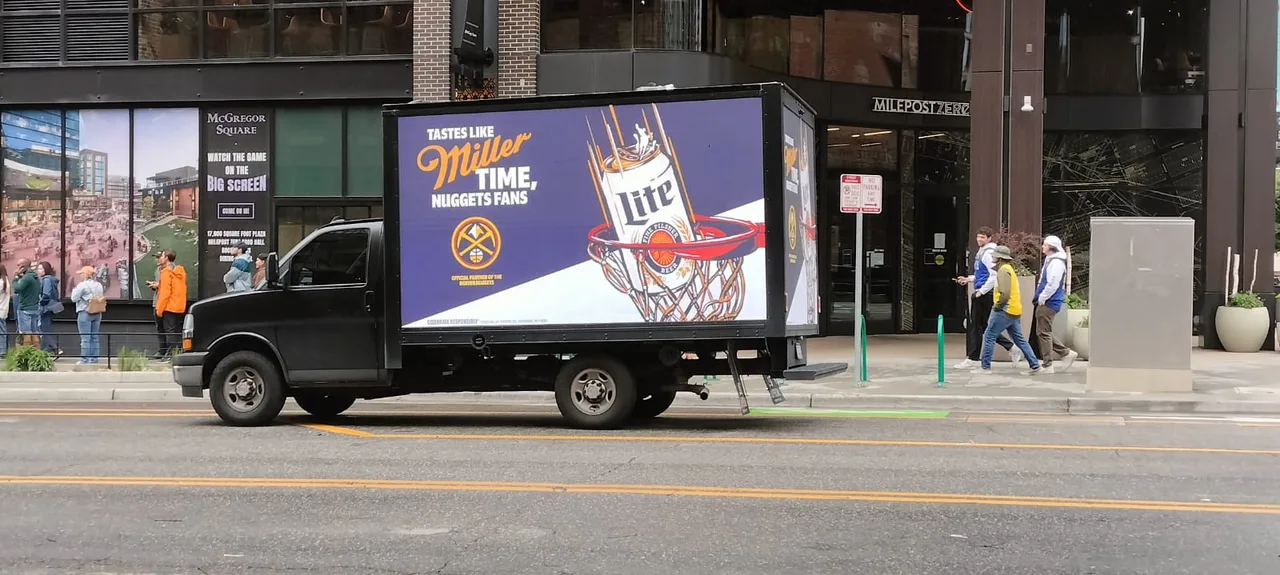
A printed mobile billboard truck carries vinyl panels on a dedicated box truck that exists only to carry the ad; the mobile billboard strategy guide covers how to route one. Blue Line's published specification puts the side panels at 258 inches wide by 115 inches high, with a 24 by 115 inch rear panel. It is sold by the shift, usually eight hours.
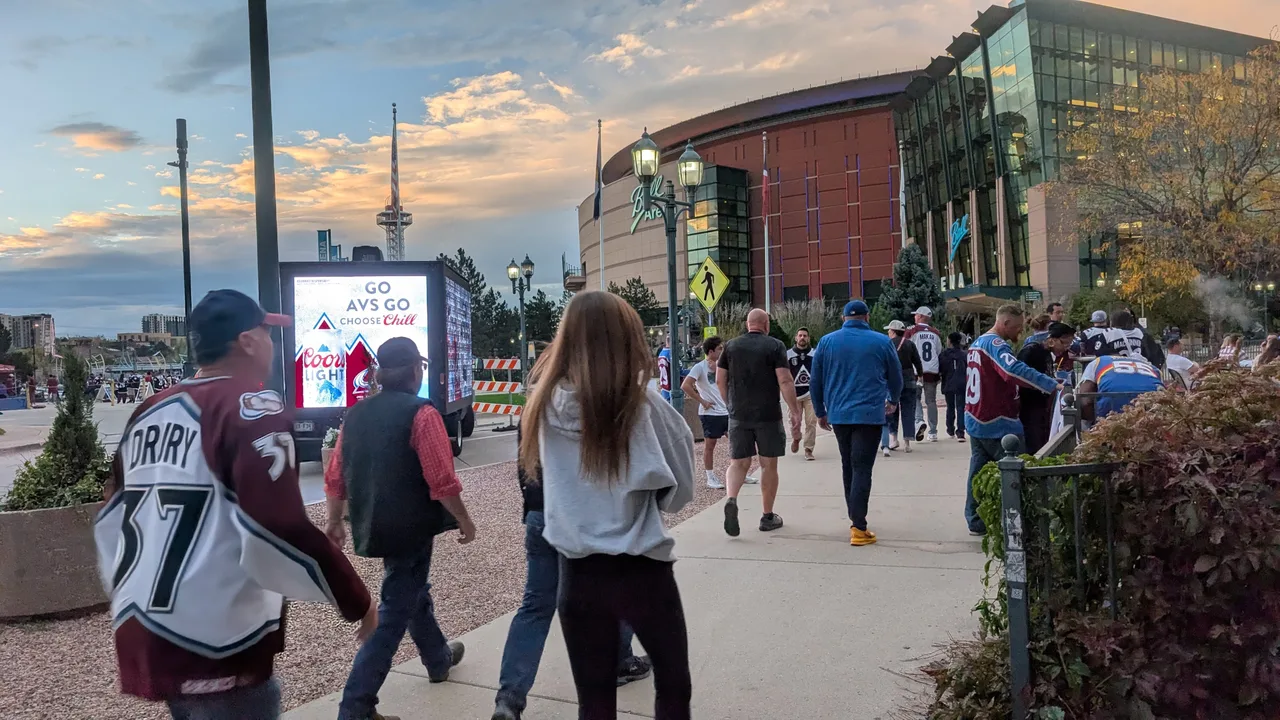
An LED billboard truck replaces the vinyl with screens. Blue Line's spec for the digital unit is 10 feet by 6 feet per side and 6 by 6 feet at the rear, at 1280 by 720 pixels per side and 720 by 720 at the rear. The screens run bright enough to read in direct sun, which is the practical difference from a printed panel on a clear afternoon, and the creative can change in minutes rather than weeks. Also sold by the shift.
A delivery-truck panel is an ad on a truck that is already making deliveries. Blue Line lists panel sizes for 14 to 19 foot trucks (180 by 80 inches per side) and 20 to 25 foot trucks (280 by 90 inches per side), sold per truck per four weeks rather than per day, and notes that the trucks typically run eight to ten hours a day on local routes and stop in front of stores. You buy presence, not a route you control.
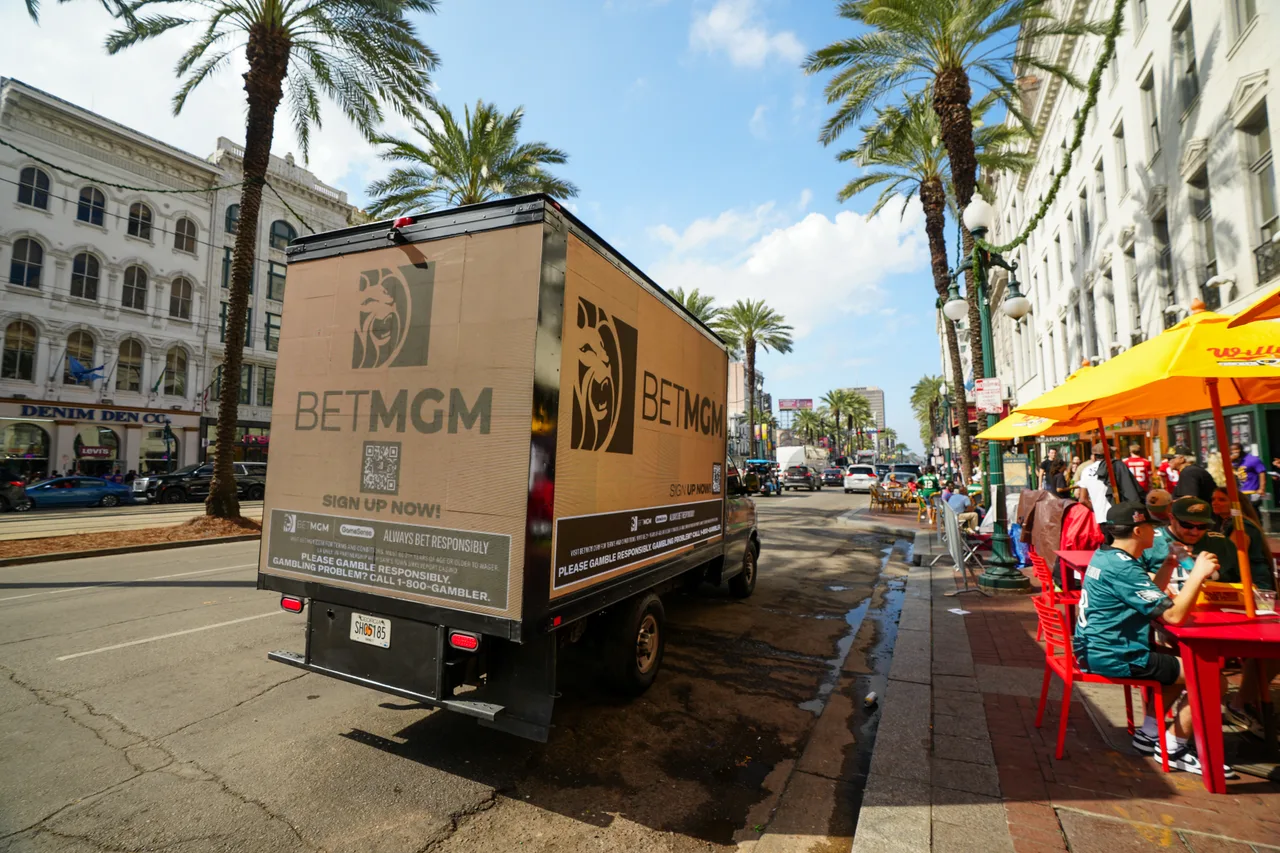
The campaign archive has LED truck frames from Denver, New Orleans and Phoenix if you want to judge the scale against a real street, and the format comparison sets trucks beside car tops, wraps and swarms.
How Does an LED Billboard Truck Campaign Work?
Three components: the vehicle, the content, the route.
The vehicle is a commercial truck with screens on one, two or three sides. Billboard Express sells its LED trucks with three sides available to a single advertiser; three-sided units are visible from both flanks and from the traffic behind. Ask the operator for its file specification before you cut video; the resolution and aspect ratio above are one reseller's, and your broadcast spot is not the same asset.
Content is where the LED unit earns its premium. You can rotate several creatives through the day, update messaging by cellular connection, and show different content by location: breakfast near offices at 7 AM, dinner near residential streets at 5 PM. On a printed truck the message is whatever was printed.
The route is planned against traffic counts, which local departments of transportation publish, and against the places your audience gathers. Blue Line's own FAQ says reporting "often includes route documentation, time windows, and may include GPS logs, photos, or recap reports"; ask which of those you will receive, in writing, before you book.
How Much Does Truck Advertising Cost?
The ranges below are market-level figures compiled from publicly published vendor and industry sources. They are not quotes, and they are not the rates of any single network. Always get a written quote before budgeting.
| Format | Published figure | Unit, as published | Publisher, retrieved 14 September 2026 |
|---|---|---|---|
| Mobile billboard truck, printed | $1,200–$5,000 | per truck, per eight-hour period | Blue Line Media (reseller) |
| Mobile billboard truck, LED | $1,200–$5,000 | per truck, per eight-hour period | Blue Line Media (reseller) |
| LED billboard truck | $175 per hour, eight-hour minimum | per truck; $7,500 per week and $24,000 per month at five eight-hour days | Billboard Express (operator) |
| Static mobile billboard | $800–$2,400 | per truck, per day | AdQuick (marketplace) |
| Digital LED truck | $1,250–$3,600 | per truck, per day | AdQuick (marketplace) |
| Delivery-truck panel | $4,200–$7,600 | per truck, per four-week period | Blue Line Media (reseller) |
| Delivery-truck panel | $400–$900 | per month, by market tier | AdQuick (marketplace) |
Blue Line Media states a minimum purchase of $5,000 per market or higher. Billboard Express also lists a half-year rate of $20,000 per month. AdQuick labels its ranges by market tier (low-cost, major metro, premium event). None of the three publishes a method, and Blue Line's site carries a notice that some of its information may be AI-generated.
Read the table for its disagreements, not just its ranges. Three sellers put a shift on an LED truck somewhere between $1,200 and $5,000, and Billboard Express's hourly rate works out to $1,400 for an eight-hour day, which sits inside the others. The delivery-truck rows do not agree at all: one publisher's floor is more than four times the other's ceiling, on what is nominally the same product. Ask what the unit includes before you accept either.
Within the ranges, three things move a quote. Market first: Blue Line's page says rates depend on timing and market, and AdQuick prices its top-ten metros above everywhere else. Hours second: the commute windows cost more than midday. Creative third: production is billed separately, and video cut to the truck's resolution is a new asset, not your existing spot.
Which Truck Advertising Format Is Best?
Best depends on the job. The table is the short version; the sections after it are the long one.
| Format | Sold as | Creative changes | Best for | Loses to |
|---|---|---|---|---|
| LED billboard truck | Per eight-hour shift | Minutes, remotely | Launches, events, one-day conquests, A/B creative | Printed truck on cost for a fixed message; fixed board for months-long presence |
| Printed mobile billboard truck | Per eight-hour shift | Reprint and reinstall | One message, one route, short flight | LED truck when the message or location changes during the flight |
| Delivery-truck panel | Per truck, per four weeks | Reprint | Sustained neighborhood presence at store fronts | Any format where you need to choose the route |
Where Are Advertising Trucks Allowed?
Not everywhere, and this changes the market list. New York City's traffic rules (Rules of the City of New York, Title 34, Section 4-12(j)) prohibit operating, standing or parking a vehicle on any street for the purpose of commercial advertising; the exceptions cover vehicles licensed by the Taxi and Limousine Commission, franchised buses, sanitation trucks, and vehicles in normal delivery use carrying non-illuminated notices with nothing mounted on the roof. A dedicated advertising truck does not fit any of those. Los Angeles Municipal Code Section 87.53 limits advertising signs on motor vehicles to those painted on or permanently affixed within the vehicle's own length, width and height, with impound as the penalty.
Blue Line's own FAQ says rules "vary by city and can affect parking, idling, sound, and where trucks can stage or circulate". Some sellers still list New York among their cities. Before you book any market, ask the operator in writing which rule it is relying on to run there, and what happens to your money if the truck is ticketed or ordered off the street.
What Are LED Trucks Best Used For?
Product launches. A lit screen routed through the districts where a category's early adopters actually are gets photographed in a way a fixed board does not, and the creative can change as the launch day unfolds.
Event marketing. Stadium entrances, convention centers and concert venues concentrate a crowd for a defined window, arriving and leaving. A truck positioned for those two windows buys more exposure per shift than a general route through the same city.
Political campaigns. A candidate can reach three neighborhoods in one day with a different message in each, inside one media buy, which no printed panel can do.
Competitive conquesting. Parking near a rival's opening, or driving the streets a competitor serves, is a tactic only mobile formats can execute. Check the local parking and idling rules first; this is exactly where enforcement happens.
How Do LED Trucks Compare with Fixed Billboards?
A fixed board offers permanence: it runs every hour of the lease, the audience is predictable, and premium locations in major metros carry the highest absolute rates in the category. You are locked to one spot, creative changes take days or weeks, and the audience is whoever passes that spot.
A truck trades permanence for choice of place. One truck works a route across many neighborhoods in a shift, which would take a row of boards to replicate, and it can change what it says while it does so. For an awareness campaign running three months or longer in one market, the board usually makes more economic sense; for short bursts, events and multi-neighborhood targeting, the truck does. There is no published, methodology-backed CPM that settles the comparison, and any vendor who says otherwise should be asked how the impression was counted.
How Do You Plan a Truck Advertising Campaign?
Start with the objective, because it decides the format. Awareness over a season points to a delivery-truck panel or a board; a launch day, an event or a conquest points to an LED truck.
Choose markets you are allowed to run in, then map routes against published traffic counts and the places your audience gathers. Identify dwell points, intersections, stoplights and retail parking, where the panel is in view for longer than a pass.
Cut creative for the format. Lamar's outdoor design tips put typical exposure at four to five seconds and headline copy at seven words or less. Blue Line's FAQ adds, for LED trucks specifically, "use clean motion and avoid small text". Oversized type, high contrast, slow transitions.
Set the measurement before the truck rolls: GPS logs and route photos from the operator, plus a QR code, vanity URL or promo code for direct response. If the budget allows, a brand lift study against a control, run by a named third party; the results page shows what those look like when they are published properly.
Then use the one advantage the LED unit has over every printed format. Run two creatives in week one, read the direct-response data, and give the winner the remaining shifts.
Who Sells Truck Advertising?
Firefly sells LED digital trucks that run video or a static image on a high-impact screen, listed with glass trucks, 3D hologram trucks and branded food trucks on its experiential advertising page, on the same network as the digital car tops it runs in 15 markets; it quotes per campaign rather than publishing rates. Billboard Express is an operator that publishes hourly, weekly and monthly LED truck rates and lists trucks in more than 300 US cities on its site. Blue Line Media is a reseller across printed, LED and delivery-truck formats with the published rate card and specifications cited throughout this guide. AdQuick is a marketplace that lists day rates by market tier and books operators on the buyer's behalf. The mobile billboard companies ranking scores twelve operators and resellers on who owns the trucks, rate cards and published specs.
Frequently Asked Questions
How much does it cost to put an ad on a truck?
On rate cards retrieved in September 2026, Blue Line Media lists mobile billboard trucks at $1,200 to $5,000 per truck per eight-hour period, Billboard Express lists LED trucks at $175 per hour with an eight-hour minimum, and AdQuick lists LED trucks at $1,250 to $3,600 per day. Delivery-truck panels are sold per four weeks instead. All are seller-published figures with no stated method.
How much does an LED billboard truck cost per day?
Billboard Express's hourly rate works out to $1,400 for an eight-hour day, and its weekly rate is $7,500 for five such days. AdQuick's published day rate for a digital LED truck runs from $1,250 in a low-cost market to $3,600 and up for a premium event. Production of the video file is billed separately.
Are advertising trucks legal in every city?
No. New York City's traffic rules prohibit operating or parking a vehicle on a street for the purpose of commercial advertising, with exceptions that do not cover a dedicated ad truck. Los Angeles restricts vehicle advertising signs to those permanently affixed within the vehicle's own dimensions. Rules on parking, idling and sound vary elsewhere; ask the operator which rule it relies on in each market.
What is the best truck advertising format for a short campaign?
An LED billboard truck. It is sold by the shift, the creative can change in minutes, and it can be routed to an event or a competitor's location on the day. A printed truck costs less for a single fixed message, and a delivery-truck panel suits a four-week presence at store fronts rather than a chosen route.
What size is a mobile billboard truck panel?
Blue Line Media's published specification lists the printed truck at 258 by 115 inches per side with a 24 by 115 inch rear panel, and the LED truck at 10 by 6 feet per side and 6 by 6 feet at the rear, at 1280 by 720 pixels per side. Ask your operator for its own template before you set type.
How many words should a truck ad have?
Seven or fewer for the headline, following Lamar's outdoor design guidance, because typical exposure is four to five seconds. Use one dominant image, high contrast, and one call to action. On an LED truck, keep motion slow and avoid small text, as Blue Line's own creative FAQ advises.
How is an LED truck campaign measured?
Operators typically provide route documentation and time windows, and may add GPS logs, photos and a recap report. Layer on a QR code, vanity URL or promo code for direct response, and, if the budget allows, a brand lift study against a control run by a named third party. Impression figures on their own are estimates.
What to send us
- Market, or markets
- Dates, or flight length
- Budget band
- The metric you will judge it by
A person replies with a written range and the formats that fit. No rate card exists; every number on this site is a published third-party figure.
Send the briefSources
- Blue Line Media, Mobile Billboard Truck Advertising, rate card, specifications and FAQ, retrieved 14 September 2026. bluelinemedia.com/mobile-billboard-advertising
- Billboard Express, Mobile Billboard Truck Advertising Rates, retrieved 14 September 2026. billboardexpress.com/cost-rates
- AdQuick, Mobile Billboard Advertising, benchmark day rates, retrieved 14 September 2026. adquick.com/mobile-billboard-advertising
- Rules of the City of New York, Title 34, Section 4-12(j), commercial advertising on vehicles. codelibrary.amlegal.com
- Los Angeles Municipal Code, Section 87.53, Regulation of Mobile Billboard Advertising Displays, amended by Ordinance 182,516. codelibrary.amlegal.com
- Lamar Advertising, Design Tips. lamar.com/en/advertising-resources/design-tips
- Firefly, format list including LED digital trucks. fireflyon.com
Written by
Melih Koray is a marketing and SEO practitioner who documents out-of-home media. He edits this site, sources every figure on it and checks each campaign caption against the photograph. He does not publish unsourced numbers, and he does not publish any operator's rate card.