Six formats, honestly compared. Updated 2026-09-14

Car top vs wrap vs LED truck: six vehicle ad formats compared

Car top advertising puts a message on the roof of a working vehicle; a wrap puts it on the body; LED trucks, swarms, in-car screens and hologram trucks each sell a different audience under the same vehicle-advertising label. Below, the six are compared on where they work, how the audience is counted, who regulates them, how they are bought, and where each loses.

How do the six vehicle advertising formats compare?

Each row includes where the format loses, because a comparison that never says no is a pitch. The regulator column names the kind of body involved rather than a statute, because the rule changes by city and the operator is the one who has to have cleared it.

FormatWhere it worksHow the audience is countedWho regulates itTypical buy unitWhere it loses
Digital car topDense street grids where pedestrians and stopped traffic read the roof: downtown cores, arena and venue perimeters, nightlife districtsGPS route logs from each unit, matched to traffic and pedestrian counts on the streets driven, then modelled to impressionsThe city or county body that licenses the host vehicle (taxi or for-hire commission), plus the state vehicle code on roof signage and illuminationPer vehicle per four-week period, in multiples of vehicles; DASH TWO notes most taxi campaigns are purchased in four-week incrementsTo a wrap when one image has to be unmissable and the screen is a distraction; to a billboard when the brief is a single fixed intersection
Vehicle wrap and 360 wrapLaunches and brand moments where the car itself should read as the ad; parked activations outside a venue; slow, visible trafficGPS logs plus device-location attribution where the operator runs it; otherwise the same route-and-traffic-count model as a topState vehicle code on window coverage and reflectivity; the licensing body if the host is a taxi or for-hire vehicle; the vehicle owner or fleet on installPer vehicle per flight, usually a minimum of several weeks because print and install are fixed costs; DASH TWO and OOH Today both list full wraps as the top of the taxi price rangeTo a digital top when creative has to change mid-flight; to everything on speed, because a wrap cannot start tomorrow
LED truckOne address on one day: stadium and arena approaches, conference exits, product launches, public squares where a truck can legally standGPS dwell logs at the named locations, matched to pedestrian counts for the hours parked or looping; not total miles drivenMunicipal parking, idling and sign ordinances; Los Angeles, for one, prohibits parking a mobile billboard advertising display on city streets (LAMC Section 87.53), so the operator has to clear the route in advancePer truck per day or per event, with a route and a dwell plan attached; multi-day rates are negotiated per campaignTo car tops on cost per impression across a whole metro; to a fixed board when the audience is drive-by rather than on foot
SwarmOne market, one week, when the goal is frequency: launch weeks, premieres, category moments where the same person should see it three times on one commuteFleet-level impression modelling from the combined GPS logs; Reveal and Firefly measured frequency distribution at the individual level with deduplicated mobile location dataThe same bodies that regulate the underlying vehicles; if the vehicles will stop together, local parking and traffic rules apply to the stopA block of vehicles running the same creative for a fixed flight, priced as a fleet rather than per unitTo a single-vehicle buy when budget is tight; to always-on media when the objective is reach over months rather than frequency over days
In-car screenAttention and completion, not street reach: the seated passenger for the length of the ride, with sound, in taxis and rideshare vehicles that carry a tabletCompleted views per ride from the screen itself; the only format here with a device-level count rather than a modelThe platform or fleet operator sets the content rules; the licensing body regulates the hardware in licensed taxis; no exterior sign rules applyPer screen, with a fleet-level minimum; OOH Today and DASH TWO both list a minimum buy of 1,000 screens for interior placementsTo every exterior format on raw reach; the audience is small and the format behaves like video, not like out-of-home
Hologram and specialty trucksEarned attention: premieres, drops, fan events; anywhere the goal is that people photograph the vehicle and other people see the photographPress and social pickup, plus GPS dwell at the named location; there is no honest impression model for a vehicle designed to be stared atMunicipal parking and event permits, illumination rules for the glass or hologram build, and venue agreements for on-site activationsPer activation, bespoke: build, route, crew and dates priced as one lineTo everything on efficiency. It is a stunt line item, and a good one only when the campaign needs to be talked about beyond the people who physically saw it

No pricing on this page. Rates vary by market, flight length and fleet size, and any figure quoted without those three is guesswork. The buy-unit column cites the third-party pages that publish the unit, not a rate.

What does each format look like running?

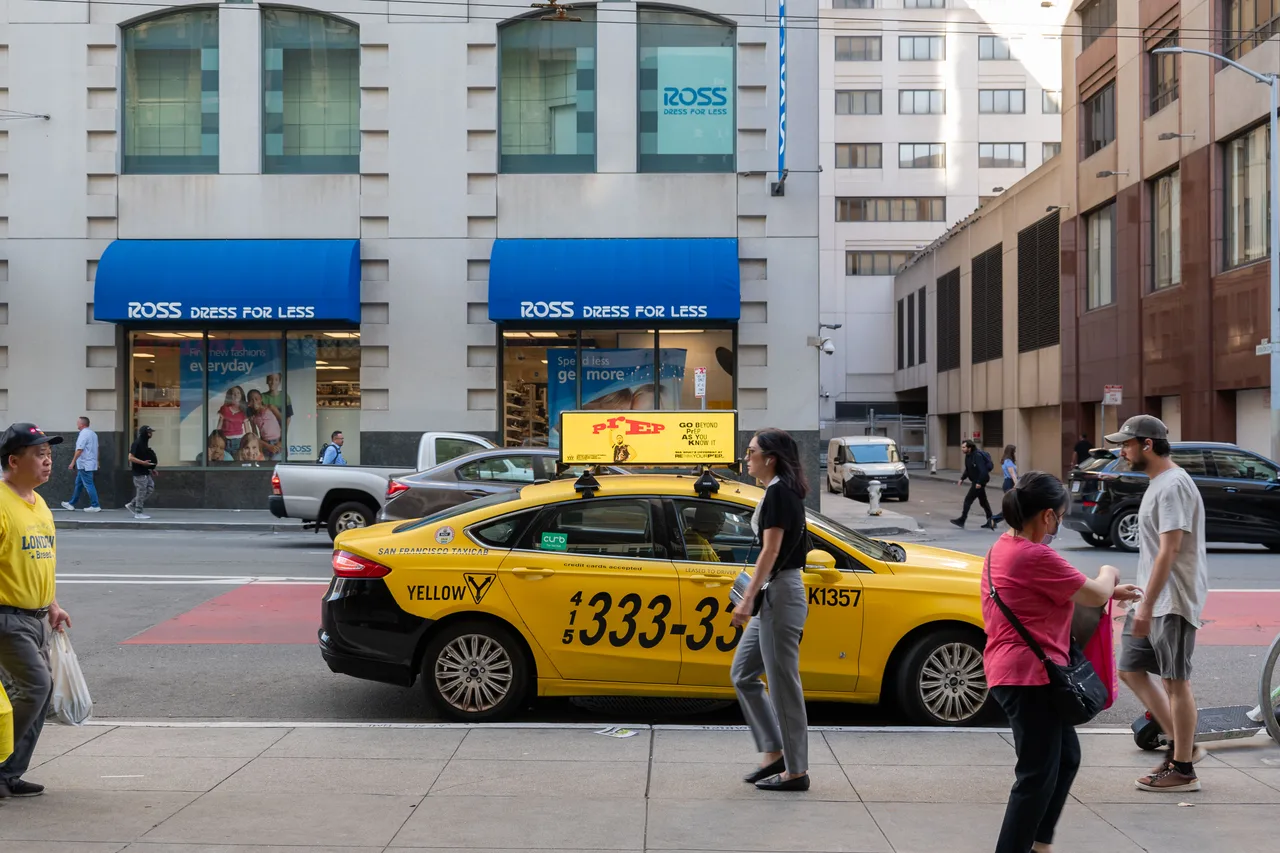
GSK campaign on a digital top vehicle in San Francisco, 2024
GSKSan FranciscoDigital top2024

Digital car top

A dual-sided LED screen on the roof of a taxi or rideshare vehicle. The reason to pick it over anything else on this page is that the message is not fixed: a restaurant group can run brunch creative in one neighbourhood at 10am and a dinner offer in another at 6pm, from the same fleet on the same day. Nothing else in out-of-home changes its mind that fast.

What to ask for: the number of vehicles, the share of voice in the rotation if the screen is shared, and the counting method behind the impression figure. A digital top quoted without a share of voice is a screen you may be sharing with three other advertisers.

Deeper: the complete guide to car top advertising.

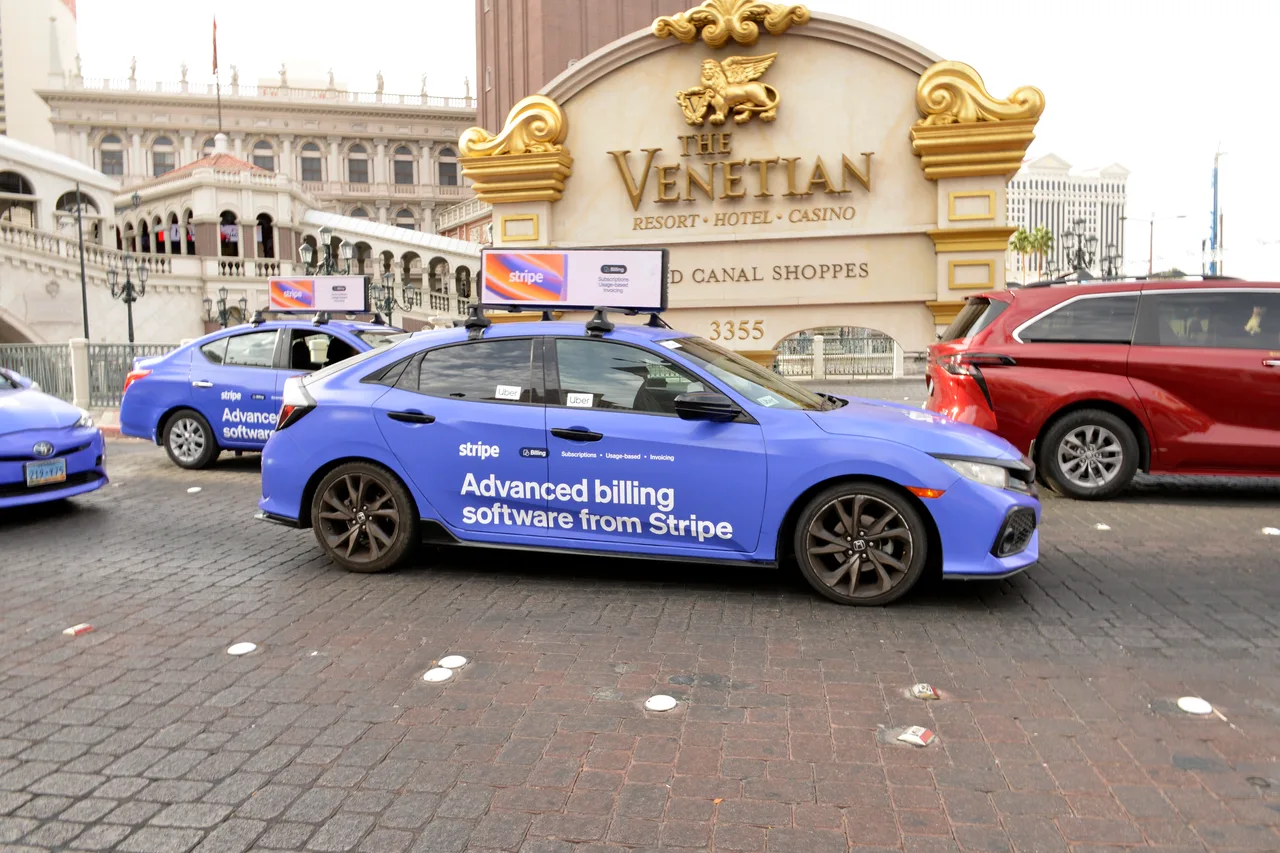
Stripe campaign on a 360 wrap + digital top vehicle in Las Vegas, 2024
StripeLas Vegas360 wrap + Digital top2024

Vehicle wrap and 360 wrap

Vinyl across the body panels, partial or full, often with a digital top riding above it. It has the largest uninterrupted surface of any format here and it works with no power, no screen and no hardware failure mode. The tradeoff is commitment: what you print is what runs until the wrap comes off.

The Stripe frame above is the format at its best: a fleet of wrapped sedans parked and moving in front of the venue where the audience already was, with the digital top carrying the second message.

Deeper: the vehicle wrap cost and return guide.

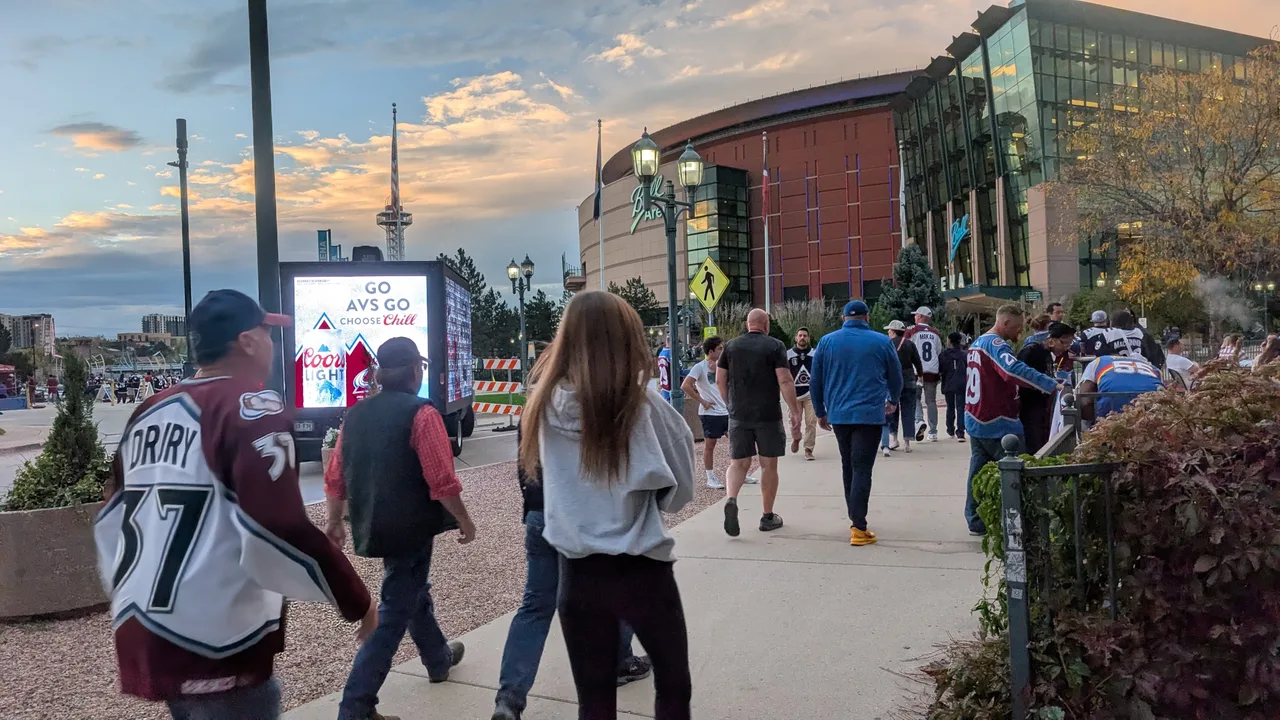
Coors Light campaign on a led truck vehicle in Denver, 2025
Coors LightDenverLED truck2025

LED truck

A full-size digital billboard mounted on a truck that can park where the audience already gathered. The value is placement precision on a specific day, not sustained metro-wide coverage. Judge it on dwell time at the locations you named, not on the odometer.

The Coors Light truck outside Ball Arena on a game night is the whole argument in one frame: the audience is walking past at reading distance, and the board is exactly where a fixed board could not be.

Deeper: the LED truck advertising guide.

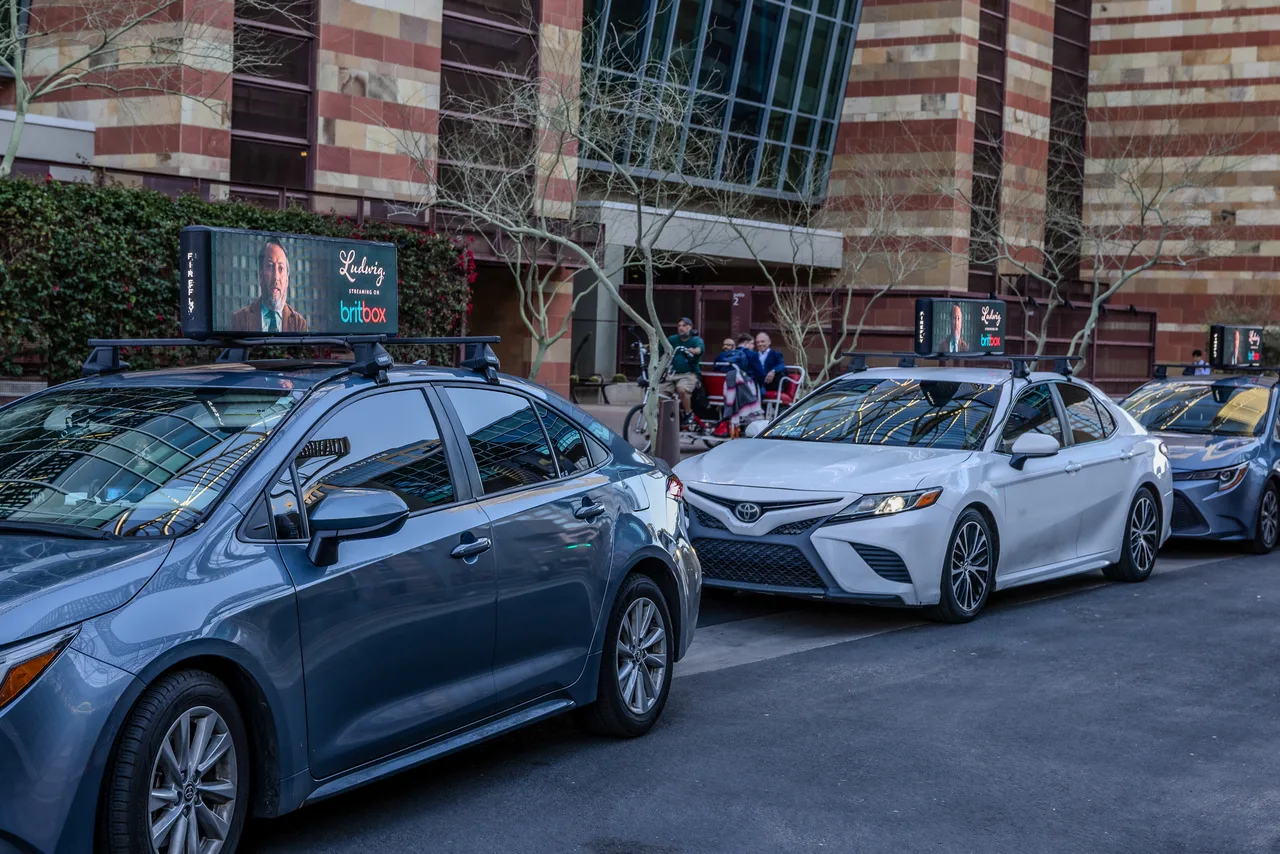
BritBox campaign on a digital top + swarm vehicle in Phoenix, 2025
BritBoxPhoenixDigital top + Swarm2025

Swarm

A coordinated group of vehicles carrying the same creative through one city at the same time. It buys frequency the way a heavy TV week does. The Firefly and Reveal white paper published on 6 May 2026 found that adding moving OOH to a stationary-only plan moved frequency from concentrated exposure levels of 5 to 19 impressions toward an effective range of 3 to 8, while growing unique reach up to 2.8 times faster than impressions.

The BritBox frame is three digital tops in a row on the same block, which is what a swarm looks like from the sidewalk. Ask how the zone is defined, how long the vehicles held it and what happens when one leaves it.

Deeper: the mobile billboard strategy guide.

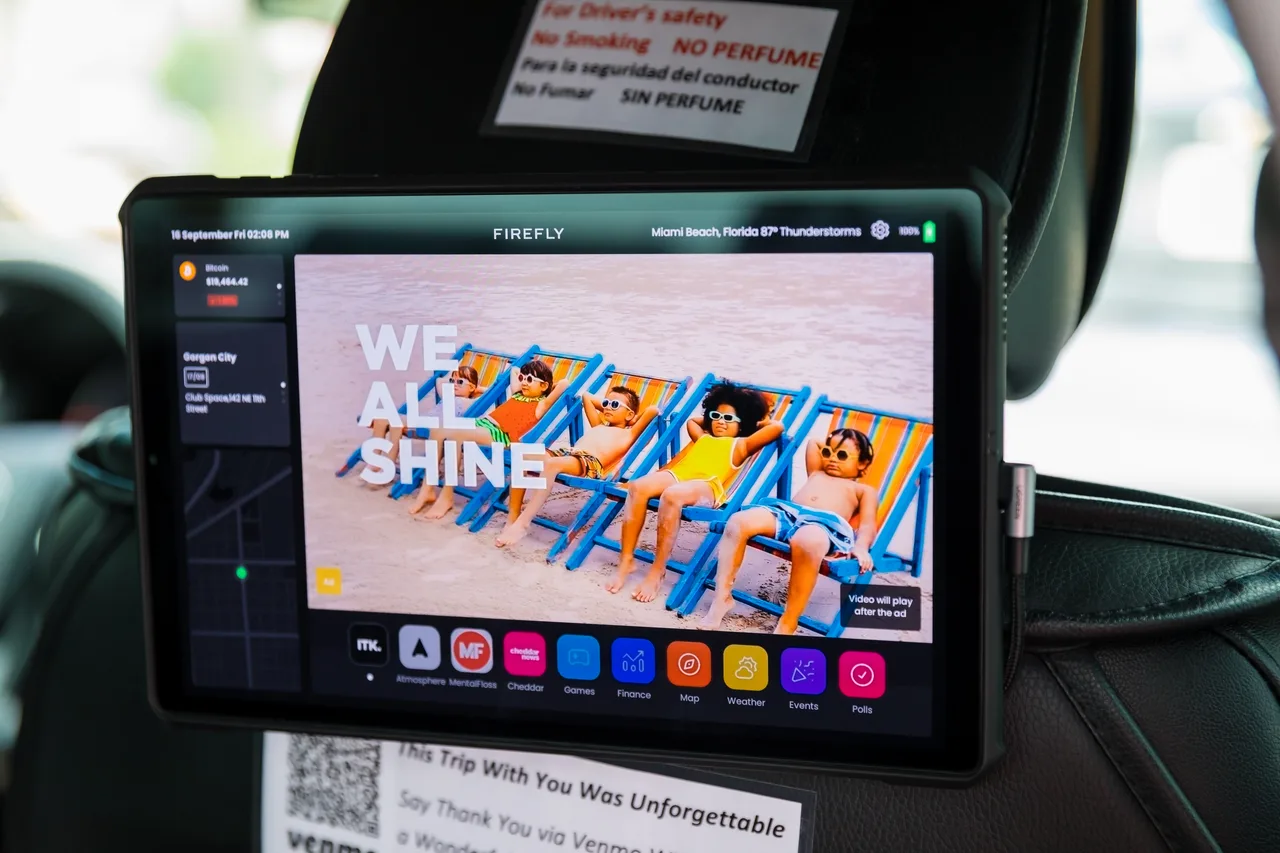
Tropical Smoothie Cafe campaign on a in-car screen vehicle in Miami, 2022
Tropical Smoothie CafeMiamiIn-car screen2022

In-car screen

A screen facing the passenger for the length of the ride. This is the only format in the category with a seated, captive viewer, so it should be planned and measured as video advertising with a location filter, not as out-of-home. Small audience, high completion.

Uber Advertising published a 2025 attention study with Lumen for ads in the Uber app that found ads viewed for 2.5 seconds or more had a one-in-two chance of being recalled; the in-car tablet is a different placement with a longer, seated exposure, and the honest count is completed views, not impressions.

Deeper: the rideshare advertising breakdown.

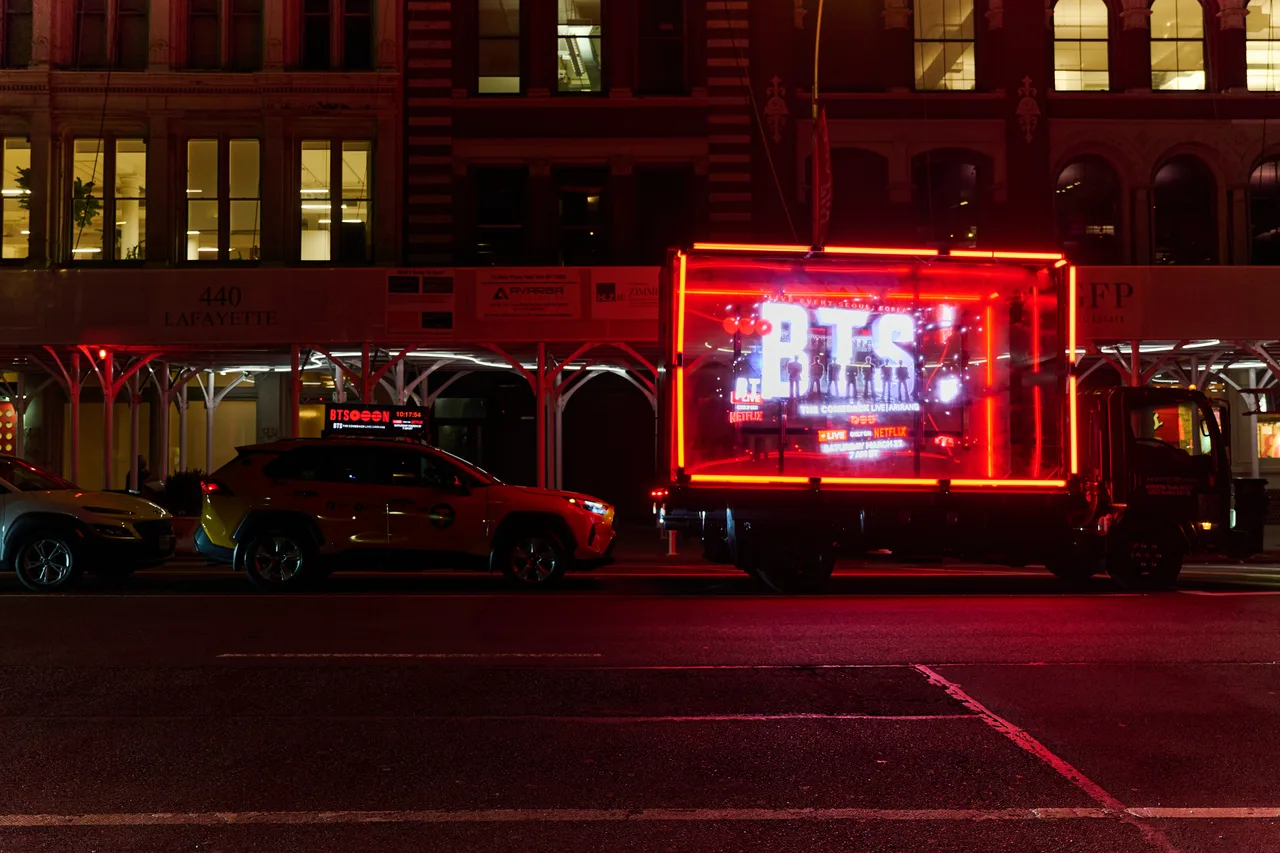
BTS campaign on a 3d hologram truck vehicle in New York, 2026
BTSNew York3D hologram truck2026

Hologram and specialty trucks

Hologram trucks, glass showroom trucks, food-truck builds, pedicabs, projection. These exist to be photographed by other people. Do not buy them for CPM; buy them when the goal is that the campaign gets talked about beyond the people who physically saw it.

The BTS hologram truck on Lafayette Street ran alongside digital tops carrying a countdown to the same broadcast, which is the right way to use a specialty build: as the photographed centrepiece of a plan that has reach elsewhere.

Deeper: the New York taxi advertising guide.

Which format should you choose?

Start from the objective, not the vehicle. If the message will change during the flight, it is a digital car top. If the vehicle itself is the creative and there is time to print, it is a wrap. If the whole point is one address on one day, it is an LED truck. If it is one market in one week, it is a swarm. If the audience is the passenger, it is an in-car screen. If the goal is to be photographed, it is a specialty build.

Then ask every vendor the same four things in writing: how many vehicles, what share of voice, how impressions are counted, and against which traffic data. The results page shows what the published studies actually measured; the campaign archive shows the six formats running, captioned with brand, market and year.

Who to ask: Firefly sells digital and static tops and 180, 270 and 360 wraps on taxi and rideshare vehicles, in-car TaxiTV, and coordinated swarms, LED digital trucks, glass trucks and 3D hologram trucks through its experiential line; SOMO and NY Taxi Ads sell digital tops on New York yellow cabs; Wrapify and Carvertise wrap enrolled drivers' cars; Billboard Express sells LED and printed trucks by the shift; Curb owns the Taxi TV screen network.

Frequently asked questions

What is the difference between car top advertising and a mobile billboard?

A car top is a roof unit, static or digital, on a working taxi or rideshare vehicle that keeps doing its job; the ad rides on trips the vehicle was making anyway, across a whole metro. A mobile billboard is a dedicated truck whose only job is to carry the board to a place you choose. Tops buy coverage, trucks buy placement.

How are car top advertising impressions counted?

From GPS logs. Each unit records where it drove and when; the operator matches those routes to traffic and pedestrian counts for the streets and hours driven and models an impression figure from them. Ask which traffic data was used and whether the figure is gross opportunity-to-see or a modelled viewed impression, because the two differ by more than the difference between vendors.

Which vehicle advertising format is best for a product launch?

A swarm for a launch week in one market, because it buys frequency fast; a wrap when the vehicle itself should be the creative and there is time to print and install; a hologram or specialty truck when the goal is press and social pickup rather than reach. A digital car top is the right default when the launch runs across several weeks and the message will change.

Who regulates vehicle advertising?

It depends on the host vehicle, not on the ad. Licensed taxis and for-hire vehicles answer to the city or county commission that licenses them; wraps and roof units answer to the state vehicle code on visibility and signage; trucks answer to municipal parking, idling and sign ordinances, and Los Angeles prohibits parking a mobile billboard display on its streets under LAMC Section 87.53. The operator clears this before a campaign; ask to see that it has.

Can I change the creative during a car top campaign?

On a digital top, yes, remotely, by daypart or by GPS zone, usually within the day. On a static top, a wrap or a printed truck panel, no; what is printed runs until it is replaced, which is a production job with its own lead time. If the message has to change mid-flight, the format decision is already made.

How much does each format cost?

This page does not publish prices. Third-party publishers such as DASH TWO and OOH Today list per-cab ranges for taxi formats and both note that most campaigns are bought in four-week increments and that interior screens carry a minimum of 1,000 screens; rates vary by market, flight length and fleet size, and any figure quoted without those three is guesswork. Get a written quote.

What to send us

  • Market, or markets
  • Dates, or flight length
  • Budget band
  • The metric you will judge it by

A person replies with a written range and the formats that fit. No rate card exists; every number on this site is a published third-party figure.

Send the brief