Car Rooftop Advertising: How It Works and What It Costs
See published per-display rates for car rooftop advertising, how static and digital car top displays work, and how to measure a campaign before you sign.
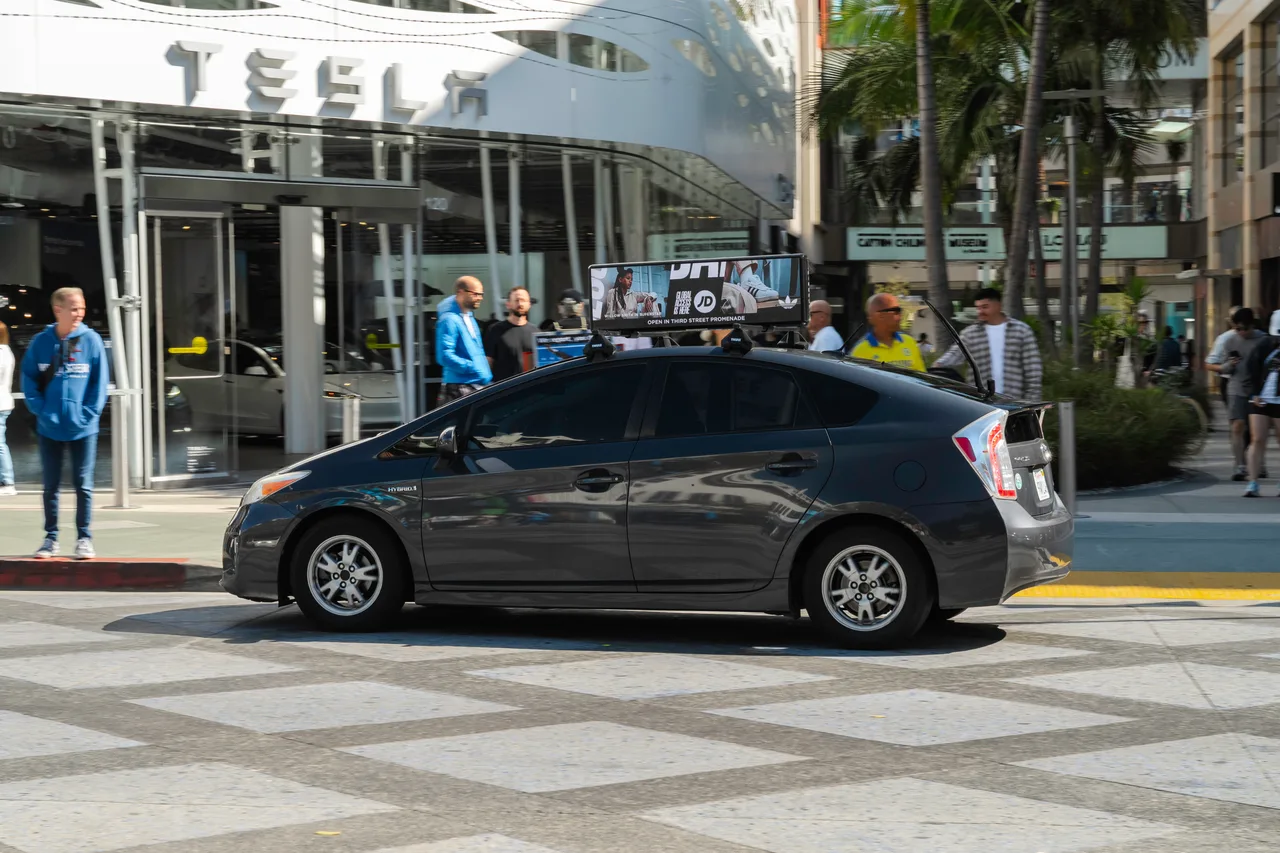
Car rooftop advertising, also sold as car top or taxi top advertising, mounts a backlit or LED display on the roof of a taxi or rideshare vehicle. Networks sell the time per display per four-week cycle: Blue Line Media's published rate card lists static taxi tops at $200 to $500 and digital rideshare tops at $450 to $750 (September 2026).
Buyers usually arrive at this format with three questions: what the unit is, what it costs, and whether it can be measured. Each answer below is tied to a published source, and every photograph is a frame from the campaign archive on this site, which documents 603 brands across 21 US markets.
What Is Car Rooftop Advertising?
A car top display is a roof-mounted advertising unit carried by a taxi, rideshare or fleet vehicle. Two kinds exist. A static top is a backlit printed panel, the box-shaped sign most people picture on a yellow cab. A digital top is an LED screen in a similar housing that rotates several creatives and can change them by location or time of day. Both are sold by the network that owns and installs the units, and both are bought the way other out-of-home is bought: by market, by number of displays, and by four-week flight.
The format is a small slice of out-of-home as a whole, and the noticing data says so. In the OAAA and Morning Consult Out of Home Advertising Study (March 2023), 49% of US adults said they had noticed advertising on a wrapped vehicle or other vehicle signage in the previous 30 days, against 69% for billboards. Asked about ride-share vehicles specifically, 22% had noticed an ad on one, and 21% for taxicabs; among adults aged 18 to 34 the ride-share figure rises to 27%. Read those numbers as coverage rather than attention. Rooftop units are concentrated in large metros; billboards are everywhere.
Where the format wins is proximity and movement. The unit sits at eye level in traffic, at the curb outside venues and in the same streets the audience walks, and it is compared against wraps, LED trucks and in-car screens on the formats page, including the briefs where it loses.
How Does Car Top Advertising Work?
The advertiser never touches a vehicle. A network owns the display units, fits them to taxis or rideshare cars and sells the time on them. You book a market, a number of displays, a flight length and, on digital units, the hours or zones you want to weight. The network handles the vehicle side: sourcing the fleet, installing and servicing the hardware, and keeping units on the road.
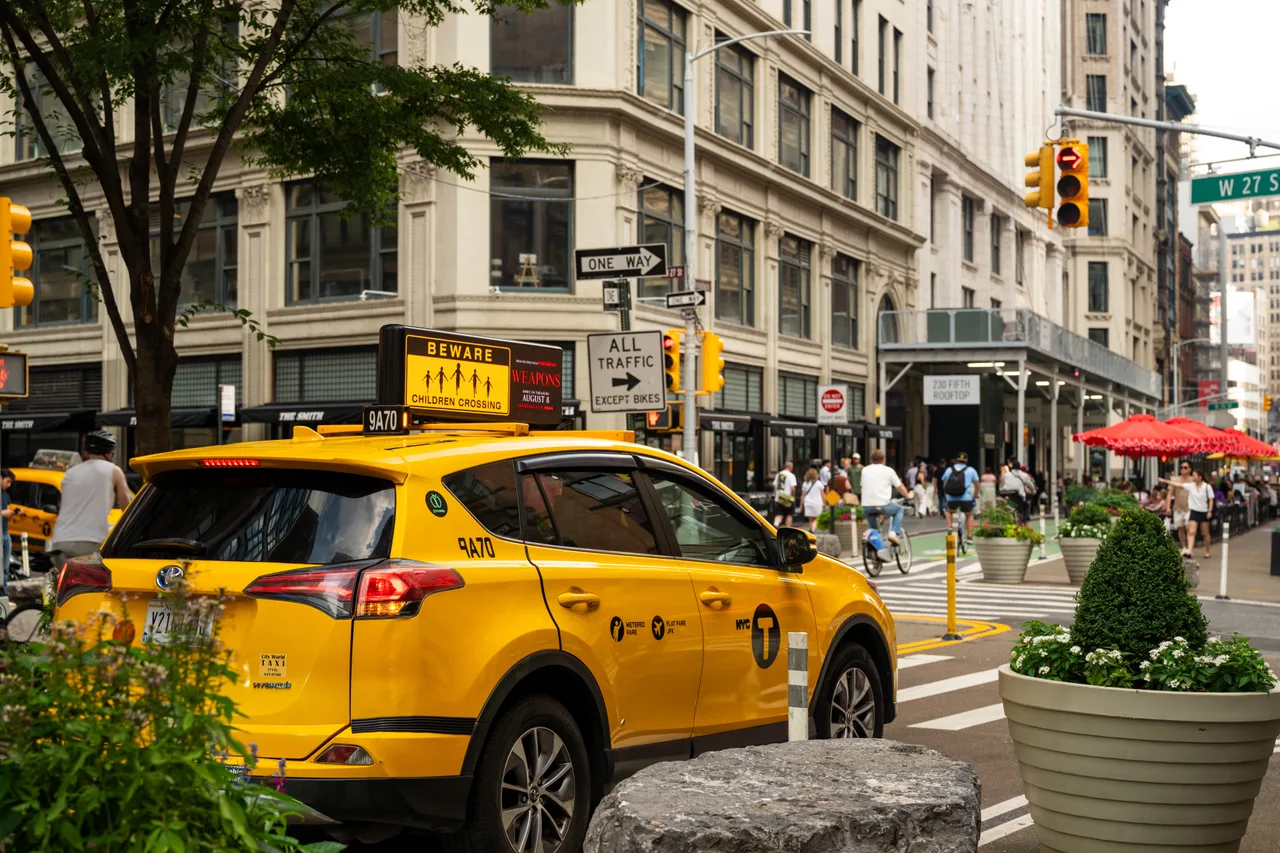
Every unit carries a GPS logger, and the route log is what the network reports back: which zip codes the unit passed through, how long it dwelt in each, and at what hours. Digital units add a content layer on top of that log, so one campaign can run a commuter message in the financial district at 8 a.m. and a different creative outside the arena at 10 p.m. The impression number in the report is derived from the route log by modelling it against traffic counts, which is why two networks can report different impressions for the same route. Ask which counts and which model before you compare proposals.
Booking runs through the network's own sales team, through an out-of-home reseller, or, on some digital networks, programmatically through a demand-side platform. Curb Taxi Media, for example, sells its New York digital tops through Vistar Media. The published ranges in the cost section below come from the reseller route, because resellers publish ranges.
Which Car Top Display Formats Exist?
Static illuminated tops
A printed panel, lit from inside, on two or four faces. Production is cheap, the unit is light enough for any sedan, and the creative cannot change until someone swaps the panel. This is the traditional taxi-top format and the lowest published entry point on the rate card below.
Digital LED tops
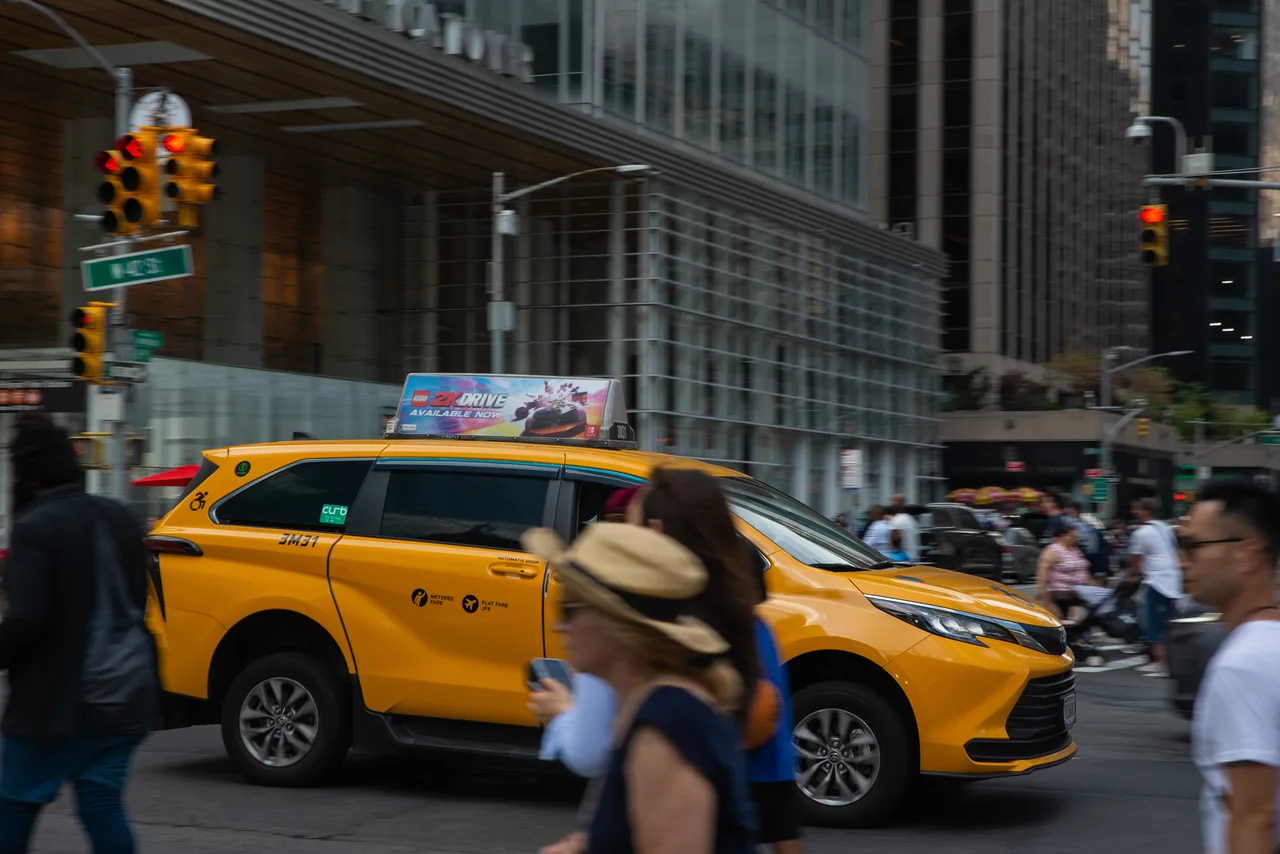
An LED screen, often double-sided, in a roof housing with a modem and GPS. It rotates several creatives, supports dayparting (a lunch offer at noon, a different message at 9 p.m.) and takes new creative mid-flight without a truck roll. The hardware is the expensive part: LED Sign City, which sells the units rather than the media, lists its car top LED display from $5,900 (retrieved September 2026). That price is why networks own the screens and sell time on them, and why a digital car top display rents for more than a static one.
Rideshare tops versus taxi tops
The unit is the same idea; the vehicle and the buy are different. Taxi tops ride on licensed cabs that work the dense core of a city all day. Rideshare tops ride on private cars driving for Uber and Lyft, which follow demand out into residential and suburban zones and cluster around events. Rate cards price the two separately: Blue Line Media lists a distinct "Rideshare (Uber/Lyft) Top, Digital" line. If you want to advertise on top of a car rather than a cab, you are buying the rideshare line, and the rideshare advertising guide covers that market in full, including wraps and in-car screens.
Who Sells Car Top Advertising?
Four kinds of company sit behind the phrase, and buyers routinely confuse them.
- Network operators own the display units, put them on taxis or rideshare cars and sell the time. This is the group you buy from. Firefly sells digital tops with full-motion screens and built-in GPS, static tops in standard, 2D and 3D formats, and 180, 270 and 360 wraps on taxi and rideshare vehicles, with a digital top network across 15 US and Canadian markets; in June 2021 it acquired Curb Taxi Media, which had sold digital and static tops on New York yellow cabs, including programmatically (Curb Mobility release, January 2020; acquisition per GlobeNewswire, June 2021). SOMO sells digital tops on New York yellow cabs, and NY Taxi Ads sells digital tops, wraps and in-cab screens in the same market; both are covered in the New York taxi advertising guide. A separate guide to Firefly advertising covers that network's formats, markets and studies, and the ranked list of car advertising companies covers the rest of the field.
- Hardware makers sell the unit, not the audience. Car Signs sells magnetic and LED car topper signs for delivery and service fleets; LED Sign City and EnRoute View Media sell digital rooftop LED units and the software that drives them. Buy from them if you own a fleet and want to sign it yourself. They do not sell campaigns.
- Wrap marketplaces such as Carvertise and Wrapify sell vinyl wraps on rideshare and delivery cars. They are often listed alongside rooftop networks, but a wrap is a different format with its own economics, and neither company sells a roof-mounted display. The Wrapify, Carvertise and Firefly comparison sets the two marketplaces against a network operator.
- Resellers such as Blue Line Media package inventory from several networks and publish indicative ranges. They are the reason any public rate card exists at all.
How Much Does Car Top Advertising Cost?
The ranges below are market-level figures compiled from publicly published vendor and industry sources. They are not quotes, and they are not the rates of any single network. Always get a written quote before budgeting.
One reseller publishes a usable rate card. Blue Line Media's taxi and rideshare advertising page (retrieved September 2026) quotes each format per display per four-week period:
| Format (rate card wording) | Published range, per display per 4 weeks | Source and date |
|---|---|---|
| Taxi Top (static) | $200 to $500 | Blue Line Media rate card, retrieved September 2026 |
| Taxi Top, Digital | $400 to $600 | Blue Line Media rate card, retrieved September 2026 |
| Rideshare (Uber/Lyft) Top, Digital | $450 to $750 | Blue Line Media rate card, retrieved September 2026 |
| Minimum purchase | $5,000 per market or higher, may be spread across displays and periods | Blue Line Media rate card, retrieved September 2026 |
One reseller's published ranges. Not an industry average, not a quote, and not the rate of any single network.
Three things to read into that card. First, the same page states that New York is the most expensive taxi market it sells, so plan on the top of each range there. Second, the media rate is not the campaign cost: creative design, panel or content production, and installation are quoted separately by some operators and bundled by others, so ask for all three in writing before you compare two proposals. A headline rate that excludes production is not comparable to one that includes it. Third, the $5,000 floor is the practical entry point. This is not a channel you test with a few hundred dollars.
What Results Has Car Top Advertising Produced?
The case for the format rests on recall and intent, not on reach volume. Per-vehicle impression counts are the most abused number in this category: the figure most often repeated, 40,000 to 70,000 daily impressions per vehicle, is widely quoted and rarely sourced with a method. Treat any impression estimate as a modelling output rather than a measurement.
There is one measured number to point at. In a case study Firefly published on 28 November 2024, measured by LoopMe, a cosmetics brand ran digital taxi and rideshare tops across Chicago, New York, Los Angeles and Miami. Exposed audiences showed a 44% lift in brand recall, a 43% lift in brand awareness, a 46% lift in brand favorability and an 85% lift in purchase intent. The flight delivered 39,981,921 impressions against a 30,000,000 plan. One brand, one flight, one vendor's study: it shows the size of lift the format can produce, not what your campaign will produce.
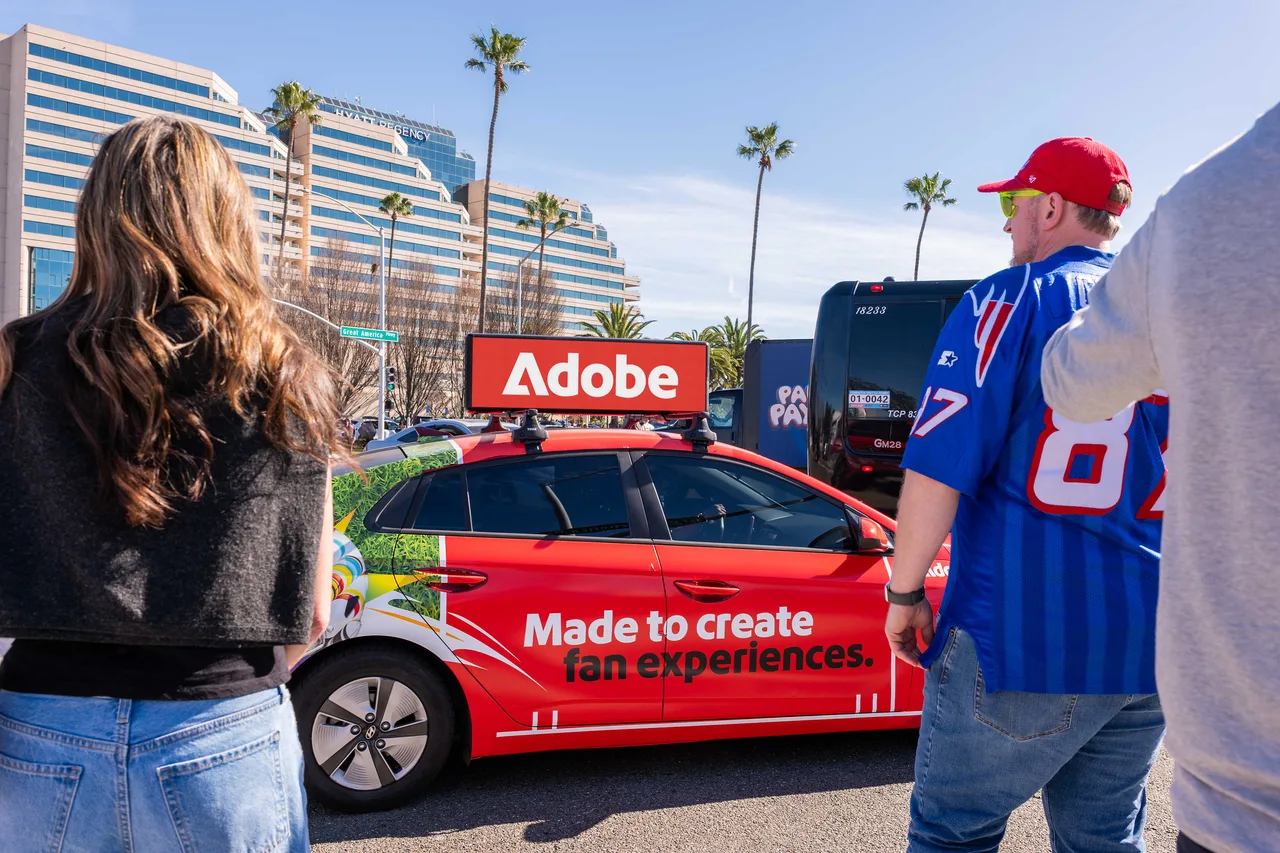
Placements like that one, photographed live and captioned with brand, city and format, are collected in the campaign archive. It is the closest thing this category has to a portfolio you can check.
How Is a Car Top Campaign Measured?
Three instruments, in descending order of how much you should trust them.
Brand-lift studies survey exposed and unexposed people inside the campaign geography and report the difference in awareness, recall and intent. They are the only instrument that measures effect rather than delivery. Lift varies too much between campaigns to promise in advance, which is exactly why the study is worth commissioning rather than assuming a benchmark.
GPS route logs are delivery proof: which streets, which hours, how long in each zone. The impression figure derived from them depends on the traffic-count source and the model, so ask for both and compare vendors on the log, not on the impression total.
QR codes and short URLs give you an attributable action. Scan rates on a moving vehicle are low by nature, since the viewer needs a clear sightline and a stationary moment, so treat the code as attribution evidence rather than the campaign's conversion path.
Car rooftop advertising is a narrow, well-lit, highly local format with a published rate card, one measured lift study and an honest set of limits. Start with one market and one flight, insist on the route log and a lift study in the proposal, and weigh it against the alternatives on the formats page before you sign.
Frequently Asked Questions
What is a car topper?
A car topper is the roof-mounted advertising unit itself: a backlit printed panel (static) or an LED screen (digital) fixed to a taxi, rideshare or fleet vehicle. The same word is used for the small magnetic or lit signs that delivery and service fleets put on their own cars, which are bought as hardware rather than as media.
How much does it cost to advertise on top of a car?
Published ranges run from $200 to $750 per display per four-week cycle depending on the unit. Blue Line Media's rate card (retrieved September 2026) lists static taxi tops at $200 to $500, digital taxi tops at $400 to $600 and digital rideshare tops at $450 to $750, with a $5,000 minimum purchase per market. Production and installation are extra unless a proposal says otherwise, and no network is bound by a reseller's ranges.
Can you advertise on top of Uber and Lyft cars?
Yes. Independent display networks fit digital tops to private vehicles driving for Uber and Lyft and sell the time on them by market and flight; the advertiser deals with the network, not with the rideshare platform. Rate cards price this line separately from taxi tops: Blue Line Media lists digital rideshare tops at $450 to $750 per display per four weeks (retrieved September 2026).
Are car top ads digital or static?
Both exist and both are sold today. A static top is a backlit printed panel that shows one creative for the whole flight. A digital top is an LED screen that rotates several creatives, changes them by time of day or location and can be updated mid-flight. Digital units rent for more because the hardware costs more: one hardware vendor, LED Sign City, lists a car top LED display from $5,900 (retrieved September 2026).
What is the minimum budget for a car top campaign?
The only published floor comes from a reseller. Blue Line Media states a minimum purchase of $5,000 per market or higher, which may be spread across displays and periods (retrieved September 2026). Individual networks set their own minimums per campaign, so get the figure in writing and treat $5,000 as the lowest realistic entry point rather than a guarantee.
Does car top advertising work?
The measured evidence says it can move brand metrics. In a case study Firefly published in November 2024, measured by LoopMe, a cosmetics brand's digital taxi and rideshare tops across four US cities produced a 44% lift in brand recall and an 85% lift in purchase intent among exposed audiences. That is one campaign and one vendor's study, so commission a lift study on your own flight rather than assuming those numbers.
What to send us
- Market, or markets
- Dates, or flight length
- Budget band
- The metric you will judge it by
A person replies with a written range and the formats that fit. No rate card exists; every number on this site is a published third-party figure.
Send the briefSources
- OAAA and Morning Consult, Out of Home Advertising Study, March 2023, appendix table "Noticed OOH media in past 30 days".
- Blue Line Media, Taxi and Rideshare Advertising rate card, retrieved 14 September 2026.
- Firefly, Case Study: Boosting Key Brand Metrics with Firefly Digital Taxi/Rideshare Tops, published 28 November 2024, measurement by LoopMe.
- Curb Mobility, Curb Taxi Media Launches Programmatic "Smart" Taxi Tops in NYC, PR Newswire, 21 January 2020.
- LED Sign City, Car Top LED Display, product page, retrieved 14 September 2026.
- Car Signs, Car Toppers; Carvertise, homepage; EnRoute View Media and Wrapify homepages. All retrieved 14 September 2026, used for format classification only.
Written by
Melih Koray is a marketing and SEO practitioner who documents out-of-home media. He edits this site, sources every figure on it and checks each campaign caption against the photograph. He does not publish unsourced numbers, and he does not publish any operator's rate card.