New York Taxi Advertising in 2026: Formats, Rates, and How to Buy It
New York taxi tops run $100 to $800 per display per four weeks on published 2026 rate cards, with $5,000 minimums. Compare formats, vendors and how to buy.
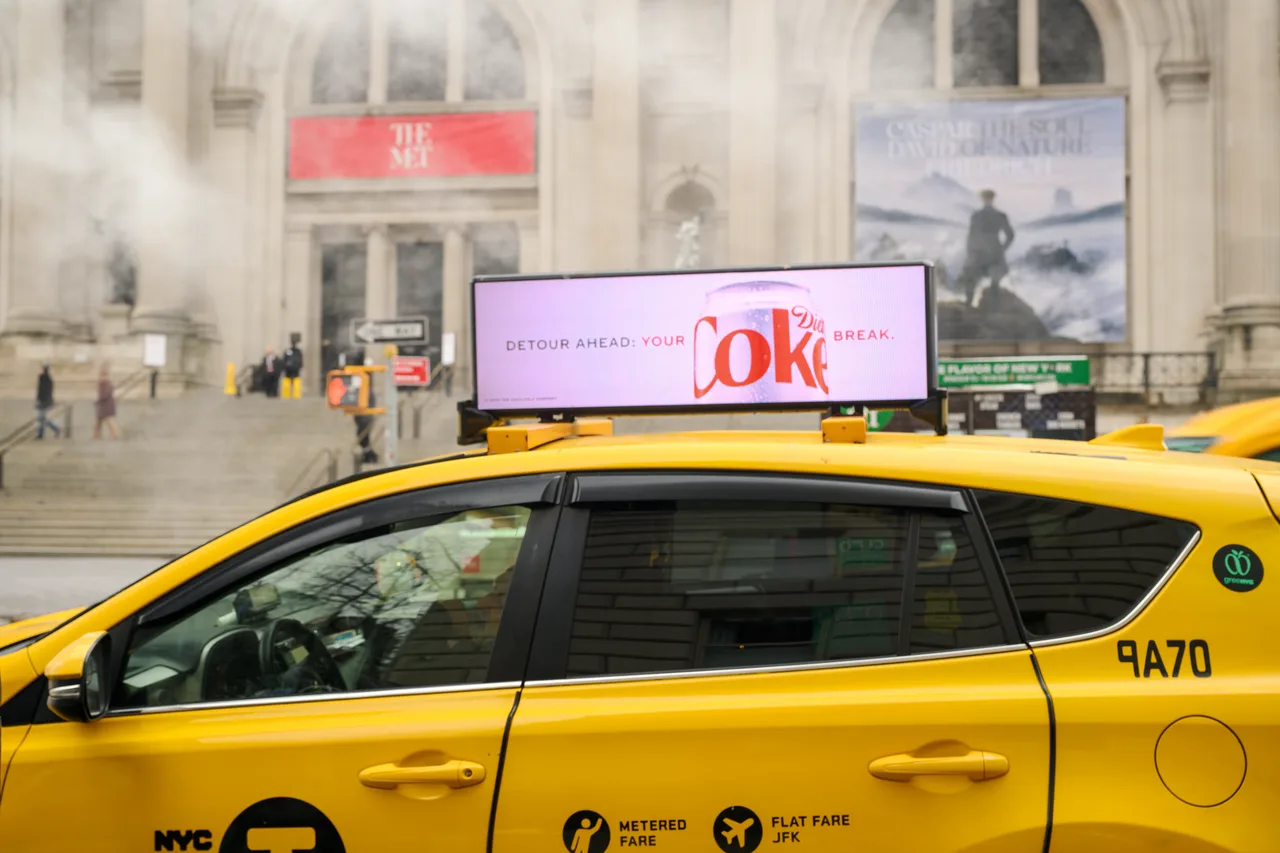
New York taxi advertising is paid media on the roof, body or in-cab screens of the city's yellow taxis, 8,878 of which are on the road on an average day. Published 2026 rate cards price a static taxi top at $100 to $500 and a digital top at $120 to $800 per display per four-week cycle, with $5,000 minimums.
Those figures come from the AdQuick taxi advertising guide (updated September 2026), the Blue Line Media New York City rate card (retrieved September 2026) and the TLC's May 2026 monthly indicators, which are broken down on the NYC taxi fleet data page. Everything else below is sourced the same way or left out.
Why Does New York Taxi Advertising Still Work in 2026?
Manhattan is a walking city, and New York taxi ads are the one advertising surface that moves through it at eye level. A pedestrian crossing Seventh Avenue at 5 PM cannot scroll past the cab in front of them, mute it or block it. The format's whole case rests on that: it is part of the streetscape, not an interruption on a screen somebody chose to open.
Scale is the other half of the case, and the number to plan against is the on-the-road fleet, not the medallion count. The TLC's May 2026 indicators put 8,878 yellow taxis on the road on an average day. The full breakdown of medallions, active vehicles and daily trips lives on the NYC taxi fleet data page and is not repeated here. What matters to a buyer is the share of those 8,878 cabs a campaign occupies, and that arithmetic comes later in this guide.
What Formats Do Ads on Taxis Come In?
Five, and they are not interchangeable. Each one is set against the rest of the vehicle category, including where it loses, in the vehicle format comparison. The notes below are specific to the yellow cab.
Static Taxi Top Ads
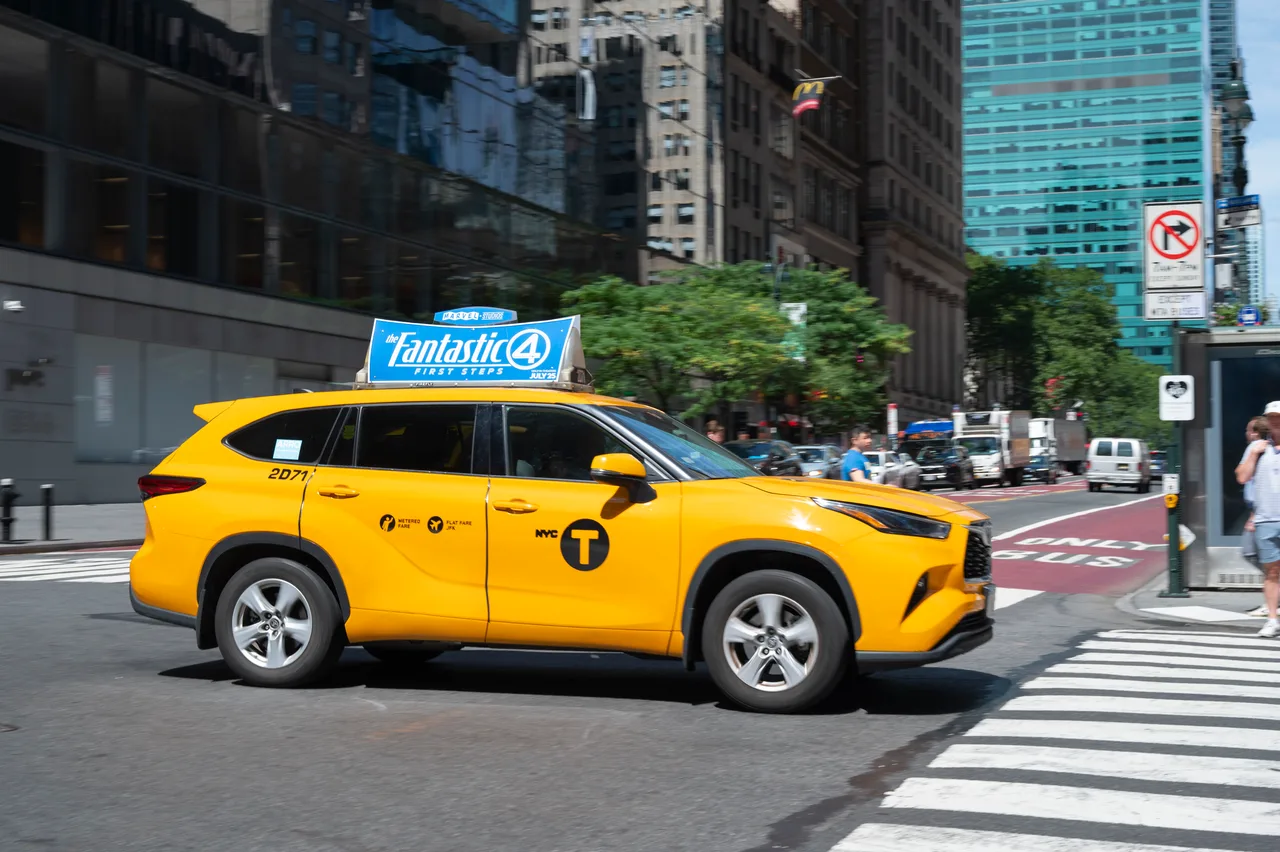
A backlit printed panel in a rooftop frame, lit around the clock and visible from the front and the back of the cab. Every rate card cited in this guide sells it in four-week cycles: one creative, printed and installed, up for the length of the flight. It is the entry format, and the one that reads best after dark, when the backlight does the work against a black street. The Fantastic Four frame further down is a static top.
Digital Taxi Tops (LED)
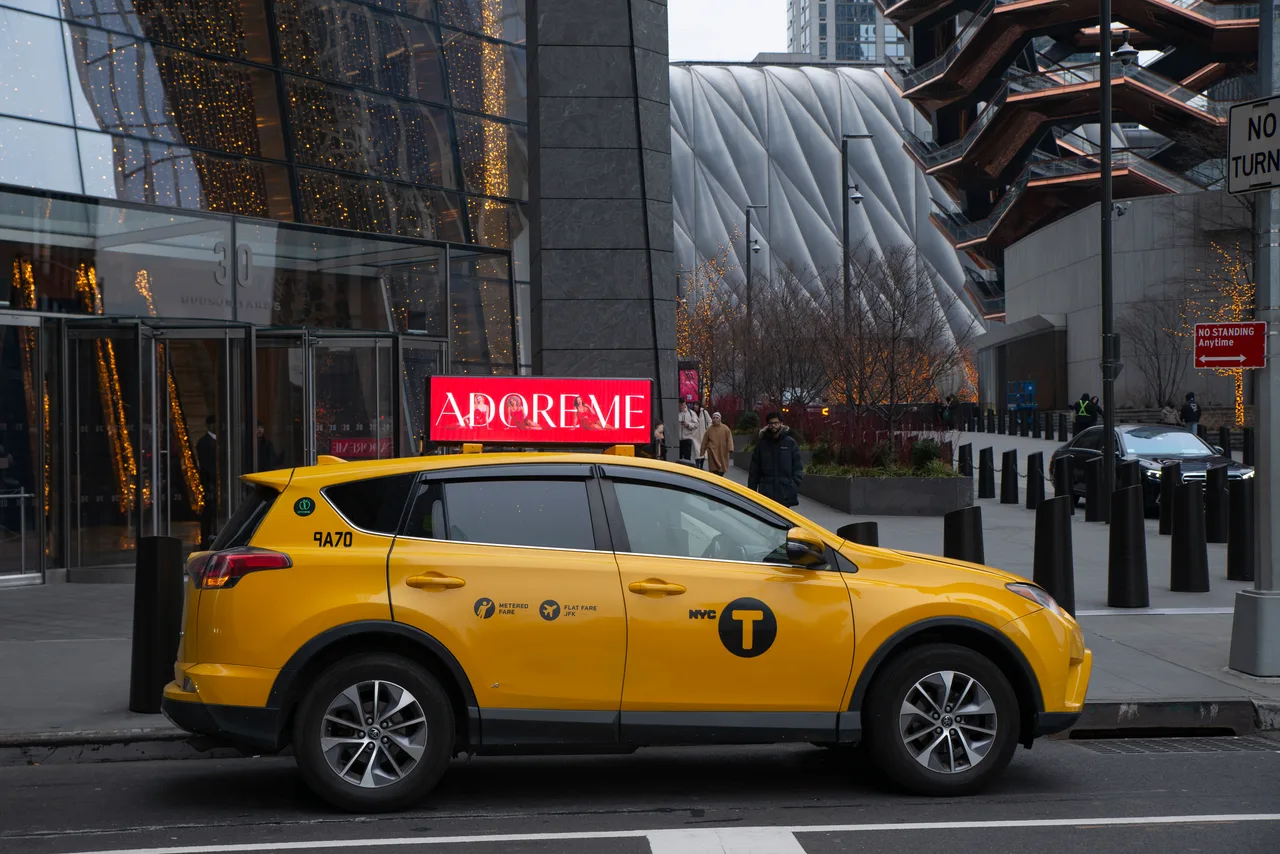
A dual-sided LED screen in place of the printed panel. The screen rotates several advertisers, takes new creative remotely and can change what it shows by daypart or GPS zone, so the same cab can carry one message near Times Square at curtain time and another in the Financial District at lunch. Three companies sell this format in New York under their own name, Firefly, SOMO and NY Taxi Ads, and all three are covered in the vendor section. The campaign archive has New York frames of both generations of top.
Taxi Wraps (Full and Partial)
Vinyl across the body panels. A full wrap covers doors, panels and trunk; a partial wrap takes the rear doors and trunk, which is the side following traffic actually sees. One New York specific: a body wrap is not a standard authorized format on a yellow medallion taxi. 35 RCNY 58-32(c) bars any exterior advertising on a taxicab unless the Commission authorizes it, so the wrap rates below describe FHV, rideshare and branded fleet vehicles in this market unless the seller can show a TLC authorization for medallion cabs. It is the largest surface in the category and it works with no power and no hardware, at the cost of commitment: what you print is what runs until the wrap comes off. It is the most expensive exterior format on every published rate card, and AdQuick notes that its wrap prices include production and installation, which is why a headline wrap rate is not comparable to a top rate that excludes them.
In-Car Screens (Taxi TV)
The screen on the back of the front seats. This is the only format aimed at the passenger rather than the street: a seated viewer, a screen at arm's length and a ride that lasts as long as Manhattan traffic decides. It is sold across the fleet or in blocks of a thousand screens rather than cab by cab, which changes the arithmetic completely; the published prices in the next section show how. Network-level impression totals for these screens are quoted often and published with a method rarely. Ask any vendor quoting one how it was counted.
Trunk Ads
A printed panel on the trunk lid, read by whoever is behind the cab at the light. It is one of the two cheapest exterior lines on every rate card, and in a city where the car behind spends a good part of its day behind a taxi, the dwell time is real. It is the most overlooked format in the category and a sensible way to add frequency to a top buy without adding much budget.
How Much Does New York Taxi Advertising Cost in 2026?
No network selling taxi advertising in New York publishes a New York rate for its own inventory. What exists is three published guides from resellers and marketplaces, and they disagree with one another, which is itself useful: the spread between them is the negotiating room.
The ranges below are market-level figures compiled from publicly published vendor and industry sources. They are not quotes, and they are not the rates of any single network. Always get a written quote before budgeting.
Blue Line Media's New York City page (retrieved September 2026) is the only one of the three that is New York specific. AdQuick (updated September 2026) and DASH TWO (updated August 2026) publish national ranges, and both say in words that New York sits at the top of them.
| Format | Blue Line Media, New York City page | AdQuick, national guide | DASH TWO, national guide |
|---|---|---|---|
| Static taxi top | $300–$500 | $100–$500 | $150–$300 |
| Digital taxi top (LED) | $400–$600 | $120–$800 | $200–$400 |
| Trunk or partial wrap | $200–$500 for trunk on the national card; no New York figure published | $150–$600 | About $150 for trunk |
| Full taxi wrap | $950–$1,950 on the national card; no New York figure published | $1,500–$3,000+, production and installation included | $500–$2,000+ |
| Taxi TV, in-car screens | $10,000–$30,000 per :15 spot across the entire fleet | About $30 per screen per month, minimum often 1,000+ screens | From $30 per screen, minimum 1,000 screens |
Exterior figures are per display per four-week cycle. Sources: Blue Line Media, New York City taxi advertising and national taxi rate card, retrieved September 2026; AdQuick taxi advertising guide, updated September 2026; DASH TWO taxi advertising guide, updated August 2026.
Read across a row before reading down a column. The New York column sits at or above the national ranges for tops, which matches what both national guides say in prose: Blue Line's card calls taxi advertising in New York the most expensive of all the cities it sells, and AdQuick names New York City and Los Angeles as the two most expensive taxi markets in the country.
Then there is the floor. Blue Line's New York page states a minimum purchase of $5,000 per ad format or higher, which may be spread over displays and periods. AdQuick lists a $5,000 per-market minimum on rideshare tops, a floor of often ten or more vehicles on full wraps, and blocks of a thousand screens or more on Taxi TV.
This is not a channel you test with $500. The entry point is a four-figure commitment to one format in one market, and a campaign dense enough to be noticed costs more than the entry point.
Two things move the number down. AdQuick puts volume discounts at 15 to 25 percent for buys of 50 or more vehicles, and says commitments of three months or longer unlock a similar discount, most of all on wraps, where production is amortised over the flight. Get the discount, the production charge and the minimum flight length in the same written quote, because each vendor bundles them differently and a headline rate that excludes production is not comparable to one that includes it.
Who Sells New York Taxi Ads?
Four New York taxi advertising companies sell under their own name, plus a reseller and a programmatic route. Each was verified on its own site in September 2026. None of the four publishes a rate, which is why the reseller and marketplace figures above are the only public reference points.
- Firefly sells digital tops with full-motion screens and built-in GPS, static tops in standard, 2D and 3D formats, and full (360), partial (270) and door (180) wraps, per its on-car advertising page; its in-car page lists TaxiTV, the passenger screen carrying NBC news and entertainment programming with geo-fencing and day-parting. Its digital top network covers 15 markets including New York, per fireflyon.com. It bought Curb's rooftop business, Curb Taxi Media, in June 2021 (GlobeNewswire, June 2021); the Taxi TV screens stayed with Curb, which still owns them, and Firefly now lists the format among its in-car products.
- SOMO sells digital taxi tops only, and only in New York: 4,000 screens on 2,000 yellow taxis, according to its own site. It belongs to the Mexico City media group GPO Vallas. Since October 2024 its screens have also been sold programmatically through Screenverse on Vistar, Place Exchange, Broadsign and Hivestack (Signage Info, October 2024).
- NY Taxi Ads sells digital tops, full wraps and in-cab screens, New York only, and describes itself on its site as the largest digital taxi top network in New York. It publishes no fleet number.
- Curb owns Taxi TV, the in-car screen network: 15,000-plus screens across 65-plus markets, headquartered in Long Island City, per its Taxi TV page. If the passenger is the audience, this is the call.
- Blue Line Media is a reseller, not a network. It matters for one reason: it is the only seller that publishes a New York rate card, which is why it anchors the table above.
Both SOMO and NY Taxi Ads call themselves the largest digital taxi top network in New York. Only one of them publishes a number. Treat the other claim accordingly until it comes with one.
Who Should Buy Taxi Advertising in New York?
Not everyone. A bakery in Queens has no use for a top in Midtown. Taxi advertising in NYC earns its cost when the brief reads "people who are physically in Manhattan during these weeks", and the categories that keep buying on that brief are the ones you see on the cabs:
- Entertainment: Broadway, film releases, streaming launches. Film, television and theatre titles recur throughout the New York frames in the campaign archive, alongside beauty and fashion.
- Food and drink: openings, seasonal menus, spirits.
- Fashion and beauty: Fashion Week and the holiday weeks, when the audience is already on the sidewalk.
- Apps and consumer tech: launches with a QR code or a short URL, where a digital top's remote creative swap lets you replace a message mid-flight.
- Finance and healthcare: awareness buys that want a physical, citywide presence alongside a digital plan.
How Do You Target and Measure a Digital Taxi Top Campaign?
The move from printed to digital tops changed what a buyer can ask for. A digital top carries GPS, so a campaign can be bought by zone and daypart: Midtown at lunch, the Lower East Side after 9 PM, the Javits perimeter for the three days of a trade show. Creative swaps happen remotely in hours, which is what makes test-and-replace possible on a medium that used to be printed and bolted on.
Programmatic buying is a real option for the SOMO screens listed above, through the same DSPs used for digital billboards, and it comes with the reporting those platforms already produce: proof of play, route logs, modelled impressions. The word to interrogate is "modelled". An impression count for a moving screen is a model of who was near the route, and two vendors modelling differently will hand you two numbers for the same cab. Ask which model, which traffic data, and whether the count is opportunity to see or a viewed impression. Then compare quotes on the same basis or not at all.
On outcomes, the study worth knowing is Firefly and Reveal's The Amplifying Effect Part II (May 2026), which found that adding moving out-of-home to a stationary buy grew unique reach by up to 2.8 times. That figure and the other lift numbers this site is prepared to quote are on the measured results page, each with its source and measurement partner, next to three widely quoted numbers that do not survive being checked.
How Do You Plan a New York Taxi Ad Campaign?
Start with the objective, not the format. Awareness in one neighbourhood, foot traffic to an opening, noise around a launch: the format follows from the goal, and a wrap and a top answer different briefs.
Size the buy against the fleet. One wrapped cab is a photograph, not a campaign. Frequency comes from share: against 8,878 yellow cabs on the road each day, work out what fraction your buy represents and whether someone who works in your target zone will meet it repeatedly in a week. Let that fraction, not a vendor's minimum, decide whether the campaign is dense enough to register.
Design for speed. A taxi top is read in the time it takes to cross a street. One idea, large type, high contrast, one call to action. AdQuick's own creative guidance caps exterior copy at seven words, which is about right.
Buy the time window, not just the zone. Midtown is dense at rush hour and lunch; Downtown and the Lower East Side fill in the evening. Digital tops let you pay for the hours that match your audience instead of all 24.
Plan the lead time. AdQuick's published timelines (September 2026): digital tops and Taxi TV can be live in as little as 48 hours once creative is approved, static tops need two to three weeks for printing and installation, and full wraps need three to four weeks. Wraps also carry production in their price, so a short flight amortises badly; the same guide says commitments of three months or more are where wrap rates come down.
Be realistic about the outer boroughs. Green Boro Taxis serve Brooklyn, Queens, the Bronx and Staten Island, but at 298 on the road per day (TLC, May 2026, via the fleet data page) they no longer work as a standalone buy. For an audience outside Manhattan, route rideshare tops or wraps into those boroughs instead; the complete guide to car top advertising covers how the rideshare side of the category is bought.
Frequently Asked Questions About New York Taxi Advertising
How much does it cost to advertise on a taxi?
On published 2026 rate cards, a static taxi top runs $100 to $500 per display per four-week cycle and a digital top $120 to $800 (AdQuick, national ranges, updated September 2026); Blue Line Media's New York City page lists $300 to $500 and $400 to $600 for the same two formats. Full wraps run $950 to $3,000-plus per cab per cycle across the three published guides, and in-car screens are sold across the fleet or in blocks of a thousand screens. Both national guides place New York at the top of their ranges, and minimum purchases start at $5,000. None of these figures is a quote.
What is taxi advertising in New York City?
Placing a paid message on or inside the city's licensed yellow taxis. Ads on taxis in New York come in five formats: a static or digital rooftop display, a full or partial vinyl wrap, a trunk panel, and a video spot on the in-car passenger screen, known as Taxi TV. It sits inside out-of-home advertising, with the screen formats inside digital out-of-home, and it is bought from the networks that own the displays, from resellers, or programmatically through a DSP.
Which companies sell New York taxi advertising?
Firefly (digital and static tops and wraps, with New York among its 15 markets), SOMO (digital tops, 4,000 screens on 2,000 taxis), NY Taxi Ads (digital tops, wraps and in-cab screens) and Curb (Taxi TV in-car screens) sell under their own names, each verified on its own site in September 2026. Blue Line Media resells the formats and is the only seller that publishes a New York rate card. SOMO's screens are also available programmatically through Screenverse.
What is the difference between static and digital taxi top ads?
A static top is a printed, backlit panel: one message, always on, no moving parts, and the cheaper of the two on every rate card. A digital top is an LED screen that rotates several advertisers, takes new creative remotely and can change by GPS zone or time of day. On Blue Line Media's New York City card the premium is $400 to $600 against $300 to $500 per display per four weeks; on AdQuick's national ranges it is $120 to $800 against $100 to $500.
How long does it take to launch a taxi ad campaign in New York?
AdQuick's published lead times (September 2026): digital tops and Taxi TV can be live in as little as 48 hours after creative approval, static tops need two to three weeks for printing and installation, and full wraps need three to four weeks for production, proofing and installation. Add whatever time your own creative approval takes, because the vendor's clock starts when the file is final.
Can small businesses afford taxi advertising in New York?
The constraint is the minimum, not the per-display rate. Trunk panels and static tops carry the lowest published prices, but Blue Line Media's New York City page states a minimum purchase of $5,000 per ad format or higher, and AdQuick lists comparable floors by format. A short flight in a limited zone is how vendors bring that entry point down, so ask for one rather than a citywide proposal.
How do I measure the success of a taxi ad campaign?
Through GPS-verified delivery (proof the cabs ran where you paid for), modelled impressions built from route logs and traffic or mobility data, brand lift surveys of exposed against control audiences, and direct response such as QR scans, promo codes and geofenced foot traffic. Ask every vendor which model produced its impression count and whether it is opportunity to see or a viewed impression. The measured results page on this site lists the lift figures that come with a named study.
Is taxi advertising effective compared to digital marketing?
They do different jobs. Taxi ads deliver geographic saturation, unskippable visibility and a physical presence that a feed ad cannot, and they cannot be blocked or scrolled past; digital delivers targeting and click-level attribution. A May 2026 study by Firefly and Reveal found that moving out-of-home added to a stationary buy grew unique reach by up to 2.8 times, which is the case for running taxi as the physical layer of a mixed plan rather than instead of one.
What types of brands work best with NYC taxi advertising?
Entertainment (Broadway, film, streaming), food and drink, fashion and beauty, apps and consumer tech, financial services and tourism are the categories that recur in the New York frames of the campaign archive, which is the closest thing to a public record of who buys the format. The common thread is a brief that reads "people physically in Manhattan during these weeks".
New York taxi advertising is a mature, well-photographed medium with an immature public price list. Buy it the way the sourcing in this guide suggests: from a named network or a reseller with a published card, at a fleet share you have calculated yourself, with the model behind every impression count in writing.
This article is written for informational purposes only. Pricing, statistics, and program details change; always verify directly with vendors, and get any rate in writing before you budget against it. Last reviewed: September 2026.
What to send us
- Market, or markets
- Dates, or flight length
- Budget band
- The metric you will judge it by
A person replies with a written range and the formats that fit. No rate card exists; every number on this site is a published third-party figure.
Send the briefWritten by
Melih Koray is a marketing and SEO practitioner who documents out-of-home media. He edits this site, sources every figure on it and checks each campaign caption against the photograph. He does not publish unsourced numbers, and he does not publish any operator's rate card.