Mobile Billboard Advertising: Routes, Creative and Cost
Mobile billboards sell by the eight-hour shift, $1,200 to $5,000 per truck on published rate cards. Route, creative and measurement decide the return.
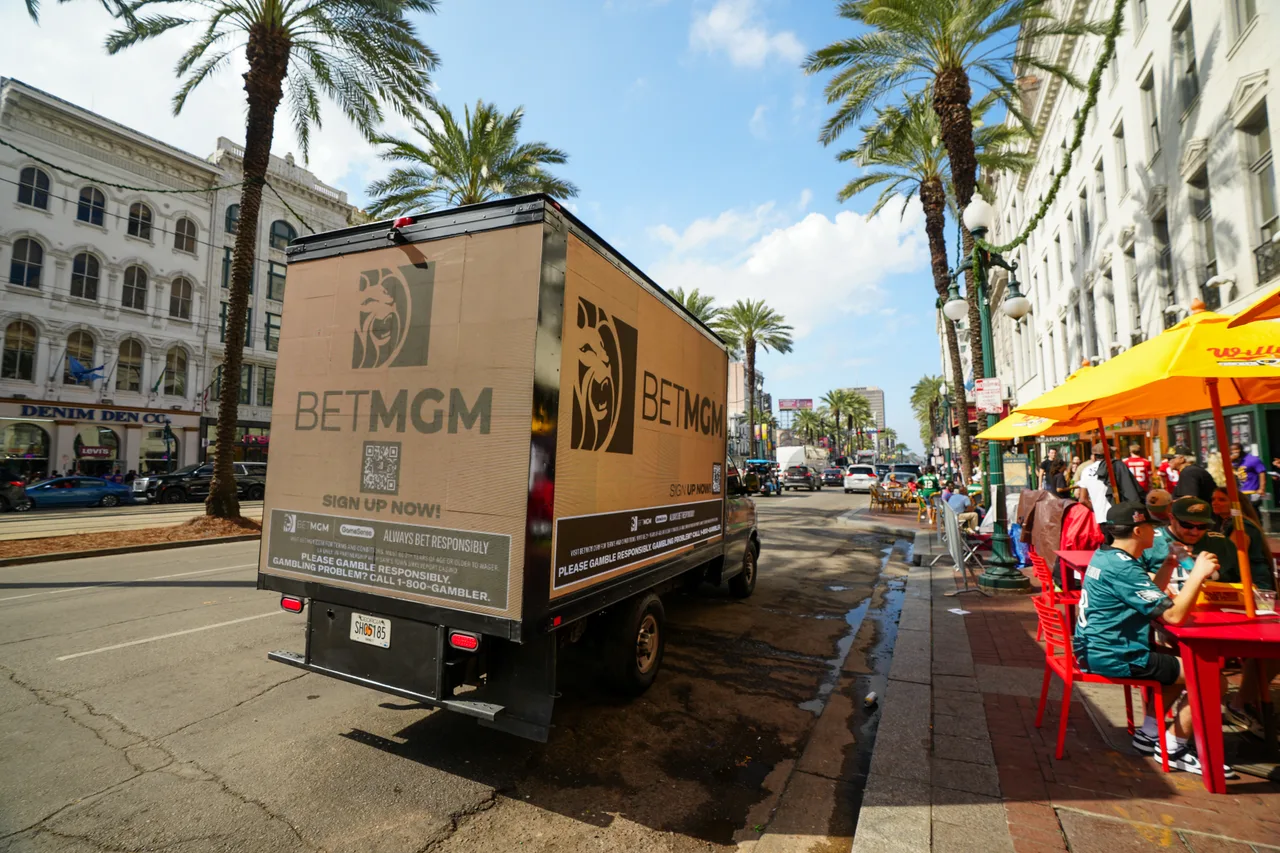
Mobile billboard advertising is a truck, trailer or bike that carries your message along a planned route instead of waiting at a fixed location. It is sold by the shift: Blue Line Media's published rate card (retrieved September 2026) lists $1,200 to $5,000 per truck per eight-hour day, static or LED, with a $5,000 minimum per market.
That range was read off Blue Line Media's mobile billboard page on 14 September 2026, and two other published cards, Billboard Express and AdQuick, are set beside it in the cost section. Renting the truck is the easy part. What follows is the part that decides whether the shift was worth it: where the truck goes, what it says, and how you will know.
What Makes a Mobile Billboard Different?
A fixed board on an interstate reaches the same commuters day after day. It cannot move to a different neighborhood for a weekend promotion, or turn up at an event on two days' notice. A mobile billboard does both in the same week. That is the whole proposition: geographic choice, bought by the shift.
The recall figure this category quotes most often has no current research behind it. It traces to an Arbitron study published in 2001 and is one of three widely quoted OOH numbers that do not survive being checked; discount any pitch built on it. What does hold up is the measured noticing rate. In the OAAA and Morning Consult Out of Home Advertising Study (1,461 US adults aged 18 to 64, fielded 10 to 15 November 2022, published March 2023), 36 percent said they had noticed a mobile billboard in the previous 30 days, and 49 percent had noticed advertising on a wrapped vehicle or other vehicle signage. Billboards scored 69 percent.
One claim in this category needs correcting. Mobile billboards do not sit outside signage law simply because they move. New York City's traffic rules (Rules of the City of New York, Title 34, Section 4-12(j)) prohibit operating, standing or parking a vehicle on a street for the purpose of commercial advertising, with exceptions for Taxi and Limousine Commission licensed vehicles, franchised buses, sanitation trucks and vehicles in normal delivery use. Los Angeles Municipal Code Section 87.53 limits advertising signs on motor vehicles to those permanently affixed within the vehicle's own dimensions. Blue Line's own FAQ says rules "vary by city and can affect parking, idling, sound, and where trucks can stage or circulate". Check the city before you plan the route.
What Types of Mobile Billboard Exist?
The format is wider than a truck with a poster on it, and wider still once you count tops, wraps, swarms and hologram trucks.
Truck-side billboards are the workhorse: a box truck carrying printed or LED panels on both sides and the rear. Blue Line's published specification puts the printed side panel at 258 by 115 inches and the LED unit at 10 by 6 feet per side. Available in most markets, quick to deploy, and the reference point for every price in this guide.
Trailer billboards are towed into place and parked: outside a mall for a weekend, at a fairground for a week, in a stadium lot on game day. The viewer gets extended exposure because the unit does not move. This is also the format most exposed to local parking rules.
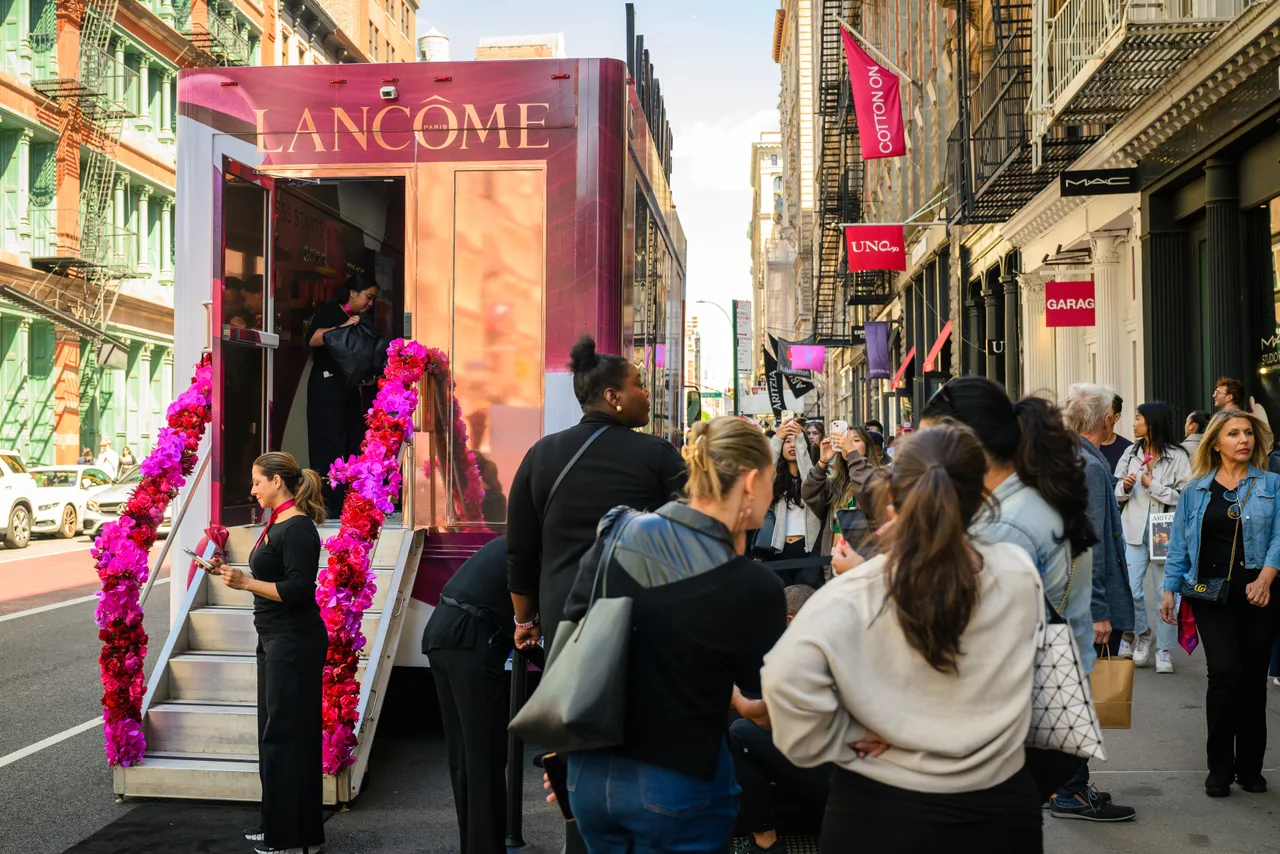
Glass trucks and experiential trucks are built-out vehicles that people walk up to and, sometimes, into. They are sold as activations rather than by the shift, and are priced per project.
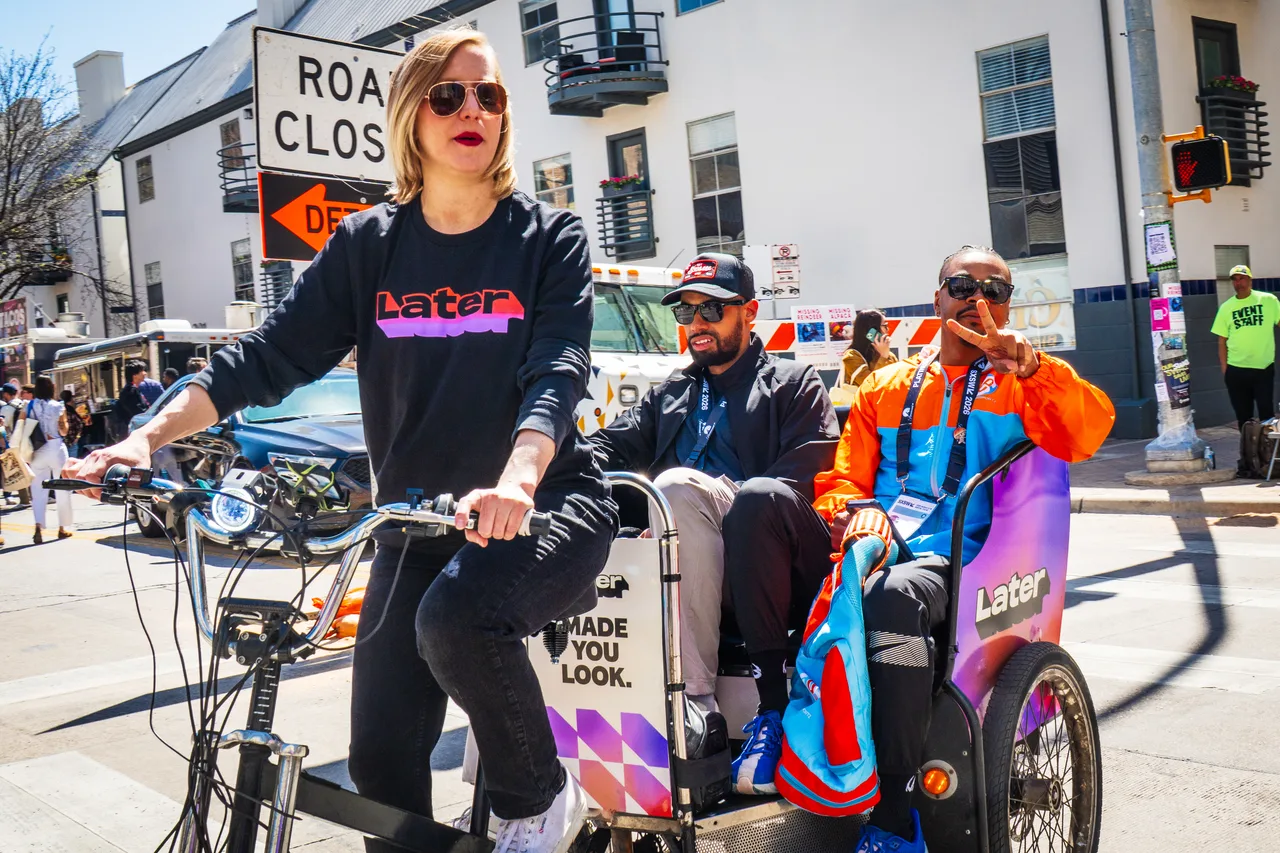
Pedicabs and bicycle billboards go where a truck cannot: bike lanes, festival grounds, pedestrian streets, campus paths. Delivery is measured in hours worked rather than miles driven, and operators quote impressions off their own route logs, so ask for the shift schedule and the counting method rather than a headline number. They are not on Blue Line's published card.
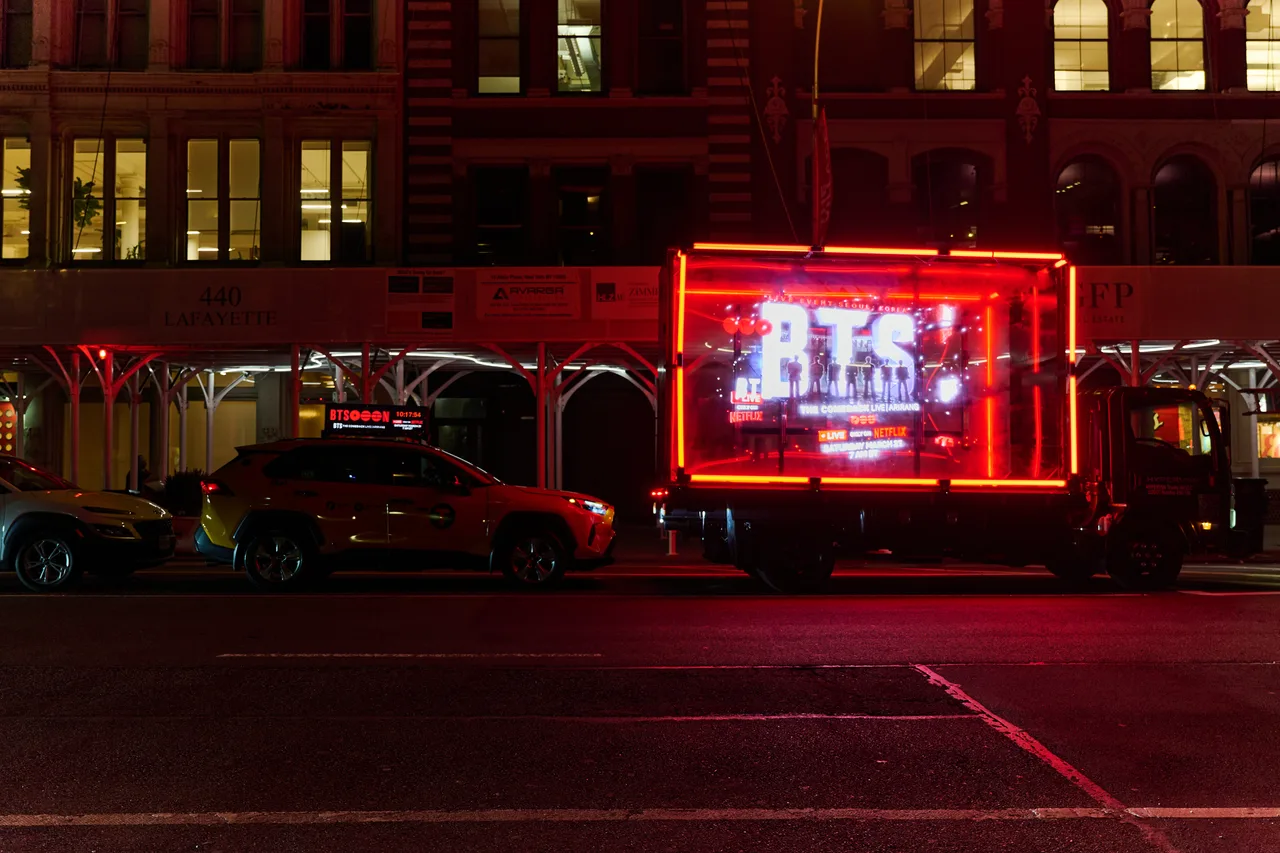
Hologram trucks are the newest variant: a truck-mounted display that shows a three-dimensional animated image. Novelty is the product; buy it for a launch night, not for reach.
Who sells them. Firefly lists LED digital trucks, glass trucks, 3D hologram trucks and branded food trucks on its experiential page, and coordinated swarms and branded pedicabs on its around-car page, all on the network that runs its digital car tops. Billboard Express and The Rolling Ads sell printed and LED trucks under their own name. Blue Line Media and AdQuick resell across operators. Roaming Hunger sources food trucks from a vendor pool rather than a fleet. Ask each which vehicles it owns and which it books in.
How Do You Plan a Mobile Billboard Route?
Route planning is the difference between a productive shift and an expensive drive. Three approaches account for most good campaigns.
Corridor saturation puts the truck on the handful of roads that carry the most vehicle and pedestrian traffic in a market. Local departments of transportation publish traffic counts; use those to pick the corridors, not intuition, and run the commute windows.
Event routing times the truck to a concert, a game, a trade show, a farmers' market. Thousands of people in a small area for a defined window means the same shift buys far more exposure than a general route through the same city. Blue Line's FAQ lists stadiums, arenas, convention centers and nightlife zones as the usual staging areas, and lists the local rules on staging as the usual constraint.
Competitive conquesting routes the truck past the places a rival's customers already go. A gym opening in a new neighborhood drives past every competing gym within a few miles; a dealership running a clearance parks a trailer across from its biggest rival, where the parking rules allow it. A wrapped fleet does the same job slowly and permanently; a truck does it for one shift, loudly. It works because the people you reach already have intent in your category.
What Should the Creative Say?
The viewing window is short, the distance varies, and the backdrop keeps changing. Lamar's outdoor design tips put typical exposure at four to five seconds and headline copy at seven words or less; both apply to a moving panel at least as much as to a fixed one.
Seven words. "Cold Beer. Live Music. Every Friday." works. A sentence about a newly renovated restaurant with craft cocktails and small plates does not. Nobody in traffic reads the second half.
Contrast. Dark text on a light ground or white text on a saturated color, in every lighting condition. No gradients, no thin faces, no busy photographic backgrounds behind type. Two or three colors is plenty.
Size to the template. Ask the operator for the exact panel template and set the headline to be read from across an intersection, then check it at distance on a printed proof before the panel is produced. The letter height that works depends on the panel and the road, so measure it rather than guess it.
One image. One product shot or one brand mark, not a collage. Blue Line's own creative advice for the format is "short headline, strong branding, high contrast, and a simple call-to-action", and for LED trucks, "clean motion and avoid small text".
How Do You Connect a Mobile Billboard to Digital?
QR codes convert an impression into an action only where someone can stop and scan. Put the code on the rear panel, where traffic held behind the truck has both the sightline and the standing time; a code on a moving side panel is decoration. Make it large and give it a landing page that loads in one tap.
Hashtags turn a photographable truck into shared content. Track the hashtag, and be honest about the count; the number of stories a truck earns is whatever it earns, not a figure to forecast.
Retargeting. Some operators partner with mobile data providers to build audiences from device IDs detected near the truck, then serve those devices a follow-up ad. Whether that pairing beats the truck alone by enough to justify the cost is a question for your own holdout test, not for a vendor benchmark. NFC tags on parked units are an experiment, not a plan; there is no reliable published benchmark for tap rates.
How Do You Measure a Mobile Billboard Campaign?
Measurement is where this format has historically been weakest, and where it has improved most.
Route verification. Blue Line's FAQ says reporting "often includes route documentation, time windows, and may include GPS logs, photos, or recap reports". Ask which of those you will get before you sign, and ask how the operator turns a GPS log into an impression estimate.
Device matching. Anonymized location data identifies devices near the truck during the shift, which can then be matched against store visits, site traffic or app installs to build an attribution model. Ask who supplies the data and what the match rate is.
Direct response. A unique phone number, vanity URL or promo code measures immediate action; a restaurant running the code "MOBILE20" knows exactly how many diners used it. It undercounts, because most people who act do not use the code, but what it counts is real.
For the standard to hold vendors to, the measured results page lists lift and reach figures from published moving-OOH studies, each with its measurement partner named.
How Much Does Mobile Billboard Advertising Cost?
The ranges below are market-level figures compiled from publicly published vendor and industry sources. They are not quotes, and they are not the rates of any single network. Always get a written quote before budgeting.
| Format | Published figure | Unit, as published | Publisher, retrieved 14 September 2026 |
|---|---|---|---|
| Mobile billboard truck, printed or LED | $1,200–$5,000 | per truck, per eight-hour period | Blue Line Media (reseller) |
| LED billboard truck | $175 per hour, eight-hour minimum | per truck; $7,500 per week at five eight-hour days | Billboard Express (operator) |
| Static mobile billboard | $800–$2,400 | per truck, per day | AdQuick (marketplace) |
| Digital LED truck | $1,250–$3,600 | per truck, per day | AdQuick (marketplace) |
| Delivery-truck panel | $4,200–$7,600 | per truck, per four-week period | Blue Line Media (reseller) |
Blue Line Media states a minimum purchase of $5,000 per market or higher. Trailer, pedicab and hologram formats are not on any of these cards; ask for their rates in writing. None of the three publishers states a method.
Run the first campaign for at least one full four-week cycle in one market, since that is the unit the published cards are sold in and the shortest period that produces data you can read. Set aside a real share of the budget for creative production and measurement before you spend the rest on media; a cheap panel running a bad file is the most expensive outcome available.
Then plan the calendar around what the format is good at: seasonal peaks, local events, a competitor's opening. A mobile billboard is at its best when it turns up at the right place at the right time and is gone when the moment has passed. Use that deliberately, and check the campaign archive to see how other brands have. The mobile billboard companies ranking scores twelve operators and resellers on who owns the trucks, and the billboard advertising cost page puts truck rates beside static and digital board rates for the same four-week cycle.
Frequently Asked Questions
How much does it cost to advertise on a mobile billboard?
On rate cards retrieved in September 2026, Blue Line Media lists mobile billboard trucks at $1,200 to $5,000 per truck per eight-hour period with a $5,000 minimum per market, Billboard Express lists LED trucks at $175 per hour with an eight-hour minimum, and AdQuick lists static trucks at $800 to $2,400 and LED trucks at $1,250 to $3,600 per day. Creative production is extra.
Are mobile billboards effective?
The measured noticing rate is 36 percent of US adults in the past 30 days, from the OAAA and Morning Consult study published in March 2023, against 69 percent for fixed billboards. The 97 percent recall figure often quoted for the format dates from a 2001 Arbitron study. Effectiveness for your campaign is a measurement question: use direct-response codes and, where budget allows, a third-party lift study.
What types of mobile billboards are there?
Truck-side billboards with printed or LED panels, towed trailer billboards that park in place, glass and experiential trucks sold as activations, pedicab and bicycle billboards for pedestrian areas, and hologram trucks. Only the truck and delivery-truck formats appear on published rate cards.
Are mobile billboards legal in every city?
No. New York City's traffic rules prohibit operating or parking a vehicle on a street for the purpose of commercial advertising, with limited exceptions. Los Angeles restricts vehicle advertising signs to those permanently affixed within the vehicle's dimensions. Parking, idling and sound rules vary elsewhere, so ask the operator which rule it relies on in each market before booking.
How long should a first mobile billboard campaign run?
One full four-week cycle in a single market. That matches the unit published rate cards are sold in and the $5,000 per market minimum Blue Line Media states, and it is the shortest flight that produces enough route and response data to judge whether to scale.
What should a mobile billboard say?
Seven words or fewer in the headline, high contrast, one image and one call to action, following Lamar's outdoor design guidance and Blue Line's own creative advice for the format. Typical exposure is four to five seconds. Put any QR code on the rear panel, where traffic behind the truck can actually scan it.
How is a mobile billboard campaign measured?
Route documentation and time windows from the operator, sometimes with GPS logs and photos; device matching against store visits or site traffic through a location-data provider; and direct-response codes or vanity URLs. Impression figures derived from GPS logs are estimates, so ask how the operator counts them.
What to send us
- Market, or markets
- Dates, or flight length
- Budget band
- The metric you will judge it by
A person replies with a written range and the formats that fit. No rate card exists; every number on this site is a published third-party figure.
Send the briefSources
- Blue Line Media, Mobile Billboard Truck Advertising, rate card, specifications and FAQ, retrieved 14 September 2026. bluelinemedia.com/mobile-billboard-advertising
- Billboard Express, Mobile Billboard Truck Advertising Rates, retrieved 14 September 2026. billboardexpress.com/cost-rates
- AdQuick, Mobile Billboard Advertising, benchmark day rates, retrieved 14 September 2026. adquick.com/mobile-billboard-advertising
- OAAA and Morning Consult, Out of Home Advertising Study, March 2023 (fielded 10 to 15 November 2022, n=1,461). oaaa.org
- Lamar Advertising, Design Tips. lamar.com/en/advertising-resources/design-tips
- Rules of the City of New York, Title 34, Section 4-12(j), commercial advertising on vehicles. codelibrary.amlegal.com
- Los Angeles Municipal Code, Section 87.53, Regulation of Mobile Billboard Advertising Displays. codelibrary.amlegal.com
Written by
Melih Koray is a marketing and SEO practitioner who documents out-of-home media. He edits this site, sources every figure on it and checks each campaign caption against the photograph. He does not publish unsourced numbers, and he does not publish any operator's rate card.