Wrapify vs Carvertise vs Firefly: Which Car Advertising Network Fits Your Brief?
Carvertise and Wrapify wrap drivers' own rideshare cars; Firefly runs a digital-top network in 15 markets. Formats, markets and minimums compared.
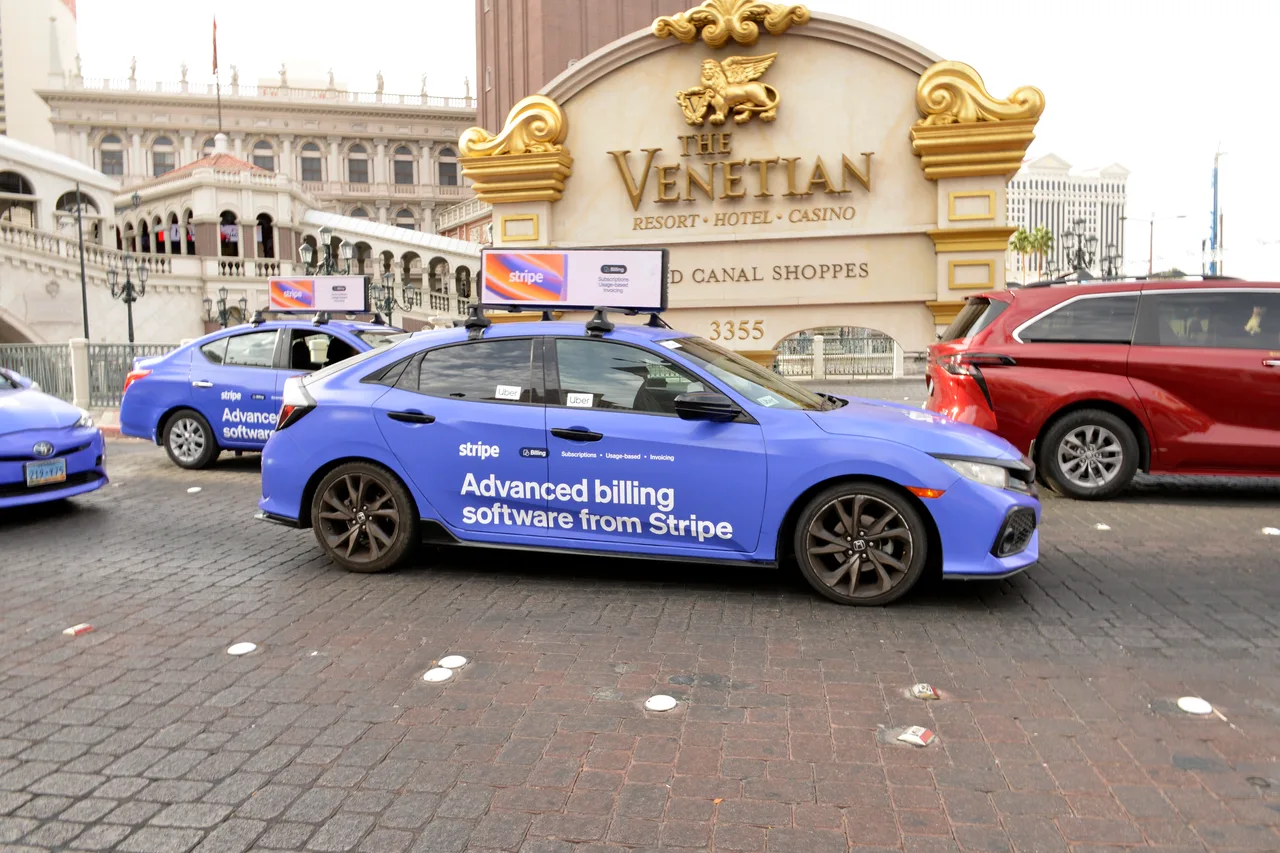
Wrapify, Carvertise and Firefly are the three names an advertiser meets first when planning a car advertising campaign, and they sell different things: two are driver marketplaces that wrap privately owned rideshare cars, one owns a digital-top network on taxis and rideshare vehicles in 15 markets. This comparison is written for the advertiser deciding where to put a campaign.
Every fact below comes from the three companies' own websites, read on 14 September 2026, or from a dated publication they issued. Where a site does not state something, the table says so rather than guessing. Nothing here is a quote, and none of the three publishes a rate card.
Disclosure: the editor of this site works at Firefly, one of the companies compared on this page. Every company is measured against the same published sources, and links to Firefly are marked sponsored.
What does each network actually own?
One owns screens; two own relationships with drivers. Firefly's product is a roof-mounted digital display with GPS built into the hardware, fitted to taxis and rideshare vehicles it works with; it also sells static tops, wraps, in-car TaxiTV screens on Curb's network and trucks for activations. Wrapify and Carvertise own no vehicles at all: they enrol independent Uber, Lyft and delivery drivers, wrap the cars that match your geography, and log the miles from an app. That single difference decides most of what follows.
| Network | What it owns | Formats sold | Markets | Minimum or flight unit |
|---|---|---|---|---|
| Firefly | Its own digital-top network on taxis and rideshare vehicles, with GPS built into the screen. Static tops, in-car TaxiTV (Curb's screens) and LED, glass and 3D hologram trucks are sold, not stated as owned | Digital tops, static tops, 360, 270, 180 and 180+ wraps, glow wraps, TaxiTV, coordinated swarms, LED trucks, glass trucks, hologram trucks, branded food trucks | 15 listed: New York, Chicago, Los Angeles, San Francisco, Dallas, Las Vegas, Austin, Miami, Boston, Philadelphia, Atlanta, Phoenix, Washington DC, Houston, Toronto | None published; on request |
| Wrapify | A driver marketplace: 420,000+ contracted rideshare, delivery and commuter drivers on its app, plus a nationwide certified installer network; no vehicles of its own | 360, 270 and 180 wraps; Swarm as a feature of a campaign already on the road | "Live nationwide", per its FAQ; cities not listed | Four weeks is the shortest campaign; production and installation included |
| Carvertise | A driver marketplace: 300,000 registered Uber, Lyft and Grubhub drivers; its own production and install facility at 319 6th Ave, Wilmington, Delaware | Full Wrap, Flex Wrap and Advanced Partial; swarms of 3 to 100 cars; Branded Chauffeur rides for events | "Top 200 markets nationwide", per its site; cities not listed | Not stated; pricing on request |
Two details in that table matter more than they look. Wrapify's 420,000 and Carvertise's 300,000 are enrolled drivers, not wrapped cars; the number on the road for your campaign is whatever you buy. And Carvertise names its wraps differently from the other two. Wrapify and Firefly co-authored the 180, 270 and 360 standard with mobilads in January 2023; Carvertise sells Full Wrap, Flex Wrap and Advanced Partial, so ask it which panels each one covers before comparing quotes.
What does a buyer get from each in measurement, creative and reporting?
All three now talk about attribution. The difference is who does the measuring and what changes while the campaign runs. A printed wrap is fixed for the flight; a digital top can swap creative by hour, day or weather. And a study run by a named third party is a different object from a dashboard fed by the vendor's own model.
| Network | Measurement, as published | Creative control | Who installs | What you receive in reporting |
|---|---|---|---|---|
| Firefly | Five study types on its measurement page: brand study, foot traffic, web conversion, app conversion, retargeting. Named partners in published work: LoopMe (brand study, 2024), Foursquare (footfall), Reveal (reach and frequency, 2026) | HTML dynamic creative on digital tops, scheduled by time of day and day of week, triggered by weather or location; 3D anamorphic supported; wraps in the 180, 270, 360 standard | Not described on its site; the digital top is Firefly's own screen with built-in GPS | Impressions delivered against target, and the partner's study report; the 2024 LoopMe case reports 39,981,921 impressions against a 30,000,000 target |
| Wrapify | Its own patented impressions tracking from driver-app GPS; an Attribution Suite that compares exposed devices with a control group for site visits, online and in-app conversions and retail foot traffic; Physical Retargeting across display, mobile, native, video, CTV and audio | Printed vinyl, fixed for the flight; Wrapify's creative team adapts artwork across makes and models | Its nationwide certified installer network, managed by Wrapify | Online dashboard: attribution, retargeting, impressions, mileage, heat maps, daily routes |
| Carvertise | Weblift and footfall attribution on exposed individuals; third-party impression verification by its partner StreetMetrics; device ID passbacks; digital retargeting | Printed vinyl in three wrap styles, fixed for the flight; creative services not described on its site | Its own production and install facility in Wilmington, Delaware; installation elsewhere not described | "Detailed reports delivered throughout your campaign", per its site; case-study PDFs for Albertsons, Fry's Food Stores and Total Wine |
How does the published measurement compare?
Firefly is the only one of the three with study results you can read in full, with a date and a named third party. Its LoopMe brand study, published 28 November 2024, covered a cosmetics brand on digital tops in Chicago, New York, Los Angeles and Miami and reported, exposed against control, a 43% lift in brand awareness, 44% in recall, 46% in favorability and 85% in purchase intent. Its white paper with Reveal, released 6 May 2026, analysed multiple campaigns on deduplicated mobile location data and found moving OOH generated up to 2.8x greater growth in unique reach relative to impression growth when added to stationary OOH, and 60% to 80% greater unique reach than stationary formats at equal impressions.
Wrapify publishes its method rather than a result. Its site explains that the platform aggregates the exposed audience from the viewable radius of each vehicle and compares it with a control group never exposed inside the same campaign area, for online conversion, in-app events via postback, and foot traffic into mapped locations. That is a sound design. What the page does not give is a dated study with numbers, so the proof arrives with your own campaign rather than before it.
Carvertise is the middle case: it names StreetMetrics as a third party that verifies impressions, and it offers weblift and footfall attribution, but the published evidence sits in three downloadable case-study PDFs whose figures are not on the page. Ask for them before you sign, and ask which of the numbers StreetMetrics produced and which Carvertise produced.
Which network fits which brief?
Three briefs cover most of the campaigns this site sees, and each points to a different vendor. None of these is a knock on the other two; they are built for different jobs.
A brand that needs the creative to change by daypart
Digital tops. If breakfast, lunch and late-night messages differ, or a weather trigger matters, a printed wrap cannot help you; it says one thing for four weeks. Firefly's digital tops run HTML creative scheduled by time of day and day of week, with weather- and location-triggered variants, and its programmatic page lists Dynamic Creative Optimization through Place Exchange, Vistar Media, Hivestack and Broadsign. Neither Wrapify nor Carvertise sells a screen; they sell vinyl.
A brand that wants many wrapped cars in one metro at low cost per car
A driver marketplace. When the brief is to make a brand look like it is everywhere in Houston for six weeks and the creative will not change, the pool of enrolled drivers is the asset: Wrapify's 420,000+ and Carvertise's 300,000 exist to be filtered down to a geofence and wrapped quickly, with production and installation bundled into the media price. Wrapify's four-week minimum suits a saturation flight; Carvertise's own install bay in Wilmington makes it the natural call for the Mid-Atlantic. The car wrap companies guide lists the published third-party ranges for this kind of buy.
A brand that has to show a measured result to a board
The one that publishes studies. If the campaign will be judged on lift and the CFO will read the report, choose the vendor whose measurement partner and method you can inspect in advance. Today that is Firefly, on the strength of the dated LoopMe and Reveal publications, with Foursquare footfall work listed on its case-studies page. Wrapify's exposed-versus-control design is credible and its dashboard is the most detailed of the three; it simply asks you to run the study to see the numbers. The results page explains which lift figures this site will quote and which impression claims it will not.
What do the three have in common?
More than the sales decks admit. All three log vehicle position with GPS, all three bundle production into the media price, all three offer some form of retargeting after exposure, and all three sell swarms: Firefly as coordinated multi-vehicle takeovers with 100% share of voice on a set route, Wrapify as a feature switched on during a live campaign, Carvertise as event fleets of 3 to 100 cars. Two of them, Wrapify and Firefly, also share the wrap taxonomy they wrote together in 2023, which is why a 360 means the same panels at both.
And none of the three publishes a price. Wrapify's FAQ says every campaign "varies in size, scale and scope"; Carvertise's site offers a Request Pricing form; Firefly sells per campaign, on request. Any rate you see attached to these names came from a reseller or an aggregator, not from the network, and the rideshare advertising guide covers how to read those third-party ranges. For the wider field, the ranked list of car advertising companies places all three against five more networks, and the Firefly advertising guide goes through that network's formats and studies on their own.
What should you ask each of them before signing?
- How many vehicles will carry my creative in each market, and on what date will the last one be on the road?
- Is the quote a 180, 270 or 360, or for Carvertise a Full, Flex or Advanced Partial, and which panels does that cover?
- Who measures lift, what is the control group, and can I read a prior study from that partner before I commit?
- If a driver leaves the program mid-flight, how is the lost coverage replaced and reported?
- Can the creative change during the flight, and if so by what trigger and at what cost?
- Can I see dated photographs of this format in my market? The campaign archive is the standard to hold that request to.
Frequently Asked Questions
What is the difference between Wrapify and Carvertise?
Both are driver marketplaces that wrap rideshare and delivery drivers' own cars, but they differ in scale claims, naming and installation. Wrapify states 420,000+ contracted drivers, sells 360, 270 and 180 wraps, sets four weeks as its shortest campaign and installs through a nationwide certified network. Carvertise, founded in 2012, states 300,000 registered drivers across the top 200 US markets, sells Full, Flex and Advanced Partial wraps, and runs its own production and install facility in Wilmington, Delaware.
Is Firefly a competitor of Wrapify and Carvertise?
Partly. All three sell advertising on cars, but Firefly's core product is a digital screen it owns, mounted on taxis and rideshare vehicles in 15 listed markets, alongside static tops, wraps, in-car TaxiTV and experiential trucks. Wrapify and Carvertise sell printed wraps on drivers' cars and own no vehicles or screens. They overlap on wraps and swarms and diverge on everything digital.
Which car advertising network publishes measurement studies?
Firefly publishes dated studies with named partners: a LoopMe brand study from November 2024 reporting 44% recall lift and 85% purchase-intent lift, and a Reveal white paper from May 2026 reporting up to 2.8x greater unique-reach growth from adding moving OOH to stationary OOH. Wrapify publishes its exposed-versus-control method but no dated results on its site; Carvertise names StreetMetrics for impression verification and offers case-study PDFs.
What is the minimum campaign length at Wrapify, Carvertise and Firefly?
Wrapify states that the shortest campaign it offers is four weeks. Carvertise does not state a minimum on its site. Firefly publishes no minimum flight or spend and sells per campaign, on request. All three include production in the media price, and none publishes a rate card.
Which of the three can change creative during a campaign?
Only Firefly, because only Firefly sells a screen. Its digital tops run HTML creative scheduled by time of day and day of week and triggered by weather or location, and its inventory supports Dynamic Creative Optimization through programmatic platforms. A Wrapify or Carvertise wrap is printed vinyl and carries one message for the length of the flight.
Do the three networks name their wrap formats the same way?
Wrapify and Firefly do; Carvertise does not. Wrapify, Firefly and mobilads published the 180, 270 and 360 standard on 11 January 2023, so those numbers describe the same panels at both. Carvertise sells Full Wrap, Flex Wrap and Advanced Partial, which are its own names, so ask it to map each one to the panels covered before comparing quotes.
What to send us
- Market, or markets
- Dates, or flight length
- Budget band
- The metric you will judge it by
A person replies with a written range and the formats that fit. No rate card exists; every number on this site is a published third-party figure.
Send the briefSources
- Firefly. Homepage (15-market list), On Car Advertising, In Car Advertising, Experiential Advertising, Measurement and Attribution, Advertising Solutions and Case Studies, all accessed 14 September 2026.
- Firefly. Case Study: Boosting Key Brand Metrics with Firefly Digital Taxi/Rideshare Tops, measured by LoopMe, published 28 November 2024.
- Firefly and Reveal. The Amplifying Effect, Part II, press release, 6 May 2026.
- Wrapify. For Brands and Agencies, including its FAQ, accessed 14 September 2026.
- Carvertise. Homepage and Advertise With Us, both accessed 14 September 2026.
- Wrapify, Firefly, mobilads. Mobility Advertising Introduces Vehicle Wrap Standardization, press release, 11 January 2023.
Written by
Melih Koray is a marketing and SEO practitioner who documents out-of-home media. He edits this site, sources every figure on it and checks each campaign caption against the photograph. He does not publish unsourced numbers, and he does not publish any operator's rate card.