Car Wrap Advertising Companies: Who Owns the Vehicles?
Five kinds of car wrap advertising companies sell wrapped vehicles to brands. What each owns, what you get, how it is priced, and how to tell them apart.
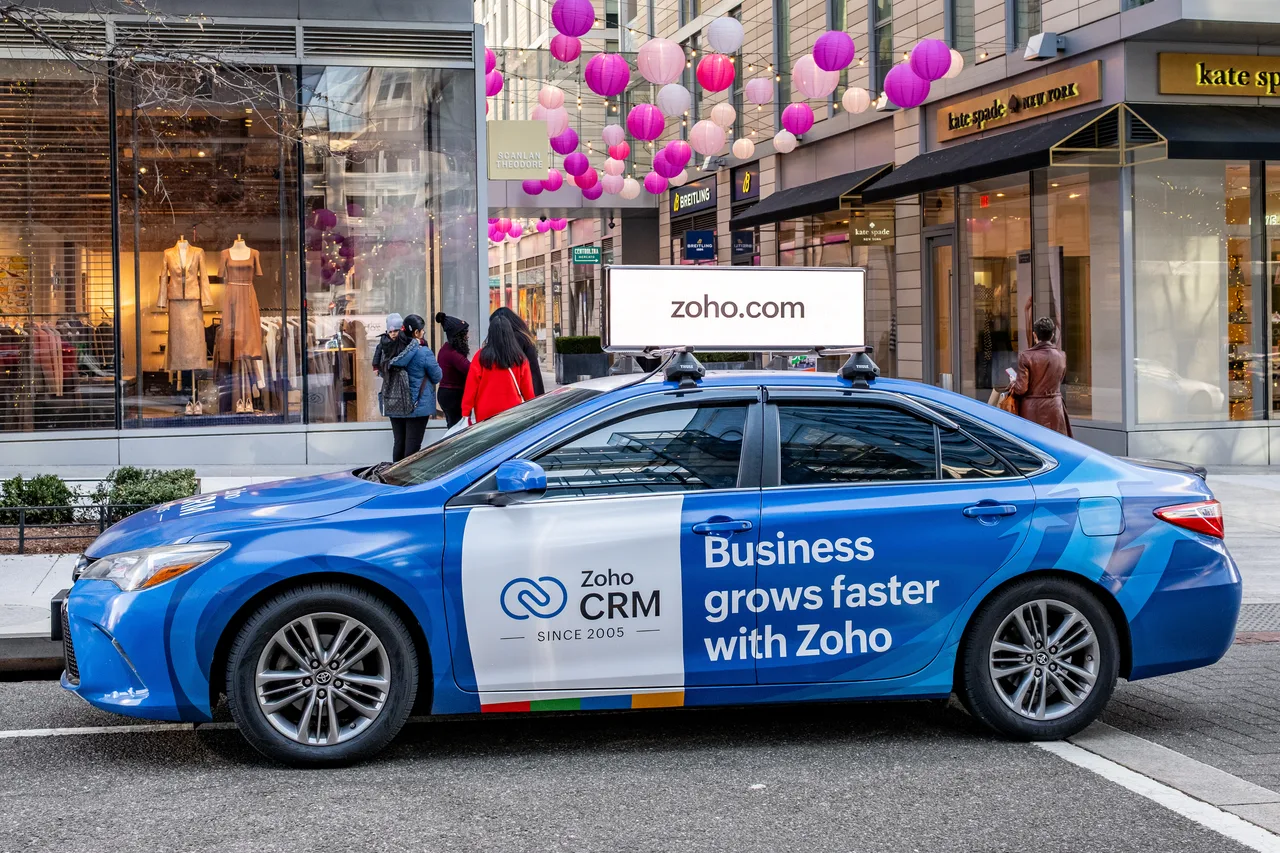
Car wrap advertising companies fall into five roles: media owners that control fleets, marketplaces that recruit rideshare and delivery drivers, aggregators that resell both, print-and-install shops, and fleet-graphics specialists for your own vehicles. The first three sell media by the vehicle per four-week period; the last two sell a one-off production job.
This page is for a brand or agency that wants wrapped vehicles carrying its creative and needs to know which company actually controls the cars, the installers and the measurement before it signs. One question sorts every vendor: who owns the vehicles, and who is renting them to you?
Disclosure: the editor of this site works at Firefly, one of the companies compared on this page. Every company is measured against the same published sources, and links to Firefly are marked sponsored.
What do car wrap advertising companies actually sell?
Three of the five types sell media: you pay per vehicle per four-week period, production and installation are bundled, and you never touch the car. Two sell a production job on vehicles you supply, with no recurring media rent. The table maps each type to what it controls, what you receive and how it prices.
| Company type | What they control | What you get | How it is priced | Best fit |
|---|---|---|---|---|
| Media owner with fleet inventory | Long-term rights to taxi, rideshare or transit vehicles; GPS hardware on the vehicle | Wrap, optional digital top, route data, named measurement partner | Per vehicle per four weeks, production bundled | Multi-market campaigns that need proof of delivery |
| Rideshare and delivery driver marketplace | A recruited driver pool, a driver app, a certified installer network | Wrapped cars inside your geofence, app-logged mileage, retargeting and attribution | Per vehicle per four weeks, production and install included | Fast citywide saturation or event swarms |
| Marketplace or aggregator | Nothing on the street; a platform and vendor contracts | One quote across several networks, one dashboard | Published planning ranges plus market minimums | Buyers mixing wraps with billboards or transit |
| Wrap fabricator and installer | Printers, laminators, an install bay, a film-maker certification | Printed cast vinyl applied to vehicles you bring in | One-off quote per vehicle; no media fee | A company branding its own vans and trucks |
| Fleet-graphics program manager | National installer network, templates per vehicle model, an asset portal | Consistent graphics across hundreds of vehicles, installed at your depot | Project pricing per unit, plus removal | Fleets of 50 or more vehicles across regions |
Which companies control their own wrapped fleets?
Media owners sell space on vehicles that were going on the road anyway, the way a billboard company sells a face. On taxis and rideshare cars the operator model adds a roof. Firefly sells full (360), partial (270) and door (180) wraps on vehicles with or without a digital top, runs a digital top network in 15 US and Canadian markets, per its site in September 2026, and its measurement page lists brand-lift, foot-traffic and web-conversion studies, with case studies measured by LoopMe and Foursquare. The trait that defines this type is not the wrap. It is that the vehicle carries GPS hardware the operator owns, so route logs come from the media owner rather than from a driver's phone.
In transit the same model means the contract holders for bus exteriors: Outfront Media sells bus advertising across a national footprint that includes New York City, and Lamar lists bus formats from side panels to fully wrapped buses. A wrapped bus is bought through those two, not through a car network.
Which companies wrap rideshare and delivery drivers' cars?
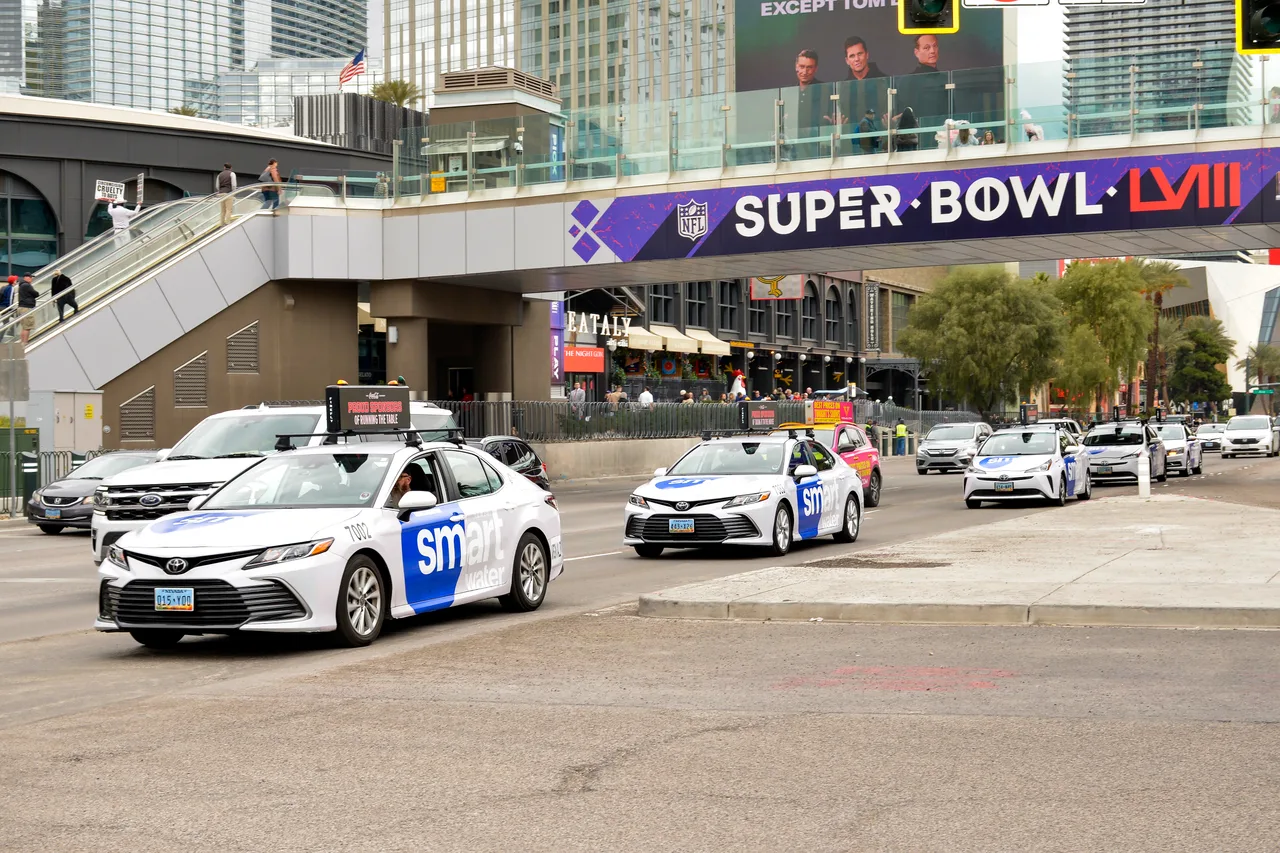
Driver marketplaces do not own a single car. They enrol independent Uber, Lyft, DoorDash and Grubhub drivers in an app, wrap the ones that match your geography, and report mileage from the app. For a buyer the product is scale and speed: thousands of enrolled vehicles per metro, a campaign on the road in days, and production and installation bundled into the media price.
Wrapify states 420,000+ drivers on its app and a nationwide certified installer network, sells the 360, 270 and 180 formats, sets four weeks as its shortest campaign, and ties exposure to site visits, online and in-app conversions and retail foot traffic, with retargeting across display, CTV and streaming audio. Carvertise, founded in 2012, cites 300,000 registered drivers across the top 200 US markets, sells event swarms around venues, and runs its own production and install facility in Wilmington, Delaware. Good Traffic is the company formerly known as mobilads; its rebrand release of 7 October 2025 cites 400+ campaigns and 75+ Fortune 1000 clients since 2017, and its packages are explicit about scale: 25 to 300 rideshare cars for four weeks to twelve months, or 5 to 10 cars for one to seven days.
Nickelytics belongs on the list with a caveat. Kiwibot bought the Tampa company for $25 million in September 2024, as reported by the St Pete Catalyst, and the Nickelytics domain now resolves to Robot.com, where wrapped vehicles sit beside sidewalk delivery robots and programmatic screens. If a proposal still carries the old name, ask which entity is contracting.
Who sells wraps without owning any of them?
Aggregators hold no vehicles and no installers; they hold vendor relationships and a planning tool. AdQuick says it aggregates taxi and rideshare inventory from more than 1,700 media owners in 50+ US cities and folds the Carvertise and Nickelytics driver networks into larger plans. Blue Line Media resells taxi and rideshare formats in over 50 US cities and, unusually, publishes a rate card with a stated minimum of $5,000 per market. The value is one contract across several networks. The cost is that the impression figures on the proposal are the underlying vendor's figures, restated.
Who prints and installs the wrap if you bring your own vehicles?
If the vehicles are yours, you are buying a print-and-install job, and the vendor pool changes completely. SpeedPro is a franchise of large-format studios offering spot graphics, partial wraps, full wraps and fleet wraps with in-house installation. FASTSIGNS lists vehicle graphics, partial wraps and fleet wraps across over 750 locations, noting that services vary by location. Both are local shops under a national brand: right for three vans, wrong for three hundred.
The film manufacturers run the credentials that separate a wrap shop from a sign shop. 3M's installer locator distinguishes a 3M Preferred Installer, an individual who passed a hands-on and written test at 3M in Saint Paul, Minnesota or an authorised facility, from a 3M Certified Graphics Installation Company, a business audited on site, trading for three or more years, with tested installers on payroll; that program dates from 1999. Avery Dennison's directory listed 559 Certified Wrap Installers in North America when checked in September 2026. Ask any shop which credential it holds, in whose name, and for which specialty. The commercial vehicle wraps guide has the published shop price lists and film ratings for that job.
Who runs fleet-graphics programs for a company's own vehicles?
Fleet-graphics specialists exist because a 200-vehicle rollout is a logistics problem, not a printing problem. Turbo Images describes 150+ installers who apply trailer, coach and transit wraps at the customer's facility or on the road, 3M Certified Platinum Supplier status, an online portal for managing fleet graphics, and removal as a listed service. Vomela prints, builds and installs fleet wraps through its transportation division and sells a changeable fleet banner system for brands that swap messages by season. 3M's Fleet Graphics Preferred Installer designation covers buses, vans, trailers, trucks and taxis, which is the credential to ask a program manager's subcontractors about. This is the right type for a logistics, home-services or franchise brand whose vehicles already log the miles; the vehicle wrap ROI guide covers how that one-off cost amortises, and the fleet graphics guide covers how those multi-vehicle programs are run, priced and removed.
How much does a car wrap advertising campaign cost?
Two aggregators publish ranges for wrapped media and they do not agree, which is itself useful. Both quote per vehicle per four-week period with production and installation bundled, and both attach minimums that matter more than the headline number.
The ranges below are market-level figures compiled from publicly published vendor and industry sources. They are not quotes, and they are not the rates of any single network. Always get a written quote before budgeting.
| Format | Published range | Unit and minimum | Publisher, date checked |
|---|---|---|---|
| Taxi full wrap | $950 to $1,950 | Per display per 4 weeks; $5,000 minimum per market | Blue Line Media, September 2026 |
| Rideshare full wrap | $800 to $1,500 | Per display per 4 weeks; $5,000 minimum per market | Blue Line Media, September 2026 |
| Taxi full wrap | $1,500 to $3,000+ | Per vehicle per 4 weeks; minimum often 10+ vehicles | AdQuick, September 2026 |
| Taxi partial wrap or trunk | $150 to $600 | Per vehicle per 4 weeks | AdQuick, September 2026 |
| Car full wrap (fleet, rideshare, personal) | $1,500 to $3,500 | Per vehicle; period not stated on the page | AdQuick, September 2026 |
| Car partial wrap | $800 to $1,800 | Per vehicle; period not stated on the page | AdQuick, September 2026 |
Read the units before the numbers. Blue Line's taxi full wrap tops out at $1,950 per four weeks; AdQuick's starts at $1,500 for the same period and is open-ended above $3,000. AdQuick's car wrap page quotes per vehicle without naming a period, so it cannot be compared line for line with the taxi table on the same site. No third party publishes a national price for wrapping a fleet you already own; that is a production quote per vehicle and shop, which is why this site does not invent one.
Why do the 180, 270 and 360 formats matter when comparing quotes?
Until 2023 every vendor named its wraps differently, so one seller's "partial" was another's "half" or "door wrap." On 11 January 2023 Wrapify, Firefly and mobilads published a joint standard: a 180 covers the front and rear doors on both sides; a 270 adds the rear quarter panels and the rear bumper, trunk or hatch; a 360 covers every body panel except the roof. Two add-ons came with it, a rear-window panel (RW) and a long extension to the front fenders (L), so "360 + RW" means the same thing at three different sellers, and Geopath, the industry's measurement body, said in the same release that it would fold the names into its audited formats. Ask for quotes in these terms and the surface you are buying stops being a matter of interpretation; the format comparison shows where each coverage level sits against tops and trucks.
How are impressions on a wrapped vehicle counted?
Nobody counts them; every figure is a model, and the models diverge. Blue Line publishes 12,000 to 15,000 estimated daily impressions per taxi full wrap with no method stated. AdQuick's car wrap page publishes 30,000 to 70,000 per vehicle per day, described as GPS routes modelled against traffic density data. Two published figures for the same product differ by a factor of two to five, so the number on a proposal is an output of the vendor's model, not a measurement of your campaign.
What can be measured is behaviour after exposure. The OAAA and Morning Consult study of March 2023, a poll of 1,461 US adults, found that 49% had noticed advertising on a wrapped vehicle or other vehicle signage in the previous 30 days. Beyond that, the standard for any vendor type is the same: a named third-party measurement partner, an exposed group and a control group, and a published method. The results page collects the lift figures this site will quote and explains the daily-impression claims it will not.
What regulations apply to wrapped commercial vehicles?
Two layers, and the vendor type decides which one is your problem. For commercial motor vehicles in interstate commerce, 49 CFR 390.21 requires the carrier's legal or trade name and USDOT number on both sides of the vehicle, in letters that contrast sharply with the background and are legible in daylight from 50 feet while stationary; if any other name appears on the vehicle, the operating carrier's name and number must still follow it. A brand wrap on a third-party truck therefore has to leave room for the carrier's marking, and a fleet-graphics vendor should raise this before artwork is approved.
Cities regulate the other end: vehicles that exist to advertise. New York City's traffic rules, at 34 RCNY 4-12(j)(1), state that no person shall operate, stand or park a vehicle on any street "for the purpose of commercial advertising." Notices for the business a vehicle is actually used for are allowed while it is in normal use, provided nothing is reflective, illuminated, animated or mounted on the roof; vehicles licensed by the Taxi and Limousine Commission may carry advertising under the Commission's rules, and franchised buses are exempt. That is the legal reason the ownership question matters: a taxi, a licensed for-hire car and a company van in service are covered, while a car whose only job is to carry your ad is not. Ask every vendor which licence regime its vehicles operate under in each city on the plan.
How do you tell wrap advertising companies apart before signing?
Six questions expose the type, whatever the sales deck says.
- Who holds title or the operating licence for the vehicles, and what happens to my creative if a driver leaves the program mid-flight?
- Is the quote a 180, 270 or 360, with which add-ons, and are production and installation inside the number?
- Where does the route data come from: hardware on the vehicle, a driver's phone, or a schedule?
- Which named partner measures lift, against what control group, and will you send the study method in writing?
- What is the minimum buy per market and the shortest flight, and who pays for removal?
- Can I see dated photographs of this exact format running in my market? The campaign archive is the standard to hold that request to.
Frequently Asked Questions
What is the difference between a car wrap advertising company and a wrap shop?
A car wrap advertising company sells media: it supplies the vehicles, wraps them, and charges per vehicle per four-week period with production included. A wrap shop sells a production job on vehicles you already own, priced once per vehicle with no recurring fee. One is an advertising buy; the other is a branding expense.
Which car wrap advertising companies own their own vehicles?
Very few own vehicles outright. Media owners such as Outfront Media and Lamar hold transit contracts for bus exteriors, and taxi and rideshare operators such as Firefly fit their own GPS-enabled digital tops to the taxis and rideshare cars they work with, without stating that they own the cars. Driver marketplaces such as Wrapify, Carvertise and Good Traffic enrol independent drivers, so the cars belong to the drivers.
How much does it cost to run a wrapped-car campaign?
Published third-party ranges for a full wrap on a taxi or rideshare car run from $800 to $3,000 or more per vehicle per four weeks with production and installation bundled, according to rate pages at Blue Line Media and AdQuick checked in September 2026. Minimums apply, such as $5,000 per market or ten or more vehicles.
What does 360 wrap mean on a proposal?
A 360 covers every body panel except the roof. It is one of three formats standardised by Wrapify, Firefly and mobilads in January 2023, alongside the 180 (front and rear doors on both sides) and the 270 (doors plus rear quarter panels and the rear bumper, trunk or hatch). Add-ons are RW for a rear-window panel and L for a fender extension.
Are wrapped advertising vehicles legal in New York City?
It depends on the vehicle. NYC traffic rule 34 RCNY 4-12(j)(1) prohibits operating, standing or parking a vehicle on a street for the purpose of commercial advertising, but allows business notices on vehicles in normal use, advertising on Taxi and Limousine Commission licensed vehicles under TLC rules, and advertising on franchised buses. A dedicated advertising car falls outside those exemptions.
How do I check whether a wrap installer is certified?
Use the film manufacturers' own locators. 3M's installer locator separates individual 3M Preferred Installers from 3M Certified Graphics Installation Companies, which are audited businesses with three or more years of trading. Avery Dennison's directory lists its Certified Wrap Installers by region. Ask for the certificate holder's name and specialty, since the credential belongs to a person or a company, not a brand.
What to send us
- Market, or markets
- Dates, or flight length
- Budget band
- The metric you will judge it by
A person replies with a written range and the formats that fit. No rate card exists; every number on this site is a published third-party figure.
Send the briefSources
- Outfront Media. Transit Advertising; Lamar. Transit, both accessed 14 September 2026.
- Firefly. Homepage and Measurement and Attribution, accessed 14 September 2026.
- Wrapify. For Brands and Agencies, accessed 14 September 2026.
- Carvertise. Homepage, accessed 14 September 2026.
- Good Traffic. mobilads Rebrands as Good Traffic, PR Newswire, 7 October 2025; goodtraffic.com, accessed 14 September 2026.
- St Pete Catalyst. Robotics firm acquires Nickelytics for $25 million, 23 September 2024; Robot.com ads, accessed 14 September 2026.
- AdQuick. Taxi Advertising and Car Wrap Advertising, both marked updated September 2026, accessed 14 September 2026.
- Blue Line Media. Taxi and Rideshare Advertising rates, accessed 14 September 2026.
- SpeedPro. Vehicle Wraps; FASTSIGNS. Products, both accessed 14 September 2026.
- 3M. Find an Installer: 3M Installation Programs; Avery Dennison Graphics Solutions. Find Certified Installers, both accessed 14 September 2026.
- Turbo Images. Fleet graphics company for vehicle wraps; Vomela. Homepage, both accessed 14 September 2026.
- Wrapify, Firefly, mobilads. Mobility Advertising Introduces Vehicle Wrap Standardization, press release, 11 January 2023.
- OAAA and Morning Consult. Out of Home Advertising Study, March 2023.
- Federal Motor Carrier Safety Administration. 49 CFR 390.21, Marking of self-propelled CMVs and intermodal equipment, eCFR, accessed 14 September 2026.
- City of New York. 34 RCNY 4-12(j), Commercial advertising vehicles, Rules of the City of New York, accessed 14 September 2026.
Written by
Melih Koray is a marketing and SEO practitioner who documents out-of-home media. He edits this site, sources every figure on it and checks each campaign caption against the photograph. He does not publish unsourced numbers, and he does not publish any operator's rate card.