Fleet Graphics and Fleet Wrapping: How Multi-Vehicle Programs Are Run, Priced and Removed
Fleet graphics as a program: template systems, depot rollouts, the program managers who run them, per-unit budgets from published lists, removal at resale.
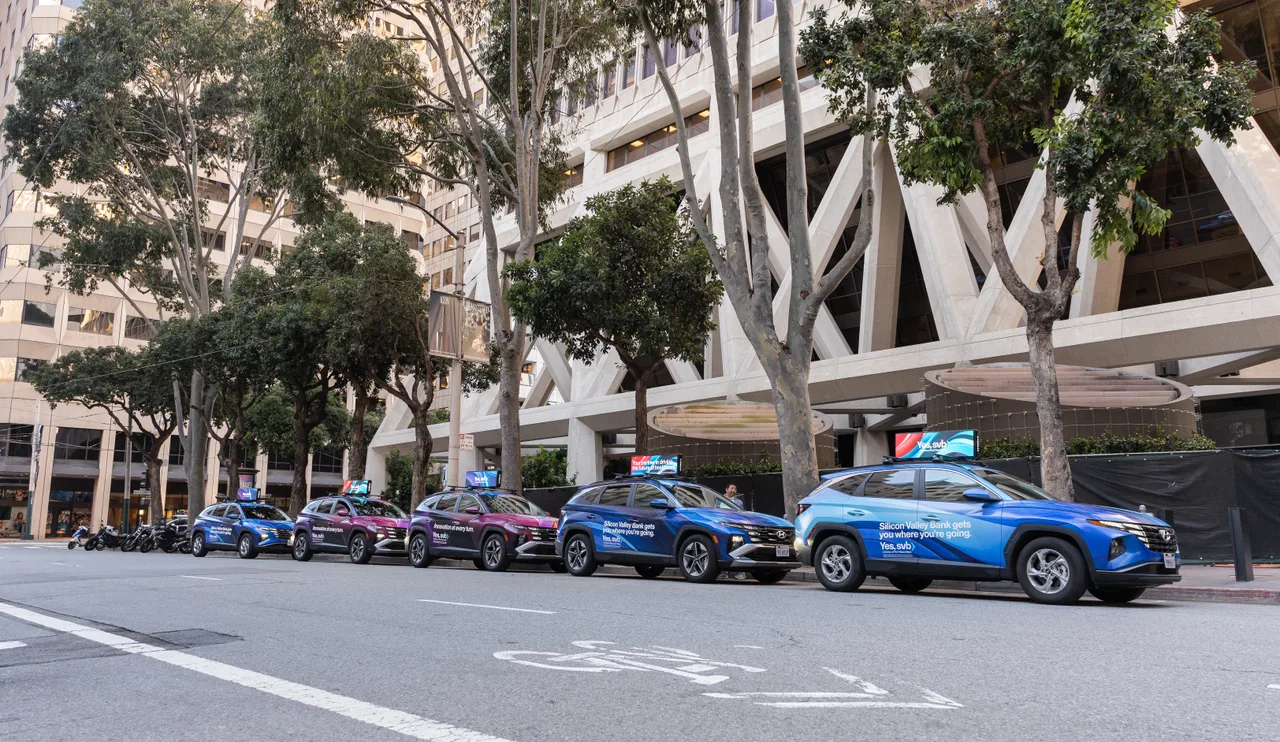
Fleet graphics are the wraps, partial wraps and decals applied to a company's own vehicles as one program: a template system, a film specification, a certified installer network and a removal plan. Program managers Vomela, Turbo Images and Modagrafics run the rollout across depots; published shop lists put a full cargo van wrap at $3,025 to $7,115 per unit.
A single wrapped van is a print job. Fifty of them across four depots is a logistics program with a print job inside it, and the vendors, contracts and failure modes change accordingly. This page covers the program layer; the film, coverage tiers, installer credentials and USDOT marking rule for any one vehicle are on the commercial vehicle wraps page. Every company statement below was read from the company's own site on September 14, 2026.
What Makes Fleet Graphics Different from Wrapping One Van?
Consistency across vehicles, locations and years, which no single install has to solve. Vomela's transportation page puts the problem plainly: "adding vehicles to a branded fleet is a brand consistency challenge," and it describes maintaining "vehicle-specific templates across a wide range of vehicle types" that are "updated as new vehicle types are added, so the brand adapts without requiring a design rebuild from scratch." The film makers say the same thing at the material level. Avery Dennison's MPI 1105 data sheet instructs: "to ensure color consistency when wrapping a vehicle, ensure the material used is from one production lot," because "some slight color shift may occur between rolls or lots." A fleet program is the paperwork that keeps the template, the lot and the installer standard the same in Phoenix as in Newark.
The other difference is that a fleet is never finished. Vehicles are added, retired, sold, re-leased and moved between depots, and Vomela describes "lifecycle management" and "de-identification and graphic removal for rebrands, acquisitions, and fleet refreshes" as services in their own right. A one-van wrap ends when the installer hands back the keys. A program has a removal budget from day one.
How Does a Fleet Template System Work?
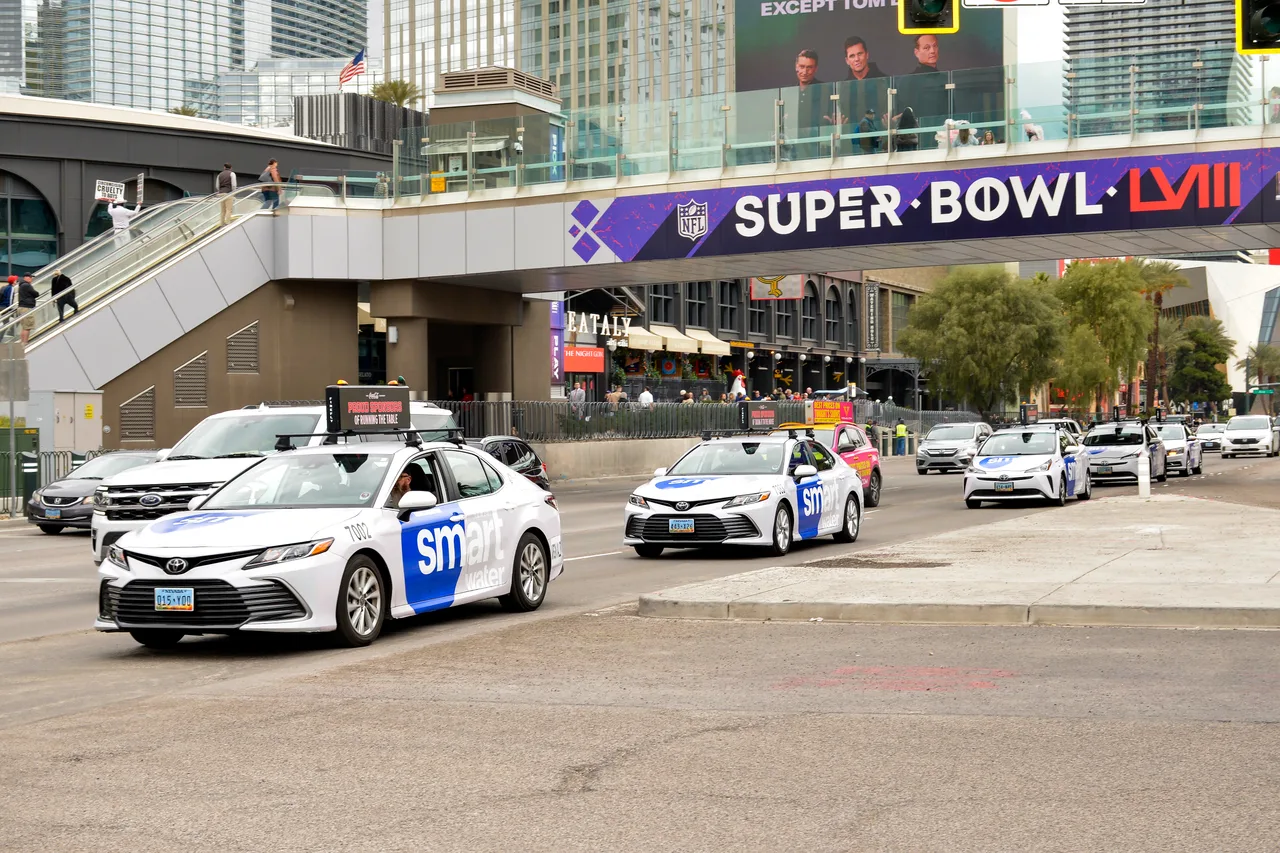
One master design, adapted to each body style at the panel level, with the coverage tier fixed per vehicle class. Turbo Images' site demonstrates the tiers it sells as four steps on one vehicle: "logo only," "logo with stripes," "partial wrap" and "full wrap." A program typically assigns a tier to each class (decals on pickups, partials on cargo vans, full wraps on box trucks, for example) so that the budget per unit is known before the next vehicle is ordered. Vomela's designers "work from vehicle-specific templates," producing "mockups that accurately represent how the finished graphic will look on the actual surface," which matters because, as its page notes, "a design that looks strong in a presentation does not always translate cleanly to a 53-foot trailer or a sprinter van with complex geometry."
The template is also where the legal marking lives. Under 49 CFR 390.21, a commercial motor vehicle in interstate commerce must carry the carrier's name and USDOT number on both sides, legible from 50 feet in daylight, and the marking must "be kept and maintained in a manner that retains the legibility." If a vehicle is operated by a carrier other than the name on the side, the operating carrier's name and number must follow, preceded by "operated by." A fleet template that reserves a contrast block for that text on every body style avoids re-cutting decals after the first roadside inspection. 3M offers its Visual Attention Software for testing a design's legibility before print; it is a tool, not a certification.
How Is a Fleet Rollout Run Across Depots?
Either the installers travel to the vehicles or the vehicles are cycled through a bay, and the program manager's job is to keep both from taking trucks off the road. Turbo Images describes "150+ installers who install at your facility or on the road" for trailer, coach and transit wraps. Vomela says that "whether 50 vehicles or 5,000, we coordinate production and installation across regions without disrupting your operations," through "a nationwide network of certified installers." Modagrafics lists warehousing, distribution and financing alongside design and nationwide installation, which is the inventory side of the same problem: printed kits have to be stored and shipped to the depot where the vehicle will be on the right day.
The material sets the depot conditions. Avery's MPI 1105 sheet gives minimum application temperatures of 45°F for flat surfaces, 50°F for rivets and corrugations and 60°F for complex curves, and says trailers and box trucks should be kept at or above that temperature "for as long as possible, at least 12 hours is recommended." SpeedPro's fleet page adds that "recently painted vehicles should wait 2 to 3 weeks before wrapping." An on-site install in an unheated yard in February is therefore a scheduling question, not just a travel one. Ordering is the last piece: Turbo Images sells a portal, Turbo Online, for managing fleet graphics "24/7," and Vomela describes a branded ordering interface, FLEX, "so every order placed meets program specifications regardless of who is placing it or where they are located."
Who Runs Fleet Graphics Programs?
Specialist program managers, national wrap companies, and installer marketplaces, in descending order of how much of the logistics they own. Each entry below was verified on the company's own site on September 14, 2026; the statements are the companies' own.
| Company | What it states it does | Credentials named | Note |
|---|---|---|---|
| Turbo Images | Project management, design, printing, installation, removal; 150+ installers on site or on the road; Turbo Online portal | 3M Certified Platinum Supplier | Locations in Quebec, Ontario and Jackman, Maine; testimonials from Greyhound and Cascades. |
| Vomela | Fleet programs "50 vehicles or 5,000," templates, multi-location rollouts, lifecycle management, de-identification and removal, Switch changeable banner system | "Nationwide network of certified installers"; warranty documentation per program | Transportation division; case study on a Coca-Cola bottler running more than 40 vehicles. |
| Modagrafics | Project management, design, warehousing, distribution, financing, fleet graphics, nationwide installation, custom ordering sites | None stated on the home page | Wheeling, Illinois; case studies name MillerCoors and Caterpillar. Home page carries a 2016 copyright; confirm current scope directly. |
| AP Wraps | Nationwide vehicle wrapping company; design, installation and logistics; published price table | Names Avery 1105 film with 1360z laminate on a fleet job | Describes wrapping "nearly 100 vehicles" for Eagle TransGroup. |
| Wrapmate | Installer marketplace; fleet graphics "priced per project"; design, local installer, removal at $130 per hour | 3M vinyl exclusively | Volume discounts "depend on the count, the design complexity"; no per-unit fleet rate published. |
| 3M installer programs | Not a vendor: the credential a program's subcontractors should hold | Fleet Graphics Preferred Installer (individual, tested); Certified Graphics Installation Company (business, audited, since 1999) | Certified company requires 3+ years trading, a W-2 tested installer, annual insurance verification. |
Two names that come up in searches for fleet graphics do not belong in this table. SpeedPro and FASTSIGNS are franchise sign networks: FASTSIGNS offers "custom solutions for single vehicles, small fleets, and large multi-location operations" but notes that "products and services may vary by location," and both quote through the local center. They are the right call for six vans in one city; the program managers above exist for the depot problem.
How Do You Budget Fleet Graphics per Unit?
The ranges below are market-level figures compiled from publicly published vendor and industry sources. They are not quotes, and they are not the rates of any single network. Always get a written quote before budgeting.
No program manager publishes a per-unit fleet rate; Turbo Images, Vomela and Modagrafics quote per program. The published unit prices come from shops pricing one vehicle at a time, so treat them as the ceiling a volume order should come in under, not the fleet price.
| Unit | Full wrap | Partial wrap | Decals or spot graphics | Publisher |
|---|---|---|---|---|
| Large cargo van | $3,300 – $7,115 | $2,775 – $3,675 | $1,225 – $1,700 | AP Wraps, July 17, 2025 |
| Standard cargo van | $3,025 – $6,005 | $2,500 – $3,450 | $1,125 – $1,550 | AP Wraps |
| Pickup truck | $3,150 – $4,370 | $2,325 – $2,600 | $1,175 – $1,300 | AP Wraps |
| Box truck, 10 to 28 ft | $4,500 – $8,500 | $2,600 – $4,800 half; $3,600 – $6,800 three-quarter | $350 – ~$1,500, any vehicle | Identity Graphx, Salt Lake City, 2026 |
| Program line items | Design $250 – $400 (Wrapmate) or $250 – $750 (Identity Graphx), once per template. Removal $130 per labor hour (Wrapmate). Refresh "every 3 to 5 years" (SpeedPro). | Design is separate on every list. | ||
The published discount language is vague on purpose. Wrapmate: fleet graphics "are priced per project" and discounts "depend on the count, the design complexity, and the timeline." Identity Graphx: "multi-vehicle fleet discounts available." Neither states a percentage. What a program does change is the design line, which is paid once per template rather than once per vehicle, and the removal line, which a per-vehicle quote omits and a fleet contract cannot. A workable per-unit budget for a 20-van program is the shop's single-vehicle partial or full price for that body style, the design fee divided by 20, and Wrapmate's removal rate multiplied by the hours the installer estimates for that film's age.
What Happens at Removal and Resale?
Film comes off cleanly inside its rated life and can take paint with it outside it, so the removal date belongs in the program plan next to the install date. SpeedPro's fleet page says that "removing vinyl wraps beyond their recommended lifespan may cause paint peeling," and that "when applied and removed by professionals within the warranty window, wraps act as a barrier against UV rays, road debris, and weathering." Avery Dennison lists "removal from automotive paint that is greater than 5 years old" and "removal from paint that is improperly cured" among the unsuitable uses for SW900, and specifies the MPI 1105 print film's adhesive as "long term removable." FASTSIGNS notes that many leases "allow removable vinyl wraps" and that it "uses materials designed to be removable when it's time to return or rebrand the vehicle."
Three consequences for a fleet. First, a vehicle that will be sold or returned at year four should be wrapped with a film whose rated life covers year four, or with a partial that leaves the resale-critical panels bare. Second, removal is priced by the hour, $130 at Wrapmate, and the hours rise with film age, so a rebrand across 200 units is a labour bill before it is a print bill; Vomela sells "de-identification" as a distinct service for exactly this reason. Third, the marking rule follows the vehicle: 390.21 requires the carrier marking to be maintained legible for as long as the vehicle operates, so a de-identified truck that keeps working needs its name and USDOT number reapplied the same day.
Fleet Graphics Vendor vs Advertising Network: What Is the Difference?
Who owns the vehicles. A fleet graphics vendor prints and installs on vehicles you own or lease, charges per project, and the message stays until you pay to remove it. An advertising network rents space on vehicles it controls or recruits, charges per vehicle per four-week period with production bundled, and the message comes off when the flight ends. Firefly (180, 270 and 360 wraps on taxi and rideshare vehicles), Wrapify and Carvertise are networks; Turbo Images, Vomela and Modagrafics are vendors. The units differ accordingly: Blue Line Media's rate card lists a rideshare full wrap at $800 to $1,500 per display per four weeks, a rent, while AP Wraps' $3,025 to $6,005 for a standard cargo van is a one-off. The car wrap advertising companies guide sorts the network side by ownership, and the vehicle wrap ROI guide covers what the research on wrapped vehicles has and has not measured. A business whose vans already cover its territory usually wants the vendor; a brand that needs presence in cities where it has no vehicles wants the network.
Frequently Asked Questions
What is a fleet wrap?
A fleet wrap is a vehicle wrap applied to multiple vehicles a business owns or leases from one design template, so every unit carries the same brand treatment. It is sold as a program: templates per body style, a film specification, installation across locations and removal at the end of the vehicle's service, rather than as one print-and-install job.
What is fleet branding and how does it work?
Fleet branding applies one identity to every vehicle a company runs, using a tier per vehicle class (decals, partial or full wrap), vehicle-specific templates, film from matched production lots for color consistency, and certified installers at each depot. Vomela describes managing it "as an ongoing system, tracking, maintaining, and evolving your fleet over time," including removal for rebrands and acquisitions.
How much does it cost to wrap a fleet vehicle?
Published single-vehicle shop prices are the only per-unit figures available: a standard cargo van at $3,025 to $6,005 full or $2,500 to $3,450 partial (AP Wraps, July 2025), a box truck at $4,500 to $8,500 full (Identity Graphx, 2026), decals from $350. Program managers quote per project, and the published volume discounts state no percentage. Design and removal are separate.
Can a wrapped fleet vehicle go through a car wash?
Published guidance says hand wash where possible. FASTSIGNS advises washing "with mild soap and a soft cloth or sponge" and avoiding "automatic car washes with stiff rollers." Avery Dennison's SW900 data sheet says power washing window graphics is not recommended, and that abrasion and loss of gloss are not covered by its warranty. Ask for the film maker's care bulletin.
How long do fleet graphics last?
By the manufacturer's rating for the film, not the shop's estimate. Avery Dennison rates MPI 1105 at "up to 7 years (printed)" on vertical surfaces; 3M sets IJ180mC's warranted period by film, ink, laminate and climate zone. SpeedPro says most businesses refresh fleet wraps every three to five years and warranties its own work for three years on factory paint.
What does a fleet graphics company do?
It manages the program rather than one install: design templates for each body style, film specification and lot control, printing, kitting and distribution to depots, installation through its own or certified subcontracted installers, an ordering portal for new units, and removal or de-identification when vehicles leave. Turbo Images, Vomela and Modagrafics each list those functions on their sites.
What to send us
- Market, or markets
- Dates, or flight length
- Budget band
- The metric you will judge it by
A person replies with a written range and the formats that fit. No rate card exists; every number on this site is a published third-party figure.
Send the briefSources
All pages and documents retrieved and read in full on September 14, 2026.
- Turbo Images, Fleet graphics company for vehicle wraps
- Vomela, Transportation: Fleet Vehicle Wrap Services
- Modagrafics, home page
- AP Wraps, Commercial Vehicle Wrap Cost: Complete Pricing Guide for 2025, July 17, 2025
- Wrapmate, How Much Do Vehicle Wraps Cost?, last updated May 2026
- Identity Graphx, Vehicle Wrap Cost in Salt Lake City
- SpeedPro, Fleet Wraps and Van Wraps; FASTSIGNS, Vehicle Graphics and Car Wraps
- 3M, 3M Installation Programs and Fleet Vehicle Graphics; Product Bulletin IJ180mC (PDF, May 2026)
- Avery Dennison Graphics Solutions, MPI 1105 SuperCast Series Product Data Sheet (PDF, revision 12, December 15, 2025) and SW900 Supreme Wrapping Film Product Data Sheet (PDF, revision 20, March 10, 2026)
- Blue Line Media, Taxi and Rideshare Advertising rate card
- Federal Motor Carrier Safety Administration, 49 CFR 390.21, Marking of self-propelled CMVs, eCFR
Written by
Melih Koray is a marketing and SEO practitioner who documents out-of-home media. He edits this site, sources every figure on it and checks each campaign caption against the photograph. He does not publish unsourced numbers, and he does not publish any operator's rate card.