Guerrilla Marketing Examples, Photographed: 12 Street-Level Campaigns
Twelve guerrilla marketing examples photographed on the street: hologram trucks, taxi swarms, pedicabs, QR trucks. Why each worked, and the permit reality.
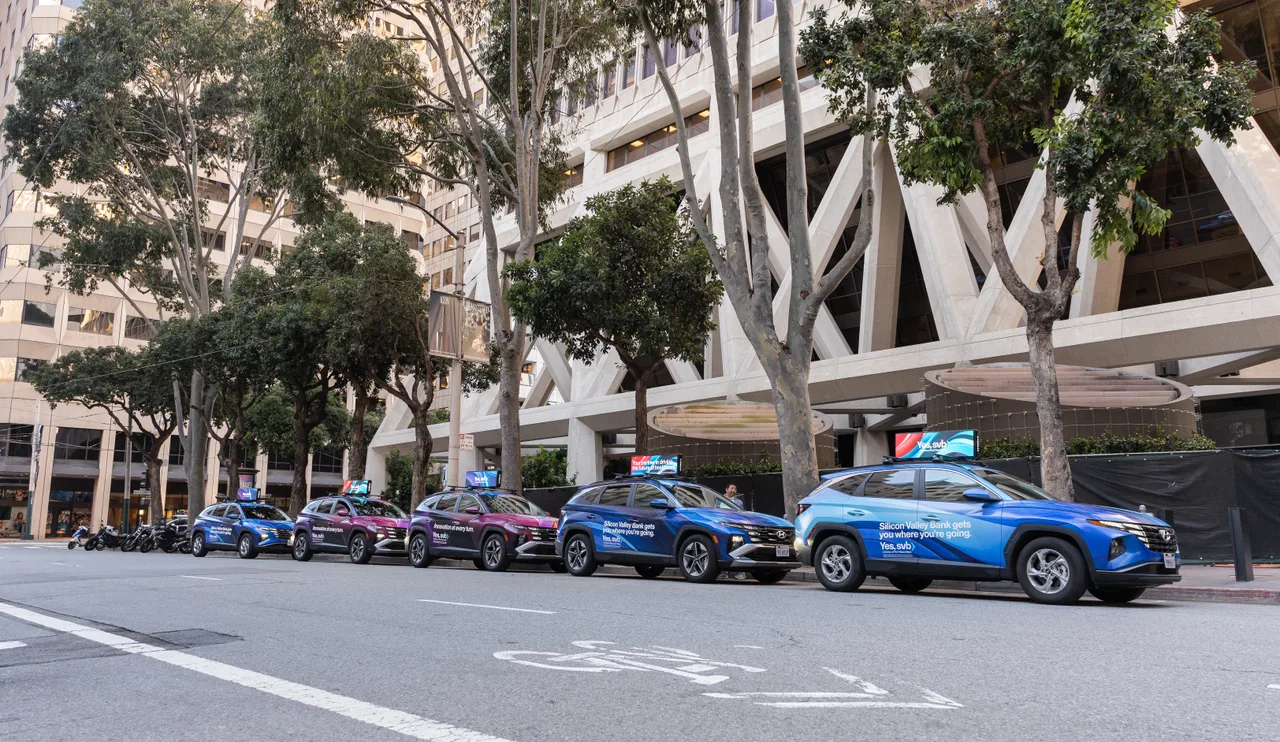
Guerrilla marketing examples are easy to list and hard to photograph, which is why most lists reuse the same stock images. The twelve below are live campaign frames from one archive: hologram and walk-in trucks, taxi swarms, pedicabs, LED trucks and QR-code trucks, each captioned only with what is visible, and each with the structural reason it worked.
The term dates to Jay Conrad Levinson's 1984 book, which TIME placed among its 25 most influential business management books for reshaping how small companies think about promoting themselves, brains over brawn. Four decades on, the tactics that still work on a street share three ingredients: surprise, location and timing. No results are claimed for any frame below, because none of the brands has published one. What is claimed is only what the camera saw.
What counts as a guerrilla marketing example on this page?
Every frame comes from the campaign archive on this site, photographed on the street rather than rendered, and every one involves a vehicle, because vehicles are how a stunt reaches the right corner at the right hour. Captions carry brand, what the activation was, city and year. Where the archive has no year, the caption says so or dates the frame from something visible in it. Where a claim is not visible, it is not made.
1. BTS, hologram truck on Lafayette Street, New York, 2026
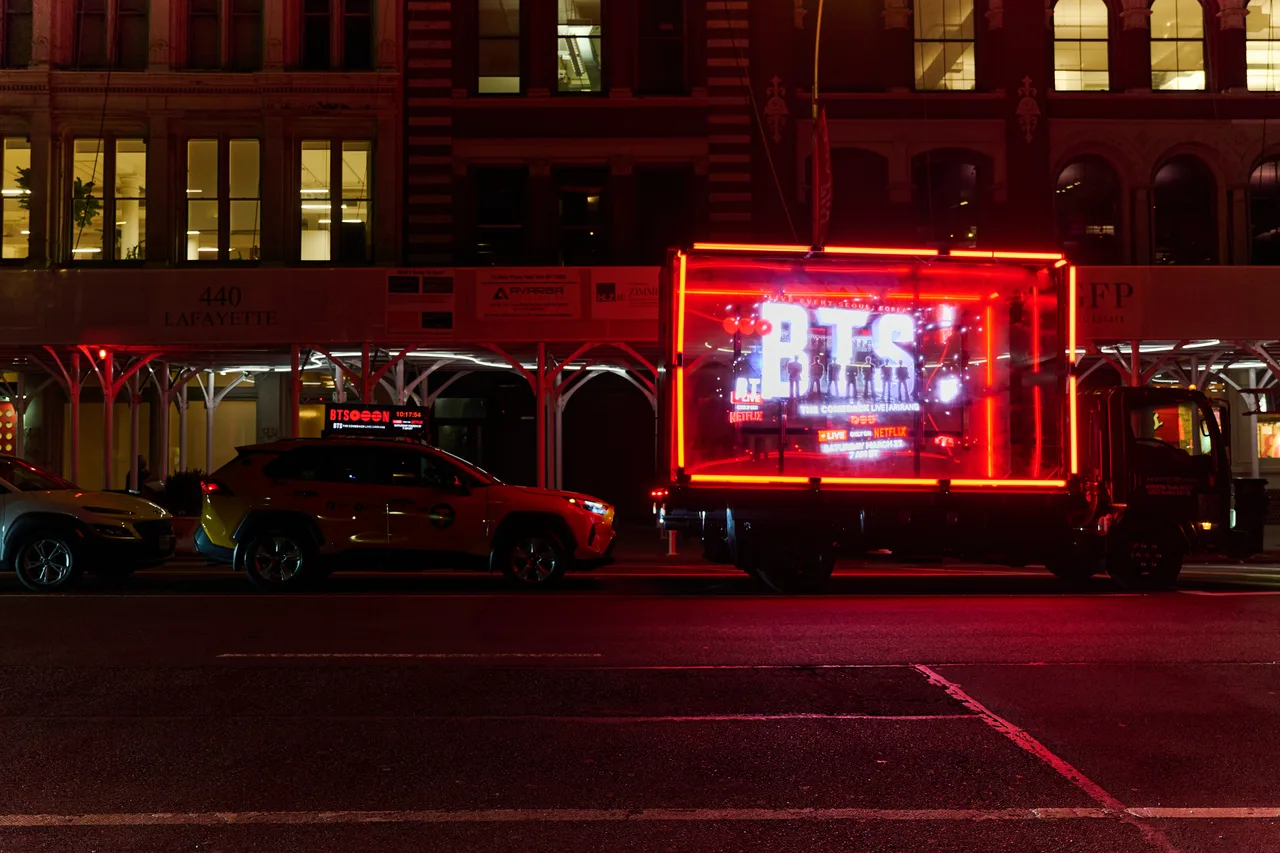
Surprise does the work here. A glowing box on a dark street is the only lit object at eye level, and the display carries the one fact that matters, the broadcast date. The taxi in the same frame is the second structural choice: a hologram truck can hold one corner, a fleet of digital tops repeats the message across the borough, and the frame shows both running the same night. The format comparison sets out what each of those two does that the other cannot.
2. Lancôme, walk-in truck with a queue, New York, 2024
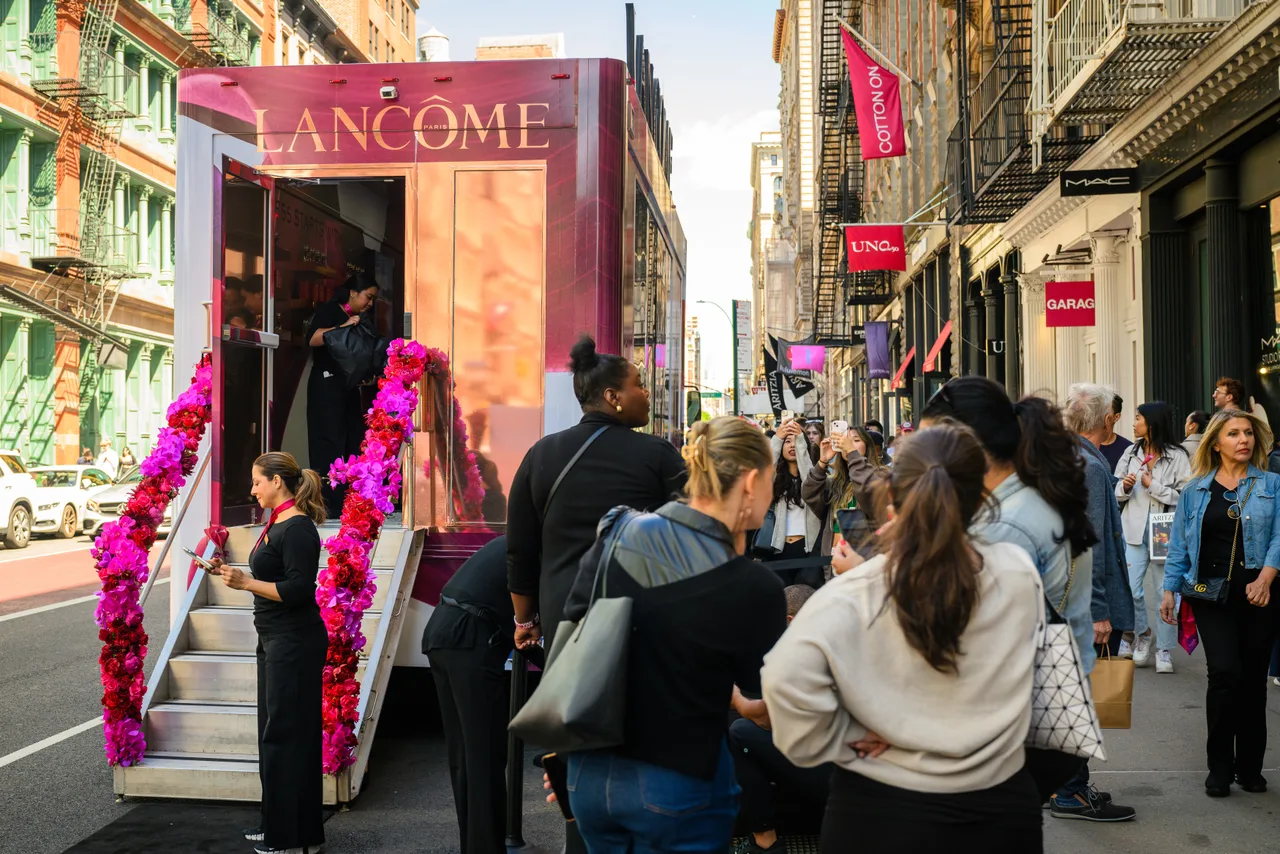
Location. The truck is parked on a block whose store signs are visible in the frame, so the audience is already shopping for the category when it walks past. The queue is the media: people photographing a queue are the reason the queue exists. Structurally this is a pop-up store that arrived on wheels, which means the permit belongs to a vehicle rather than a lease, and it can be somewhere else next week.
3. The Gates, QR-code truck at the park, New York, 2025
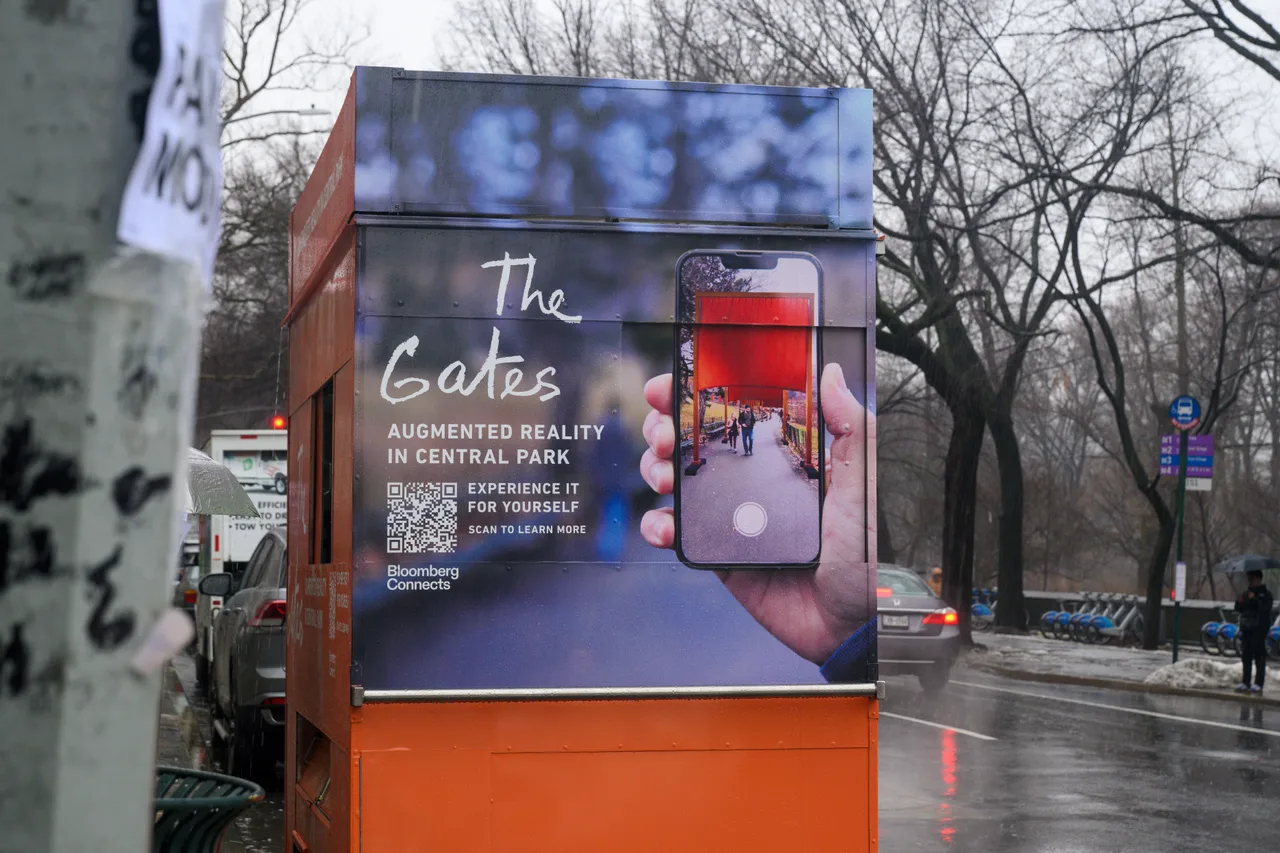
Timing and location together. The wrap sells an augmented-reality artwork in the park, and the truck is parked at the park, in winter, when the trees are bare and the orange panel is the only colour on the street. The call to action is a QR code large enough to scan from the pavement, which turns a parked truck into a doorway. That is the difference between a mobile billboard and a guerrilla placement: this one is only useful on this kerb.
4. Peach Slices, five-taxi swarm, New York, 2024
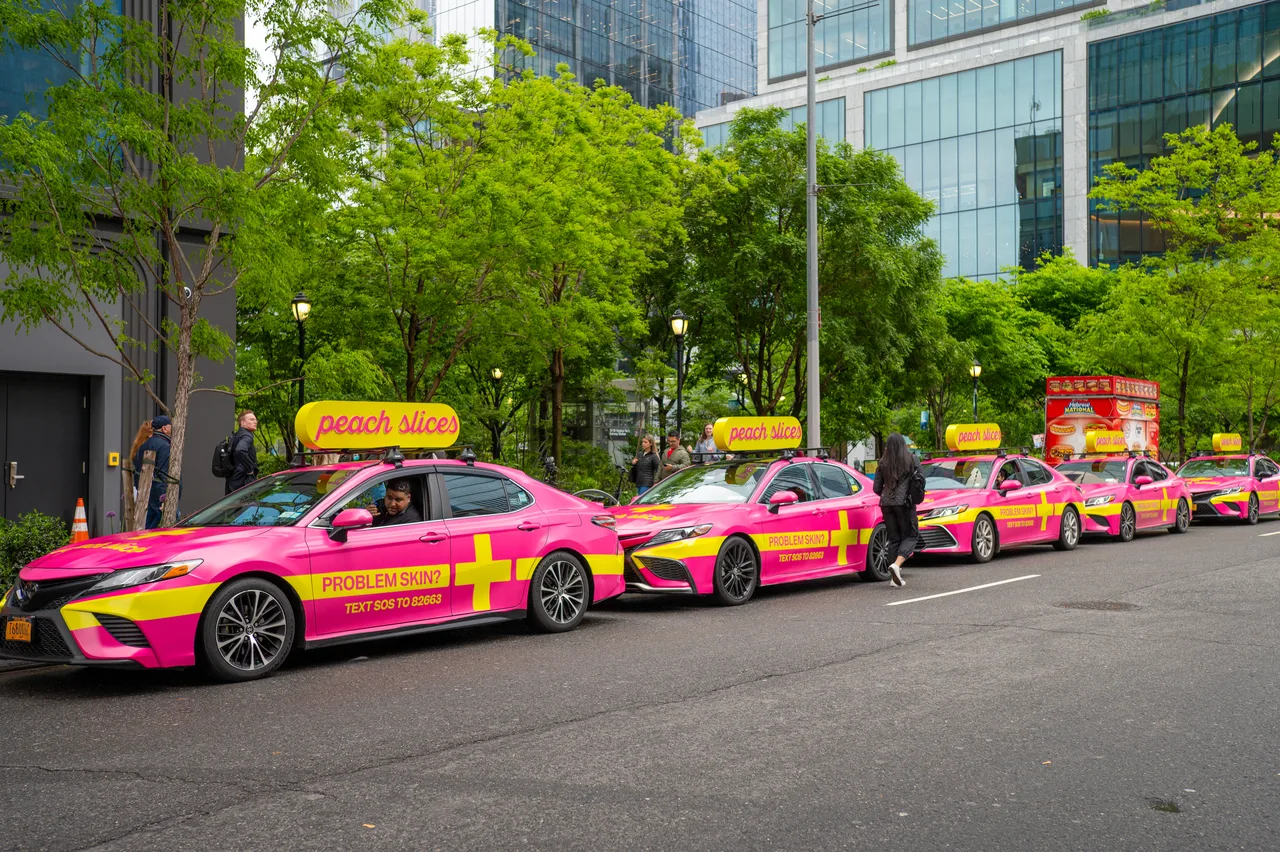
Repetition. One pink taxi is a taxi; five in a row are an event, and the frame catches them stationary, which is the moment a swarm is photographed and shared. The creative is a single question and a text number, readable at walking pace. Swarms are the format that most often gets called guerrilla and most often is just media: the guerrilla part is the choice to bunch the vehicles rather than spread them.
5. Johnnie Walker, courtesy cars beside Ryder Cup Live, New York, 2025
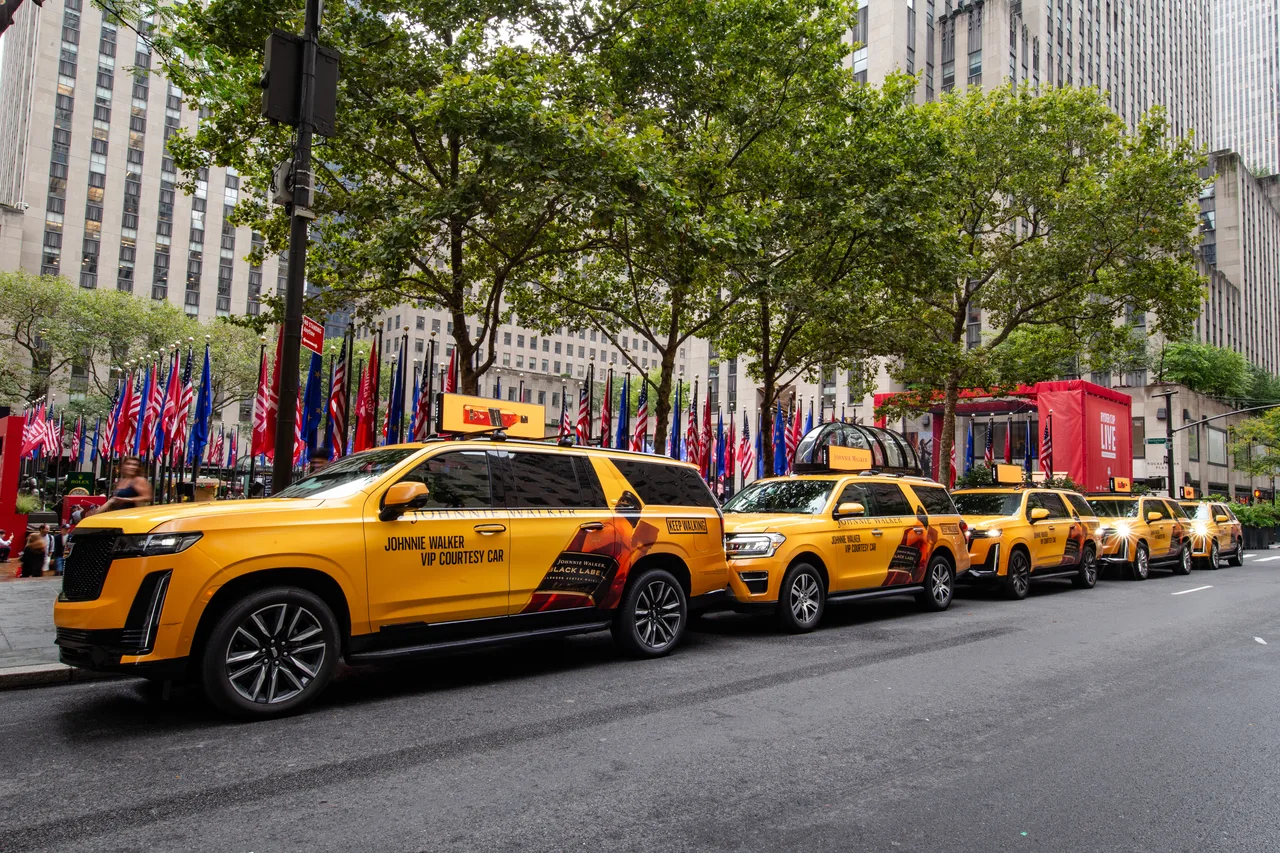
Adjacency. The archive has no year for this frame; the Ryder Cup Live structure visible behind the cars dates it, since the PGA of America ran that fan zone at Rockefeller Center from 25 to 28 September 2025. The cars are labelled as courtesy cars, which gives them a reason to stand at the kerb beside an event whose inside inventory belonged to other sponsors. The event advertising guide is about exactly that perimeter.
6. Later, branded pedicab during SXSW, Austin, 2026
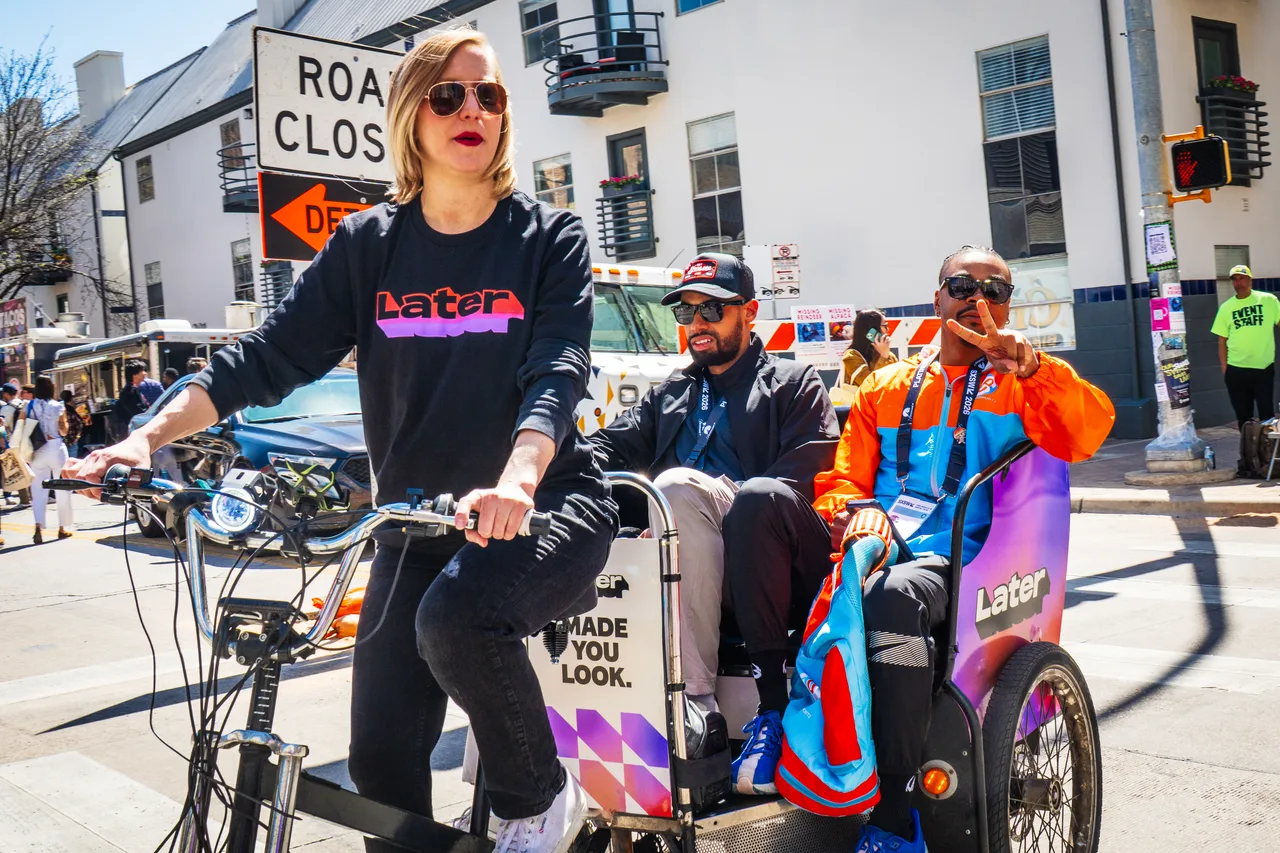
Access. The road-closed sign in the frame is the point: during SXSW, which ran 12 to 18 March 2026, closed streets carry the badge holders on foot, and in the frame the pedicab is on the closed street where the cars are not. The passengers are wearing the festival's lanyards, so the audience is confirmed in the frame rather than assumed. The panels say "Made You Look," which is the whole theory of the format written on the side of it.
7. Otsuka, congress swarm with a booth number, Houston, 2025
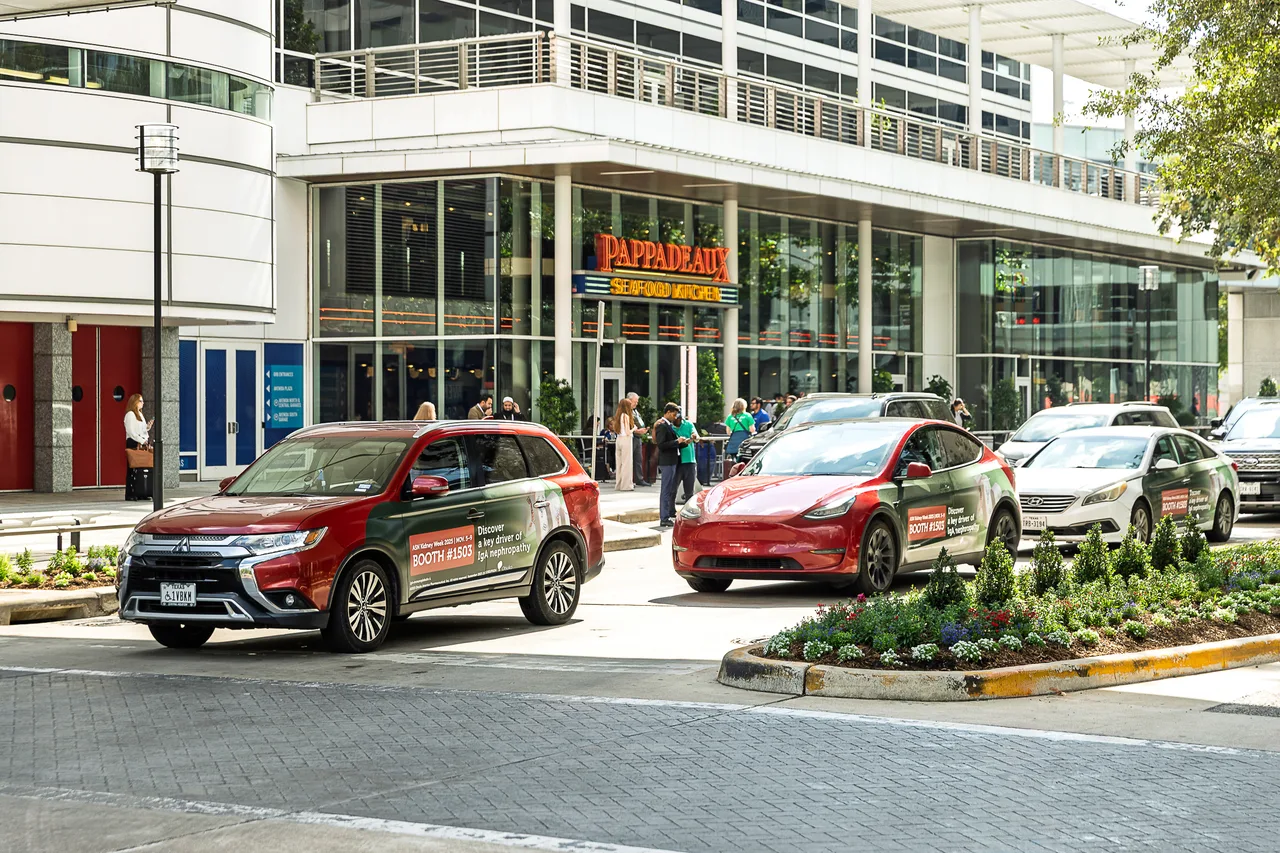
Precision. The wrap names the congress, the dates and a booth number, so the message is only worth reading by the people walking into that hall that week; ASN Kidney Week ran 5 to 9 November 2025. A wrap that expires in five days is a strange thing to print, and that is exactly why it reads as guerrilla rather than as fleet branding. The cars are ordinary models, which is the other tell: nothing about them says advertising until the door panel does.
8. Veeam, wrapped cars outside a security conference, San Francisco, undated
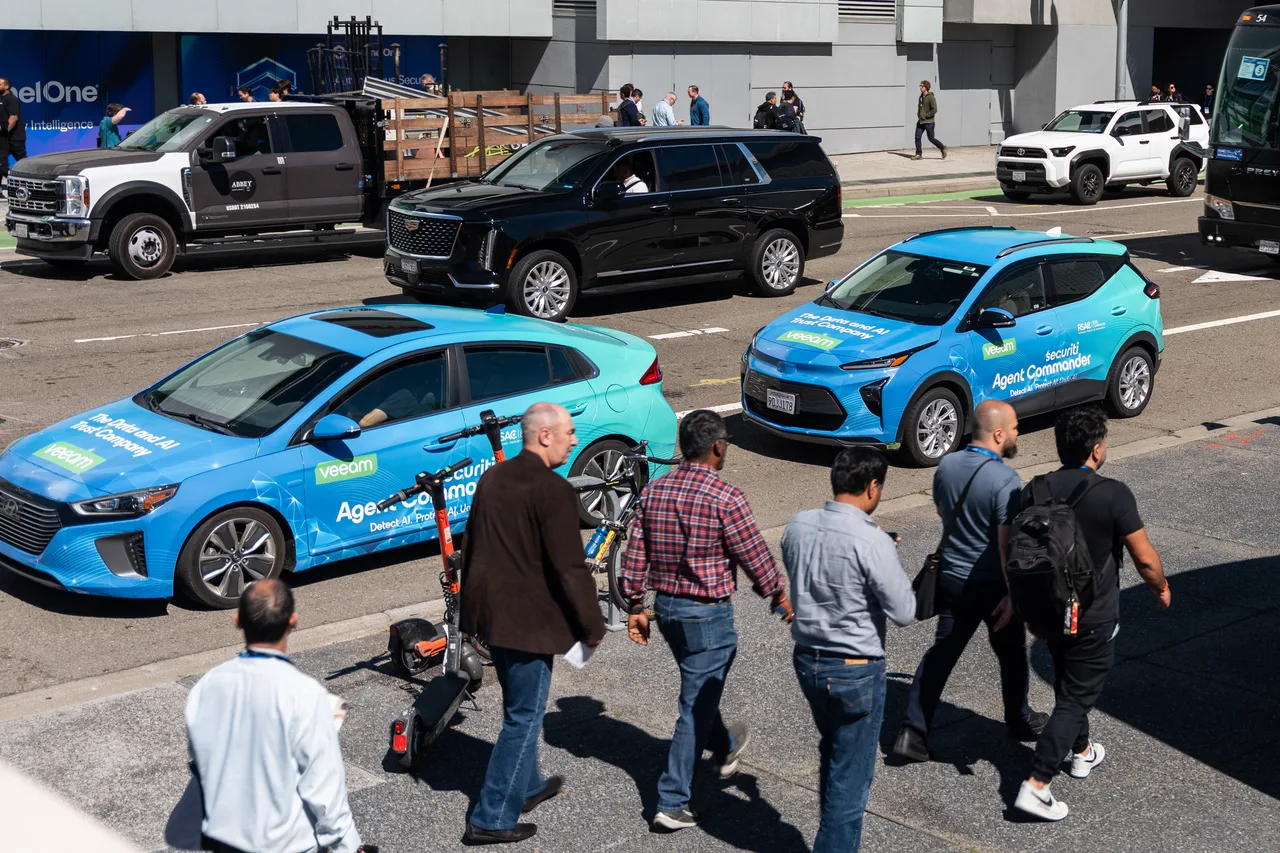
Proximity. The cars are at the kerb the attendees cross, and the attendees are identifiable by their lanyards. The archive lists the buyer as an agency rather than the brand on the wrap, which is worth noticing: the agency booked the vehicles from an operator, which is how most of the frames on this page came to exist. The agency guide maps who owned what in that chain.
9. Coors Light, LED truck on the arena walkway, Denver, 2025
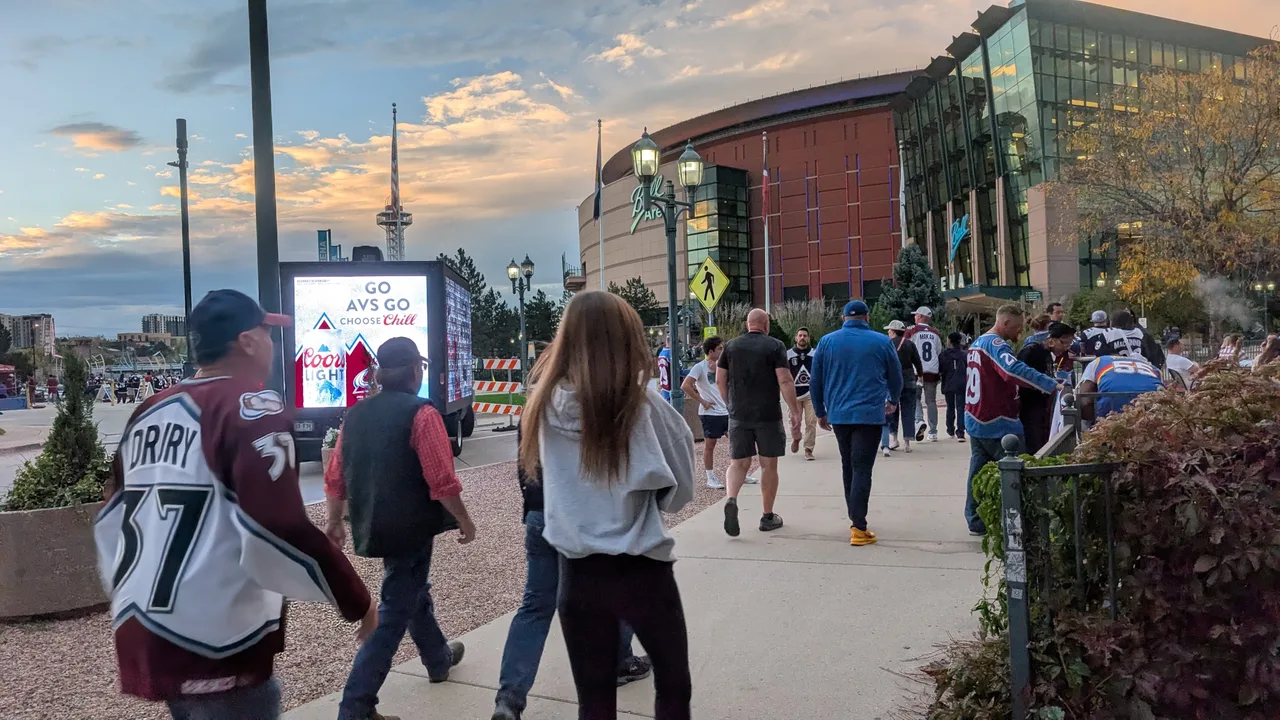
Timing. The truck faces the direction the fans walk, at dusk, when they walk it, and the creative names the team on their backs. Ball Arena's own prohibited items list bars unapproved advertisements and handouts from the building, so the pavement outside is where a non-sponsor's message stops. The LED truck guide covers the mechanics of buying that hour.
10. bet365, LED truck in the parking lot, Phoenix, undated
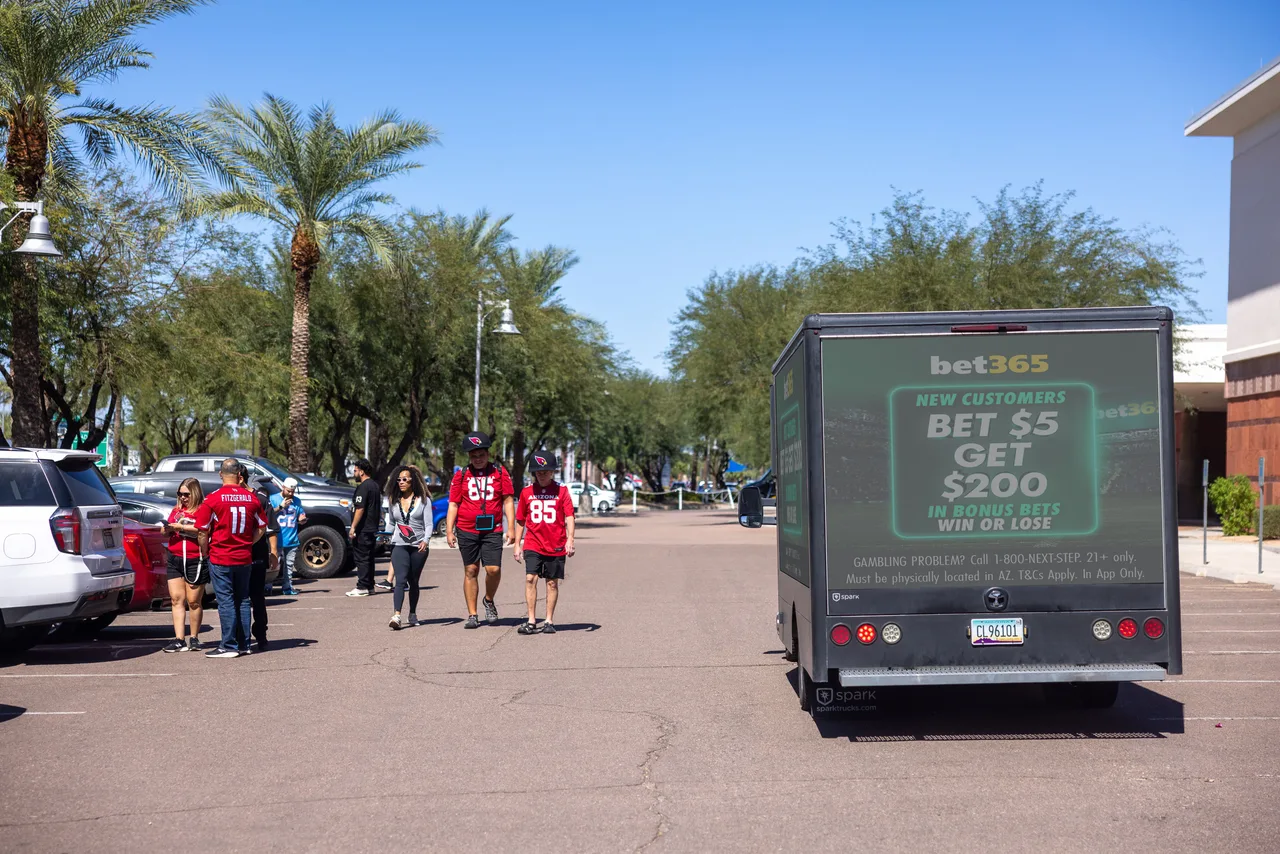
Movement. A parked truck in Los Angeles is a citation; a moving one is traffic, and this one is moving through the lot at the pace of the people walking it. The creative is an offer with a state-specific compliance line, which is the kind of message that has to be right for the audience in the frame or not shown at all. Note what is not here: no handouts, no staff, nothing that needs the lot owner's permission beyond passage.
11. smartwater, taxi line under the Super Bowl bridge, Las Vegas, 2024
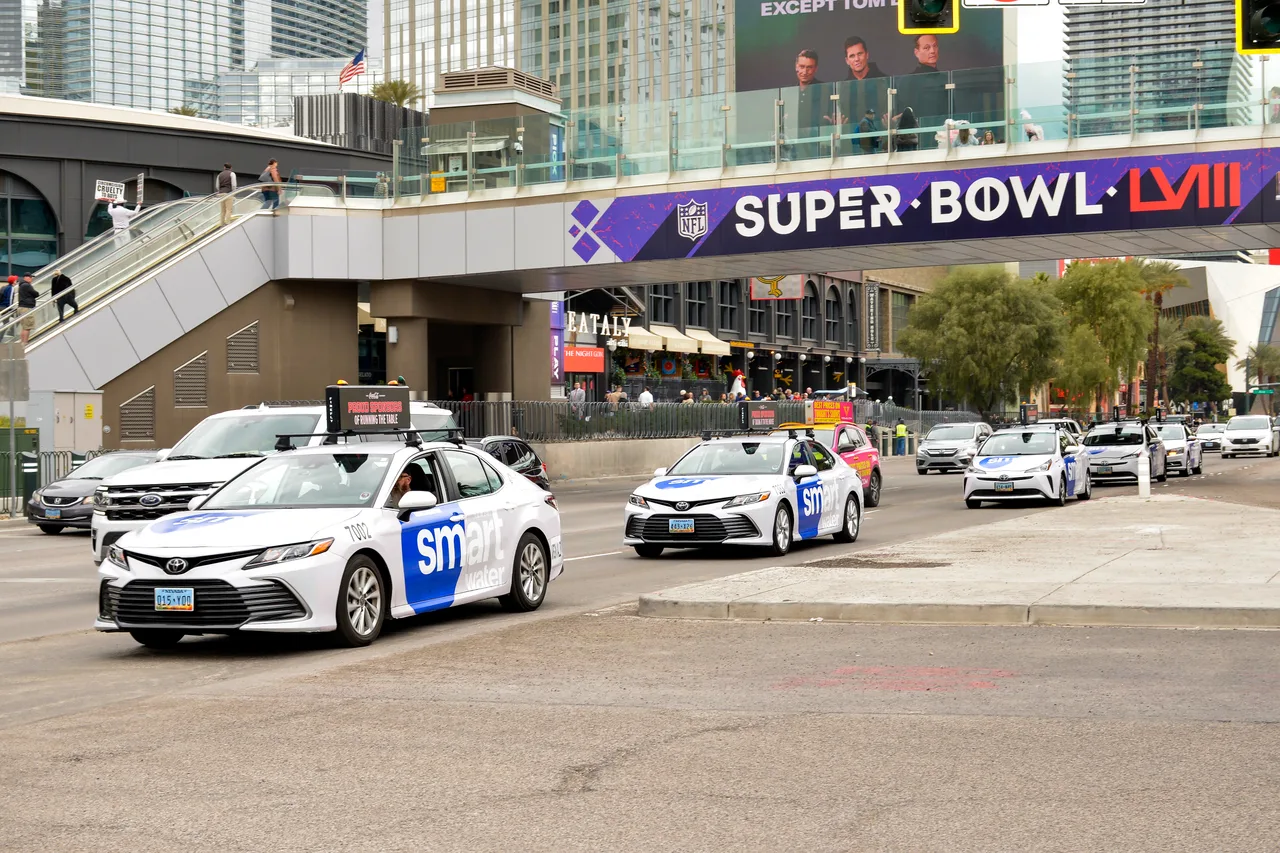
Contrast. The NFL's own bridge wrap is fixed, official and above the crowd; the taxis are moving, repeated and at eye level beneath it. Super Bowl LVIII was played at Allegiant Stadium on 11 February 2024, and the Strip was the week-long perimeter. The vehicle format is what makes this a placement rather than a sponsorship: the taxis were going to drive the Strip that week regardless.
12. Google Cloud, wrapped car with a door-holder at GTC, Washington DC, 2025
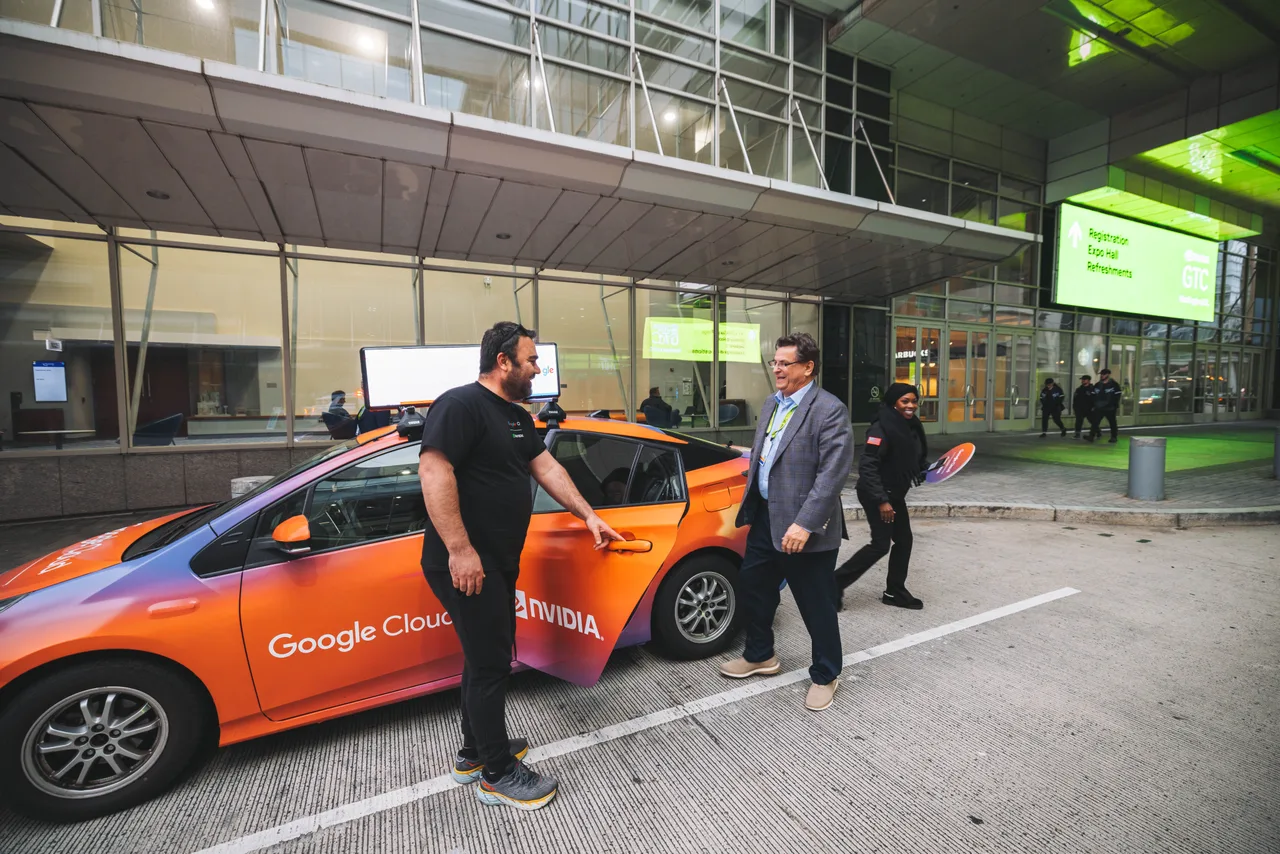
Service as media. The wrap is the message, but the person holding the door is the mechanism: a ride offered at the kerb of a conference that ran 27 to 29 October 2025 at the Walter E. Washington Convention Center, with the venue's own GTC signage visible on the screen behind. The frame shows the moment of acceptance, which is the closest a photograph gets to a result without inventing one.
Guerrilla, experiential or ambient: which is which?
The three words describe the same street from different angles. Guerrilla marketing is defined by its economics: an unexpected placement that earns more attention than it cost, which is Levinson's original sense. Experiential marketing is defined by participation: the audience does something, walks into the Lancôme truck, takes the Google Cloud ride. Ambient advertising is defined by surface: a message on something that is not normally an ad, a bridge, a kerb, a taxi roof. A hologram truck is guerrilla by economics, ambient by surface and experiential only if you can go inside it. Most of the twelve frames are two of the three at once, and the label matters less than the permit.
Is guerrilla marketing legal?
Legal where the vehicle is, which is the honest answer and the reason this page is on a vehicle site. Los Angeles Municipal Code Section 87.53 makes it unlawful to park a mobile billboard advertising display, a sign on a non-motorised trailer, device or bicycle whose primary purpose is advertising, on any public street or public land, with removal after a warning citation. Section 87.54 then limits advertising on a parked motor vehicle to paint, decals or a manufacturer-designed location within the vehicle's own dimensions, and makes a repeat offence after a warning a misdemeanour with a fine of $250 to $1,000. A wrapped car in service passes; a parked truck with a bolted-on screen does not.
New York's traffic rule 34 RCNY 4-12(j)(1) prohibits operating, standing or parking a vehicle on any street for the purpose of commercial advertising, permits business notices on a vehicle in normal use as long as nothing is reflective, illuminated, animated or on the roof, and exempts vehicles licensed by the Taxi and Limousine Commission under the Commission's rules. Read that against the frames: the taxi tops, the courtesy cars and the wrapped cabs are inside the exemption; the hologram truck and the walk-in truck are the ones whose permits you would ask to see. Major events add a third layer, the clean zone: New Orleans approved a nine-day one for Super Bowl LIX, from 3 to 11 February 2025, restricting commercial activity such as promotional giveaways across the Central Business District and French Quarter, per Verite News. Guerrilla marketing that ignores those three layers is not bold. It is towed.
Which guerrilla marketing ideas survive the permit check?
- A swarm of licensed taxis or rideshare cars bunched on one route for one hour, rather than spread across a month; the vehicles are already permitted to carry advertising.
- A truck that keeps moving through the arrival route rather than parking on it, in cities where parked displays are the offence.
- A wrap with an expiry date: a booth number, a broadcast date, a closing night, so the message is only for the people in the frame.
- A pedicab fleet inside the road closures, where cars cannot go and the audience is on foot.
- A parked walk-in or glass truck, only with the kerb permit in hand and a staffing plan for the queue it will create.
- A photographer on the day. The frame is the deliverable; the results page explains what measurement is and is not possible after it.
The vehicle side of that list is sold by a short roster. Firefly runs coordinated swarms of taxi and rideshare vehicles and lists LED digital trucks, glass trucks, 3D hologram trucks, branded pedicabs and branded food trucks alongside them; Billboard Express and Bulldog Mobile Billboards sell trucks; Roaming Hunger sources food trucks. The experiential marketing agencies guide sorts them by who owns the vehicle and who holds the permit, and the ranked list of experiential marketing companies scores that roster on fleet, fabrication and staff.
Frequently Asked Questions
What is guerrilla marketing, with examples?
Guerrilla marketing is an unexpected, low-cost placement designed to earn more attention than it paid for, a term from Jay Conrad Levinson's 1984 book. Photographed examples on this page include a hologram truck lit at night on Lafayette Street, five pink taxis lined up as a swarm, a QR-code truck parked beside the park it advertises, and a branded pedicab inside SXSW road closures.
Is guerrilla marketing still a thing?
Yes; the twelve frames here are dated 2024 to 2026. What has changed is the vehicle: hologram trucks, LED trucks and coordinated taxi swarms have replaced chalk and stickers because they can be permitted, moved and photographed in one day. The economics are the same as in 1984; the hardware is not.
Why is it called guerrilla marketing?
Levinson borrowed the word from guerrilla warfare, where a smaller force uses surprise and mobility against a larger one. Applied to marketing it meant brains over brawn, the phrase TIME used when listing the 1984 book among the 25 most influential business management books. Mobility is the part that makes vehicles the natural format.
Is guerrilla marketing legal?
It is legal when the placement complies with the city's vehicle and street rules. Los Angeles Municipal Code 87.53 and 87.54 restrict parked advertising displays and signs on parked vehicles, New York's 34 RCNY 4-12(j) prohibits vehicles standing or parked for commercial advertising outside the TLC-licensed exemption, and host cities pass temporary clean zones around major events. Licensed taxis, moving trucks and pedicabs are the formats that usually clear all three.
What is the difference between guerrilla marketing and ambient advertising?
Ambient advertising describes the surface: a message on something that is not normally an ad, such as a taxi roof or a pedestrian bridge. Guerrilla marketing describes the economics: an unexpected placement that earns more attention than it cost. A wrapped taxi swarm is both; a paid bridge wrap is ambient but not guerrilla.
What are experiential marketing examples?
Experiential examples are the ones the audience takes part in: the Lancôme walk-in truck with a queue on a SoHo street, the Google Cloud car whose ambassador holds the door for a conference attendee, and the branded pedicab carrying SXSW badge holders. Each is photographed on this page; none has a published result attached.
Where do the photographs on this page come from?
From the campaign archive on this site, photographed on the street during live campaigns and captioned with brand, format, city and year. Two frames have no year recorded and are labelled as such; one is dated from the Ryder Cup Live structure visible behind the vehicles.
What to send us
- Market, or markets
- Dates, or flight length
- Budget band
- The metric you will judge it by
A person replies with a written range and the formats that fit. No rate card exists; every number on this site is a published third-party figure.
Send the briefSources
- TIME. Guerilla Marketing (1984), by Jay Conrad Levinson, The 25 Most Influential Business Management Books, 9 August 2011.
- PGA of America. Ryder Cup Live Bringing Bethpage Black to the Heart of New York, 3 September 2025.
- SXSW. SXSW 2026 Schedule, accessed 14 September 2026.
- American Society of Nephrology. Kidney Week 2025; NVIDIA. GTC Washington, D.C. 2025 Travel and Venue, both accessed 14 September 2026.
- Allegiant Stadium. Super Bowl LVIII; Ball Arena. Prohibited Items, both accessed 14 September 2026.
- City of Los Angeles. LAMC Sec. 87.53 and Sec. 87.54, accessed 14 September 2026.
- City of New York. 34 RCNY 4-12(j), Commercial advertising vehicles, accessed 14 September 2026.
- Katie Jane Fernelius. Council approves a nine-day clean zone for the Super Bowl, Verite News, 10 October 2024.
Written by
Melih Koray is a marketing and SEO practitioner who documents out-of-home media. He edits this site, sources every figure on it and checks each campaign caption against the photograph. He does not publish unsourced numbers, and he does not publish any operator's rate card.