Experiential Marketing Agencies: Who Owns the Vehicles and Who Rents Them
Four kinds of experiential marketing agencies sell activations. Which ones own fleets, fabrication shops or staff, what you get, and how each is priced.
Experiential marketing agencies fall into four roles: full-service agencies that plan and produce the activation, fabrication houses that build the sets and vehicles, vehicle operators that own the trucks, swarms and pedicabs on the street, and staffing agencies that supply brand ambassadors. Most "experiential marketing companies" on a ranking list are the first type, and they rent the other three.
This page is for a brand or media buyer who has a live activation to run and needs to know which company will actually own the hardware, the people and the permits before signing a statement of work. Agency websites describe experiences. Very few say who owns the truck. One question sorts every vendor: is the vehicle yours, or are you subcontracting it from someone I could call directly?
Disclosure: the editor of this site works at Firefly, one of the companies compared on this page. Every company is measured against the same published sources, and links to Firefly are marked sponsored.
What do experiential marketing agencies actually sell?
One of the four types sells judgement and project management; the other three sell things you can photograph. The table maps each type to what it controls, what you receive and how the invoice is built, because that is where the four differ most.
| Company type | What they own | What you get | How it is priced | Best fit |
|---|---|---|---|---|
| Full-service experiential agency | Strategy, creative and production staff; sometimes a fabrication shop, rarely a fleet | A concept, a run-of-show, vendors sourced and managed, a wrap report | Agency fee plus pass-through production costs, or a fixed project price | Multi-city tours, launches with a stage and a story |
| Fabrication and production house | Shops, printers, welders, engineering, warehousing; some build vehicles and trailers | A built set, exhibit, trailer or demo vehicle, delivered or leased | Quoted per build; lease or sale of the finished unit | Anything custom that has to survive a 20-stop tour |
| Mobile-tour and vehicle operator | LED trucks, glass trucks, wrapped taxi and rideshare fleets, pedicabs, GPS logs, permits | Vehicles on a route or at a venue on a date, with proof of performance | Per vehicle per hour, day or four-week period; market minimums | Event perimeters, launch weeks, city takeovers |
| Staffing and brand-ambassador agency | A vetted talent pool, field managers, payroll and compliance | Trained people on site, sampling, demos, street teams | Per person per hour or per shift, plus a management fee | Sampling, trade show floors, anything with a conversation |
Which experiential marketing companies are full-service agencies?
The names that top the search results are agencies in the first row, and their own sites describe the same thing in different words. Factory360, trading since 2007 with teams in New York and Miami, lists pop-ups, events, installations, mobile tours, PR stunts, sampling and guerrilla marketing under one experiential heading, and defines a mobile tour on its tours page as designing a branded vehicle, truck or trailer and taking it on the road. It does not say it owns any. SoHo Experiential calls itself a full-service experiential marketing agency with over 20 years behind it, covering strategy, creative, production, logistics and on-site execution from a SoHo office; again, no fleet or shop is mentioned. Amp Agency frames activation as sampling, sweepstakes, pop-up retail and mobile tours.
Above them sit the network-scale shops. Momentum Worldwide lists ten offices from New York to Sydney and puts brand activation, partnerships and sponsorships, and field marketing on the same services menu. Jack Morton lists 22 locations across the Americas, EMEA and APAC in its site footer and folds production in as an integrated capability alongside strategy, creative and measurement. George P. Johnson is the exception that proves the pattern: it is an agency, but its fabrication page claims 1,000,000 square feet of dedicated fabrication space, craftspeople in Detroit, Los Angeles, Nashville, Germany and China, and says outright that owning the equipment and facilities eliminates the arbitrary pricing associated with outside vendors. That is a different kind of company from one that sources a trailer for you, even if both call themselves experiential.
Read six agency sites in a row and the vocabulary blurs. Read them for nouns instead: square feet, installers, trucks, cities. Whoever names hardware owns some.
Who builds the vehicles and the sets?
Fabrication houses sell a built object, not an idea, and most agencies in the first group buy from them. Craftsmen Industries in St. Charles, Missouri, describes nearly 40 years of designing, engineering and producing experiential marketing vehicles, with in-house engineering, fabrication, print, paint and fiberglass, a range that runs from mobile museums and guerrilla marketing vehicles to kitchen and sampling units, and a sale-or-lease route for the finished unit. GPJ's fabrication division, above, is the agency-owned version of the same capability. The tell for this type is that the quote is for a thing: a 28-foot trailer, a demo truck, an exhibit that packs into a container. When an agency proposal has a line for "vehicle build," one of these companies is usually behind it, and you are entitled to ask which.
Who owns and operates the vehicles on the street?
Vehicle operators own or control the assets that move, sell time on them by the hour, the day or the four-week period, and report GPS routes and photographs as proof of performance. They are the layer agencies rent when a brief says "swarm," "LED truck" or "food truck," and they can also be booked directly.
On the car side, Firefly runs digital tops and wraps on taxi and rideshare fleets in 15 US and Canadian markets and lists coordinated swarms, LED digital trucks, glass trucks, 3D hologram trucks and branded food trucks as experiential formats on the same network. On the truck side, Billboard Express claims a truck fleet in 200 or more cities and 30 years in business, sells static and three-screen digital LED trucks, and is one of the few operators that publishes a rate page. Bulldog Mobile Billboards, based in Dallas, lists vinyl trucks, LED trucks and glass-walled display trucks in three sizes across 20-plus cities. Can't Miss US calls itself one of the first LED digital truck companies in the country and names eight markets from New York to Washington DC, with GPS verification and on-site images as its proof. Food trucks have their own marketplace: Roaming Hunger gives access to thousands of food trucks, trailers and carts, counts 564 activations, and will source, wrap and staff the vehicle; the trucks come from that vendor network rather than a fleet of its own, which is the same ownership question in a different costume.
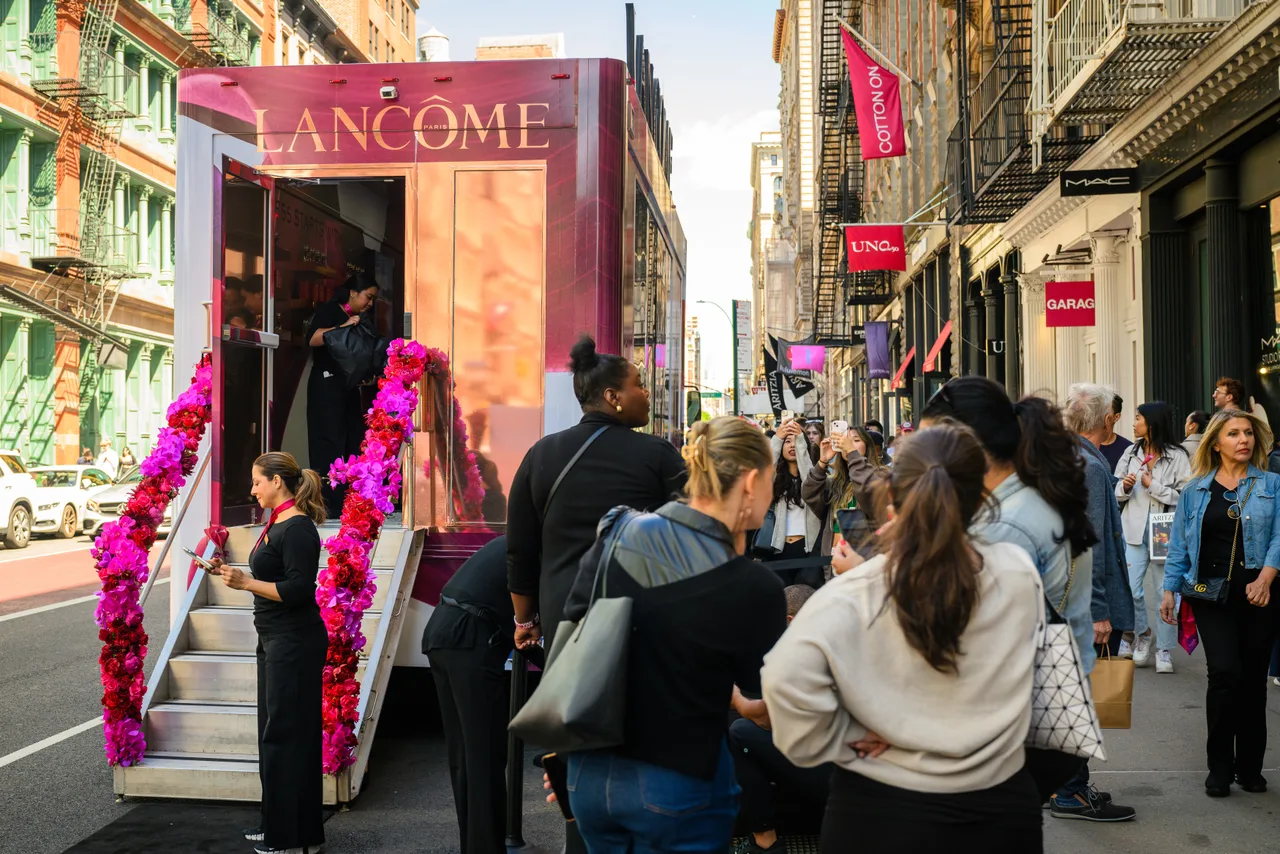
The frame above is the whole argument in one photograph. The pink truck was designed by an agency, built by a fabricator, parked on a Manhattan curb by an operator who holds the vehicle and the permit, and worked by ambassadors from a staffing pool. Which of those four your contract actually covers is the thing to establish before the deposit clears. The format comparison sets the vehicle types side by side, and the campaign archive shows each of them running in a real market.
Who supplies the people?
Staffing agencies sell trained humans by the shift, and they are the reason a "brand activation agency" can be three people and a laptop. ATN Event Staffing has supplied brand ambassadors, conference and trade show staff, promotional models and street teams nationwide since 2002 and is clear that it staffs events rather than producing them. PUSH Agency, with offices in Tempe and Las Vegas, lists brand ambassadors, product demonstration staff, trade show staff and field marketing managers across the United States and Canada, and also offers planning and fulfilment, which puts it on the border between the fourth type and the first.
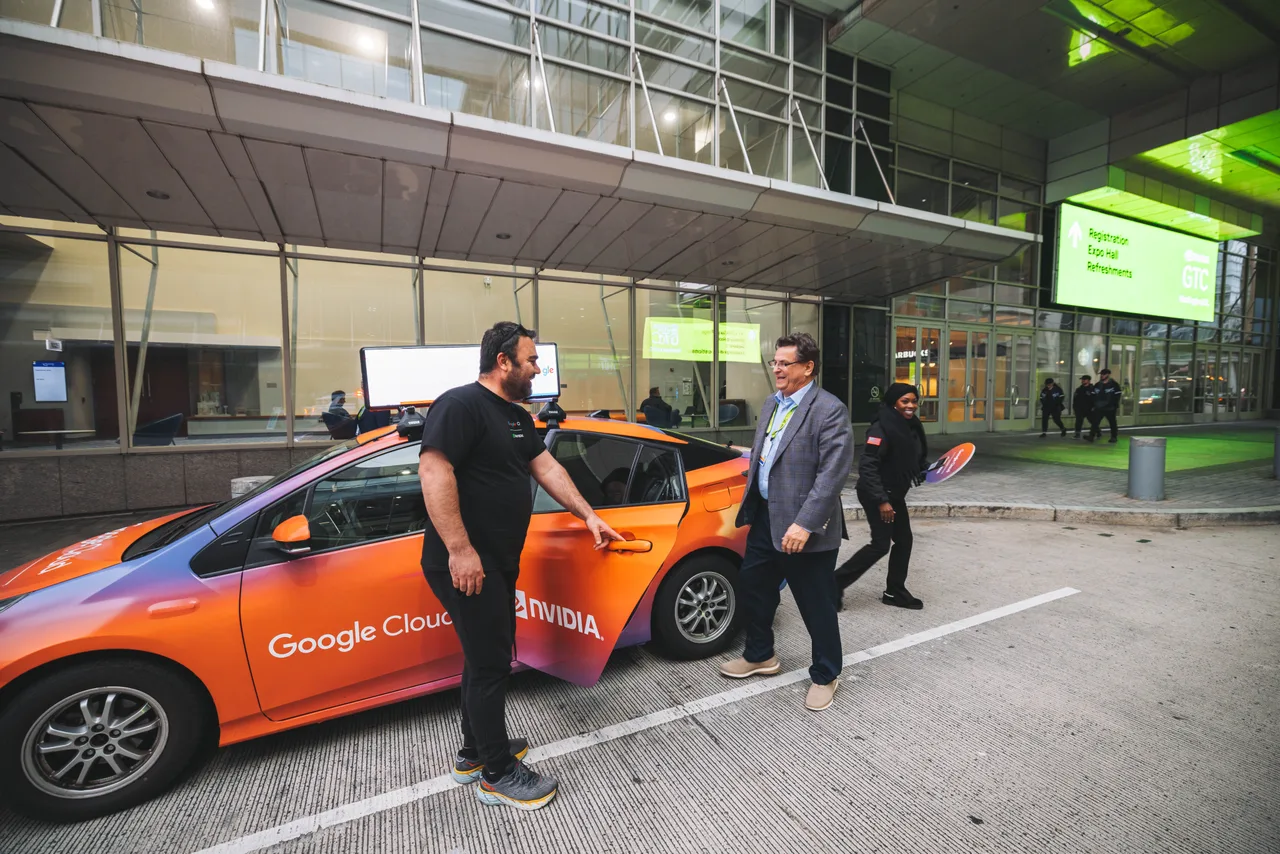
"Field marketing" is the term to watch here. Momentum lists it as a service; Push sells field marketing managers as a job title. In practice it means recurring in-market work, sampling, retail demos, street teams, run by a regional manager rather than a one-off launch, and it is usually staffed from this pool whichever agency's logo sits on the deck. The Google Cloud car at the top of this page is the two roles together: the vehicle is the operator's, the person holding the door is the staffing layer.
Where do "top experiential agency" lists come from?
The second result for this search is a Clutch directory, and directory pages are where most agency lists on the internet start. Clutch's own help centre explains the mechanism: its ranking weighs the number, quality and recency of client reviews, work experience, market presence and industry recognition, services offered and, on location pages, presence in that location. Separately, its sponsorship page states that sponsors are displayed on a directory page ahead of companies with a lower-tier sponsorship or none, in tiers that run from Starter up to Quadruple Diamond, and that Clutch Rank decides the order only among sponsors of the same tier, with verified non-sponsors listed after them.
None of that is hidden, and none of it is a comparison. A list ranks companies against a review-count score and a sponsorship tier. It cannot tell you whether the agency in third place owns a fabrication shop or whether the one in ninth would subcontract your LED truck to the same operator you could book yourself. Use the list to find names. Then do the comparison the list did not do, which is the table at the top of this page, filled in from each company's own site. The ranked list of twelve experiential marketing companies applies the same criteria across operators, agencies and staffing firms, and the guerrilla marketing examples post shows twelve of their outputs photographed on the street.
How do you brief and evaluate an experiential marketing agency?
A brief that names the outcome, the cities, the dates and the audience is enough for an agency to respond to. The evaluation is where buyers go soft, so the questions below are the ones that expose which of the four types you are talking to.
- Which parts of this proposal will your own employees deliver, and which parts are subcontracted? Name the subcontractors for the vehicle, the build and the staff.
- Who holds the permits for the street, the venue perimeter and the sampling, and in whose name are they filed? The event advertising guide lists the city rules that decide this.
- Is the fee a percentage of production, a fixed project price, or a day rate, and are pass-through costs shown at cost with the vendor invoice attached?
- What is the proof of performance: GPS logs and dated photographs from the operator, a headcount from the staffing lead, or a slide? The results page sets out what counts as measurement.
- If a vehicle breaks down or a venue cancels, whose asset and whose contract absorbs it?
- Can I see dated photographs of this exact format running in my market, not a render? The archive on this site is the standard to hold that request to.
An agency that answers the first question without flinching is worth the fee. One that answers "we handle everything" is describing its margin, not its assets.
When should you skip the agency and book the operator?
When the brief is a vehicle on a route for a date. A swarm of wrapped cars around a convention centre, an LED truck on an arena's arrival path for a home stand, a pedicab fleet during a festival: these are media buys with a creative file attached, and the operator sells them directly with production bundled. The LED truck guide and the mobile billboard strategies post cover the buying mechanics. When the brief involves a stage, a script, a build and a tour schedule, the coordination is the product and an agency earns its fee. Most activations sit between the two, which is why the ownership question matters: it tells you what you are paying a markup on.
Frequently Asked Questions
What is an experiential marketing agency?
An experiential marketing agency plans, designs and produces live brand experiences such as pop-ups, mobile tours, launch events and festival activations. It typically employs strategists, creatives and producers and subcontracts fabrication, vehicles and event staff to specialist companies, though some, such as George P. Johnson, own their own fabrication facilities.
What is the difference between an experiential agency and a brand activation agency?
In practice the terms overlap. "Brand activation" is used for shorter, tactic-led work such as sampling, sweepstakes and retail pop-ups, while "experiential" covers larger productions with a build and a tour. Amp Agency, for example, lists sampling, sweepstakes, pop-up retail and mobile tours under one activation heading. Judge by what the company owns, not the label.
What are the top experiential agencies in the USA?
Published rankings such as Clutch's are built from review counts, work experience, market presence and, on directory pages, sponsorship tier, so they are lists rather than comparisons. Agencies whose own sites were checked for this page include Factory360, SoHo Experiential, Amp Agency, Momentum Worldwide, Jack Morton and George P. Johnson.
How much does experiential marketing cost?
No agency publishes a rate card, because the fee is built from a project scope plus pass-through production. The only public prices in this category come from vehicle operators, which publish day rates for trucks and per-period rates for pedicabs; those figures, with their sources and minimums, are in the event advertising guide on this site.
What is field marketing?
Field marketing is recurring in-market work such as sampling, retail demonstrations and street teams, run by regional managers rather than staged as a one-off launch. Momentum Worldwide lists it as a service and staffing agencies such as Push sell field marketing managers as a role, which is why it is usually staffed from a brand-ambassador pool.
Do experiential marketing agencies own their own vehicles?
Rarely. Of the six agency sites checked for this page, none states that it owns a fleet; Factory360 describes designing a branded vehicle for a tour, and GPJ owns fabrication space but not a street fleet. Vehicles come from operators such as Billboard Express, Bulldog Mobile Billboards, Can't Miss US or car-top networks, and from builders such as Craftsmen Industries.
What is an event marketing agency?
An event marketing agency produces conferences, launches and sponsorship activations for a brand, and the larger experiential agencies such as Jack Morton list event marketing and sponsorship consulting as core services. The distinction from an experiential agency is mostly historical; the ownership questions on this page apply to both.
What to send us
- Market, or markets
- Dates, or flight length
- Budget band
- The metric you will judge it by
A person replies with a written range and the formats that fit. No rate card exists; every number on this site is a published third-party figure.
Send the briefSources
- Factory360. About and Experiential Marketing and Mobile Tours, accessed 14 September 2026.
- SoHo Experiential. Homepage, accessed 14 September 2026.
- Amp Agency. Activation and Amplification, accessed 14 September 2026.
- Momentum Worldwide. Homepage; Jack Morton. Homepage, both accessed 14 September 2026.
- George P. Johnson. Homepage and Fabrication and Graphics, accessed 14 September 2026.
- Craftsmen Industries. Experiential Marketing Vehicles, accessed 14 September 2026.
- Billboard Express. Homepage and Rates; Bulldog Mobile Billboards. Homepage; Can't Miss US. Homepage, all accessed 14 September 2026.
- Firefly. Experiential Advertising and Homepage, accessed 14 September 2026.
- Roaming Hunger. RMNG Experiential Marketing Agency, accessed 14 September 2026.
- ATN Event Staffing. Homepage; PUSH Agency. Homepage, both accessed 14 September 2026.
- Clutch. How Does Clutch Rank Companies? and What Position Will My Company Have on Pages it Sponsors on Clutch?, Clutch Help Center, accessed 14 September 2026.
Written by
Melih Koray is a marketing and SEO practitioner who documents out-of-home media. He edits this site, sources every figure on it and checks each campaign caption against the photograph. He does not publish unsourced numbers, and he does not publish any operator's rate card.